Commentary on MSW Books Samples of MSW's Writing Online News about Meredith Sue Willis
Appearances, Publications, and Project Online Classs with MSW Services MSW Provides
Resources for Writers Writing Exercises Journal of Practical Writing
NYU Novel Writing Spring 2025
Meredith Sue Willis's Books Newsletter for Readers and Writers
Links for readers & writers Contact





Today is
Books by Meredith Sue Willis
Recent Books
Reviews and Ordering Information for Saving Tyler Hake
Reviews and Ordering Information for Soledad in the Desert
Recent Anthologies with MSW's Work:
Recent Reviews of Books by MSW
Excellent new review of Saving Tyler Hake by Rachel King at GoodReads.com
Ed Myers on Saving Tyler Hake
5 star Amazon reviews of Saving Tyler Hake
Review of Saving Tyler Hake in The Herald-Dispatch
Saving Tyler Hake in Southern Literary Review
Saving Tyler Hake at Books for Readers Newsletter
Review of Saving Tyler Hake in Appalachian Mountain Books
Soledad in the Desert at Review Tales.
Soledad in the Desert Discussion with Tyler Chadwell, Eddy Pendarvis, Donna Meredith, Phyllis Wilson Moore--and MSW!
Review of Soledad at Renaissance Writer!
Review of Soledad by Diane Simmons
MSW's Their Houses is featured at Snowflakes in a Blizzard.
Sample of Soledad in the Desert here.
Carter Seaton interviews MSW on Chapters about Soledad in the Desert and other matters.
Soledad in the Desert discussion.
Instagram "Pandemic Profile" of MSW and Soledad
MSW talks about revision at Commaful.com
Podcast of MSW on Having Fun With Revision: The bite size story telling show
A page of obituaries of some of my favorite writers and activists. I just added Dan Menaker and Diane di Prima.
To order books, click on book's cover image; at the end of comments and reviews, order from an online store; order from the publisher; or order in selected cases directly from the author.
Novels and Short Stories for Adults
Books for Teens and Children
Books about Writing
E-book Versions of MSW books
(To buy any of these books as e-books, click on the image. They are also available at the
Kindle Store and at the Nook Store as well as the iBook store and other e-book stores.)
Meredith Sue Willis Books in
Alphabetical Order
Billie of Fish House Lane
Thoughtful books are not always entertaining, and entertaining books are not always thoughtful, but this book merges both into a joyful look at family, friendship, and race. Eleven-year-old Billy Lee and her family live in a rickety house on the edge of a marsh, amid freeway overpasses, power lines, and old warehouses. Billy's father, an artist who suffers from a debilitating disease, is African American. Her mother, who makes African robes and bakes sunflower seed cookies, is white. Billy has never met any of her mother's family, until one day when a cousin invites her for a visit. The conflicting pulls that Billy feels between loyalty to her best friend, Eutreece, and a desire to befriend her "new" white cousin, Celia, set Billy pondering questions of race in a unique and concrete way that will inspire young readers to ask their own questions. If she is half-white and half-black, Billy wonders, what does her white side feel like? Does it feel different from her black side? What an interesting way to frame this issue—placing the essence of racial conflict inside a single character allows Willis to explore these questions in a nuanced, non-pedantic way. Billy's voice is as fresh and interesting as her story. Children of all races will find both humor and understanding—as well as plenty to ponder —in Billy's open, enthusiastic approach to life. This book would be an excellent choice for book clubs and classroom discussions.
-- Barbara Carroll Roberts, The Critics Children's Literature
.
.
Biracial Billie Lee leads a harmonious life in a funky New Jersey neighborhood until her white cousin comes to town. There’s that, and a mysterious neighbor alerts her inner detective. Billie Lee’s an appealing problem solver.
– Claudia Ebeling, Bucknell World Vol. 34 No. 4
...I was surprised by many aspects of this contemporary children's book. Beyond the obvious (knowing references to illicit drug use), it is far grittier -- and far more richly imagined -- than most of the kids'-lit I recall from my own childhood. (The protagonist lives under a highway near a disused canal, for instance.) At times, as in a dreamlike episode during which two pre-teens very calmly take a car from the garage of a parent and drive around the neighborhood at night, BILLIE OF FISHHOUSE LANE transcends the genre altogether, bringing to mind great books about children for adults such as THIS BOY'S LIFE by Tobias Wolf and Jamaica Kincaid's ANNIE JOHN. Recommended.
-- Adam Sexton, author of Master Class in Fiction Writing: Techniques from Austen, Hemingway, and Other Greats
I love Darling Billie and her father. She's an appealing character and has a voice. I was drawn in, too, by the realistic but non-violent problem of racial bias and how [Willis] punctured all the sterotypes. And Celia was so funny! I'm glad she turned out to be OK. (I also like the undercurrent of humor that flows throughout the novel.) I'm also glad the father didn't die. Billie's vision and how she kept her daddy from dying--I believe that actually happens sometimes. -- Llewellyn McKernan
Smart, sassy, and eleven years old, Billie Lee lives with her eccentric family in a home on Fish House Lane. Her dad is an African American artist who carves tree trunks into sculptures; her mom, who's white, sews African-style robes that she sells at the Boutique Afrique. Billie loves her parents, her two younger brothers, and her know-it-all best friend, Eutreece, and she feels completely at home in her swampy neighborhood under an elevated highway in New Jersey. Then Billie's white cousin, Celia, shows up and changes everything. A sleepover at Celia's fancy suburban home releases a flood of questions. How can Billie be Black but also White? How can she convince Eutreece that Billie hasn't betrayed their friendship? And, when these kids get thrown together at Fish House Lane's summer barbecue, how can Billie and her friends accept one another long enough to solve the mystery of a neighbor named Neighbor, who has hidden something strange—and maybe dangerous—down by the canal? The answers to these questions challenge Billie far more than she ever thought possible.
-- Publisher, Montemayor Press
To Buy Billie of Fishhouse Lane:
ISBN 978-1932727029
To order online at Bookshop.org click here
Amazon has it too, or
Go directly to the the publisher's page.
The Blair Morgan Trilogy
To order online, click on Higher Ground;
Only Great Changes; Trespassers.Publishing HIstory: The three novels of the Blair Morgan Trilogy follow Blair Ellen Morgan through the nineteen sixties, from a small mining town in north-central West Virginia to anti-poverty work in Tidewater Virginia to anti-Vietnam War protests in New York City. Higher Ground and Only Great Changes were originally published in hardcover by Scribner's in 1981 and 1985. The complete complete trilogy, including the final volume, Trespassers, is now available in paperback from Hamilton Stone Editions
...The story of Blair Ellen Morgan, the daughter of teachers in rural West Virginia, who grows up to experience all the turbulence at the heart of the 1960's.
— Claudia Ebeling in Bucknell World
Miss Willis sustains a reader's attention...throughout the trilogy by being a master of what might be called thumbnail episodes. Every significant encounter between consorts, friends, parents, neighbors has a setting and a beginning, middle, and end. The effect is the feeling of being eased along story to story through a narrative where the meaning of each episode will be revealed. Even the most disturbing episodes have some measure of grace, and this comes because of Miss Willis' steady, assured narrative style.
— Carol Herman in The Washington Times
Higher Ground and Only Great Changes deeply moved me and convinced me of three very important things. One, it is possible for a writer to join a social vision with a creative vision. Two, it is possible to think and write of Appalachia in new and empowering ways without resorting to stereotypes. And three, well-crafted, stylistically sophisticated fiction can do positive political work. The political and social relevancy of these two novels rests in Willis' representation of Blair Ellen Morgan's coming of age over the approximately twenty years from the late 1950's to 1974.
— Tal Stanley, "Making That New Place: Blair Morgan's Coming of Age and Meredith Sue Willis' Social Vision," The Iron Mountain Review, Volume XII
For Ordering information, see individual books.
Blazing Pencils
Publishing HIstory: This is the new, revised edition, updated and improved. A few of the first edition are still available from the author.
I recommend it highly to teachers who write, writers who teach, and the students who keep all the others honest.
-- David Berry, Merlyn's Pen
Blazing Pencils is a wonderfully clear “how-to” guide to writing fiction and essays. The more than 150 writing ideas in Blazing Pencils will help the aspiring writer every step of the way in writing a complete story or essay. One of the great pieces of advice to young writers by their more experienced (and published) elders has been to “write, write and keep on writing.” But like any other craft, writing has its own tips, tricks and techniques. Blazing Pencils will heop shape and channel all that practice so ardently advocated to its most productive and rewarding end results.
-- Wisconsin Bookwatch
4-11-13: Playwrights Theatre of New Jersey blog on Blazing Pencils.
...There's a great overview for lower level writers about the five paragraph essay. If your students are like mine, you'll use M. S. Willis's lesson every term. Some of the better students will get the idea of a thesis and topic sentences just from the one lesson. Others will need a blazing pencil inserted under the fingernails....
-- "Marcus Aurelius"
A fine balance between text, exercises, and examples.
– Kliatt Young Adult Book Guide
Blazing Pencils: A Guide to Writing Fiction and Essays is a wonderfully clear "how-to" guide to writing fiction and essays. The more than 150 writing ideas in Blazing Pencils help the aspiring writer every step of the way in writing a complete story or essay. One of the great pieces of advice to young writers by their more experienced (and published) elders has been to "write, write and keep on writing". But like any other craft, writing has its own tips, tricks and techniques. Blazing Pencils will help shape and channel all that practice so ardently advocated to its most productive and rewarding end results.
– Midwest Book Review
ISBN 9781932727142
To order online, click Blazing Pencils.
To order by mail, click on order.
To order from the publisher, click here.
The City Built of Starships
Publisher's note:Sent by her estranged father on what she believes is a peace mission, the young desert-dweller Espera inadvertently starts a class war in the drug-torn City Built of Starships.....
...A gripping tale. I love the way the ethical imagination is torqued into a surprising, nightmarish narrative. Some of the characters are astounding– and there is the Death yaeger and his dive. It's a wonderful, dark, hope-giving book.
–Marc Kaminsky, author of The Road from Hiroshima and Daily Bread
....A surprising flavor: it uses science fiction tropes and concepts convincingly, and yet it feels all the way through like fantasy! It's partly the dragonlike yaegers and the Far-Seers, familiar fantasy types, and the magical-seeming properties of the glowworm. But the binary system and the class theme of hands vs. officers are solidly science fiction, ditto people who deal with their lives by staying drugged all the time...plausible explanations for phenomena like Big Cook and the morbid flatulance and why the desert ghouls can live on so few calories, so it's hard to pin down exactly why all the characters feel to me as if they're in a fantasy. But the cover art--starships viewed through a lavender mist--bears out the exact genre-spanning effect I'm talking about....I enjoyed it and enjoyed being puzzled by it.
-- Judith Moffett, author of eleven books in five genres, including science fiction. She has won both a John W. Campbell Award for Best New Writer and a Theodore Sturgeon Memorial award for the best science fiction story of the year.
Readers will love Espera. Hero. Adventurer. Readers will love the wise sayings and the wise women who say them. Here's a whole world that needs changing and this girl has a part in it. Meredith Sue Willis knows how to be wise. She knows how to write a rousing adventure story.
– Carol Emshwiller, Nebula award winner and author of Carmen Dog
The novel stands out because it's a story of a failed colonisation that ends with only a sliver of hope. There are no magic fixes, no lost technologies....
Farah Mendlesohn, The Inter-Galactic Playground
As soon as I finished this book, I started looking for another science fiction book by Willis. She's one of my favorite writers of Appalachian fiction, but I didn't know she wrote science fiction, too. Along with Bradbury-esque science fiction, there's a little of the "jack tale" in this journey-quest, with characters like "Big Cook," "Tiny," and, best of all, "Brash," who changes sides so often that he could be a weather vane for gauging who's winning the battle. I got a kick out of the "yeagers"--huge, flying creatures (a salute to Willis' fellow West Virginian, Chuck Yeager, the first man to fly faster than the speed of sound). The links aren't as direct as in the "hunger games" series, but Willis' Appalachian links are there. I really like that this fable--in which the innocent young Seeker, Espera, manages to outmaneuver evil in the "second world"--holds mountains as places of refuge and glowworms as magically healing.
-- Edwina Pendarvis, Professor of Education, Marshall University
.... the versatile Meredith Sue Willis...has returned to writing for young adults. Her science fiction tale, The City Built of Starships (Montemayor Press), stars Espera, a girl caught up in the volatile colonization of a far planet.-- Claudia Ebeling, Bucknell World, September 2005
The novel opens in a desert some undisclosed distance from the City Built of Starships. Espera, whom the narrative initially positions as its adolescent heroine, has been raiseed in this desert, in isolation from other humans, by her mother, Soledad, a mystic and healther....Occasionally Espera's father, Leon, visits. And then Soledad and Leon argue. Leon wishes to make "the lavender world" – also known as "the second worlds" – the possession of humans; Soledad insists that humans are guests on the world and that it is not theirs to possess. Espera is not exactrly torn between yere parents: Since Soledad has raised her, she shares her mother's ethics and values. But her father's visits bring exciteemnt into a life that revolves around her mother's meditations....
– L. Timmel Duchamp, The New York Review of Science Fiction
June 2005, Number 202, Vol. 17, No. 10
After a cloistered, puritanical childhood, Espera ventures into a fallen world on a quest to redeem– or perhaps destroy– it...
-- Kirkus Discoveries
Of some sf interest is the Young Adult tale The City Built of Starships (2005), whose young Ecologically-sound protagonist confronts old-guard remnants of the expedition which has attempted to colonize (see Colonization of Other Worlds) the beleaguered planet she hopes to save, along with its sentient inhabitants.
--The Encyclopedia of Science Fiction. August 12, 2018
.... I'm a jaded old reader of SF and it held my attention - good planet-building, a nice premise about the officers versus the hands as that evolves over time, and thank heavens someone considers that eating alien food might not be a good idea! So many books people just eat it without much thought.
I found Espera to be a heroine, and found the tension between her parents particularly apt for young readers who are often torn between divorced parents. They would see themselves in her.
The plot was solid and in the midst of the danger and sometimes terror humor found a place - the eccentricities of people and especially the Scion, who moves from abusive power to helplessness and then into a sort of redemption.
– Valerie Nieman, author of Neena Gathering
.
ISBN 978-0967447766
To order hardopy online, click The City Built of Starships
To order by mail, click order.
For a choice of ebook formats, click here.
Read an excerpt! (Click on "read and excerpt.")
Deep Revision
Article about using a revision exercise from MSW's Deep Revision (Jennifer Kayton, 1-31-13) Hundreds of ideas of how to enjoy the work of making writing fresher, richer, and more authentic.
-- Kliatt
Meredith Sue Willis wrote this book about her experiences in teaching elementary school students to keep going after a first draft. I use it in college classes, where the problem is the same: students write the first thing that comes to their mind, but stop there.
Willis presents almost 200 different exercises that engage the mind and make writing fun. For example, reverse revision is a process by which students try to make their writing worse and worse. By observing what obscures meaning and weakens sentences, they can then see what would work to make writing BETTER.
Other techniques, such as meditation, going deeper by adding details, changing media, and changing point of view, are useful for writers at any level of expertise.
The charming examples of writing and rewriting from Willis's students make this book delightful for classroom use.
-- Linda Burgess (Sugarloaf, CA USA)
Meredith Sue Willis has a playful but realistic understanding of revision. I appreciate her holistic approach; revision happens throughout the entire writing process and throughout our lives. She believes (as do I) that a first grader revising makes decisions very similar to an adult, and so the lessons of revision apply regardless of age. This book is chock-full of exercises for the practical-minded.
-- Elizabeth Andrews, Good Reads
ISBN 978-0915924417
To order online, click here.
To order by mail, click on order.
Dwight's House and Other Stories
The brief opening paragraph of Dwight's House and Other Stories deserves an award all its own. To me, it's perfect, and not just because it foreshadows the suspenseful drama of the opening story. It possesses the power of a slow zoom, moving from the universal--a returning comet hurtling through space and auguring disaster--to the historical—1986, a year of explosions on earth—and then all the way down to a dark lake shore in Massachusetts and two lighted houses, "one house on the water's edge and one back in the hemlocks." Willis' opening uses past disaster to lead us to the site of future disaster, local and personal, fueled by sex—female vs. male; class—out-of-work vs. well-off; geography—northern vs. southern; and ethnicity—"Jew" vs. "hillbilly," qualities that both differentiate and connect the main characters, all of whom suggest extremes of a type. The first story, "Dwight's House," is classic, comparable to the fiction of Annie Proulx and Edith Wharton and—this may sound strange--in its strong sense of irony and circumstance, the novels of English author, Thomas Hardy. Suspenseful in psychological and sometimes physical terms, all of the stories in this collection are intriguing, insightful, and, in an important way, hopeful.
5 star Amazon review August 17, 2024
The title novella is a marvel that successfully experiments with point of view, rapidly gyrating between the four main characters in the piece–Dwight, Fern, Susan, and Elaine. Willis pulls off this exhilarating As I Lay Dying technique quite nicely, managing to probe the inner states of each character, as well as allowing the innate conflict to surface in an almost organic fashion. Within a rustic Massachusetts setting, Willis introduces us to Dwight, an abusive and malicious man from West Virginia who envies the sleek modern cabin of the Jewish couple by the lake; his withdrawn wife Susan; Fern, who hates her stepfather; and Elaine, the neighbor who has retreated to her lakeside cabin to come to terms with the lump in her breast. In superbly piercing, almost brittle prose, the story ultimately manages to portray class conflict, the roots of anti-Semitism, the consequences of adultery, as well as render a family's free fall.
In Dwight's House and Other Stories, Meredith Sue Willis's eclecticism and layered prose releases us from the moorings of "regional fiction." This is a significant book from an accomplished author much deserving of a wider readership.
-- Nathan Leslie, Main Street Rag, Volume 9, Number 1, Spring 2005
The occupants of two summer lake houses in western Massachusetts spend a couple of stormy winter days coping with their own problems and getting involved with each other's. Privileged Elaine Roth, a housewife whose children have grown, has fled to her summer home to escape the twin revelations that her husband has been committing adultery and that she has a lump in her breast.
Next door, in a rundown fishing cottage, jobless Dwight and Susan huddle in blankets trying to avoid the cold. Their two young sons and Susan's adolescent daughter Fern haven't gone to school in weeks, since Dwight's truck stopped functioning. When Elaine impulsively invites Dwight's family over for brunch, the situation turns explosive.
Willis breaks out of the narrow borders of the short story by switching among the points of view of Dwight, Elaine, frazzled Susan, and obdurate Fern. She develops the four corners of this stubborn rectangle with equal care. Although Dwight is the obvious candidate for the villain of the piece, even he is not a totally unsympathetic character. Willis nicely balances empathy with implicitly moral judgment....Willis regards all of her characters with unsentimental compassion. Her fiction leads us by the hand into dark places, and then leaves us on our own to find our way out.
– Margaret Quamme, "Stories in the Dark," American Book Review,
Volume 26, Number 3, March/April 2005, p. 8.
This collection includes the 109-page novella, Dwight's House, and four short stories, ranging in length from seven to twenty-four pages. Most are set on lakes surrounded by homes which could be located in Willis's native West Virginia or the Northeast where she has now lived most of her adult life. Willis always offers the reader a good old-fashioned straight-forward tale, but her fascinating and sometimes quirky characters are what distinguish her as a story-teller.
-- Appalachian Heritage, Volume 33, Number 1, Winter 2005
Written by a prize-winning member of the Appalachian Renaissance in literature, Dwight's House & Other Stories is an anthology of short stories by critically acclaimed author Meredith Sue Willis. Focusing on believeable characters put in paralyzing dilemmas, these tales examine the troubling paradoxes of the human condition with sympathy and synchronicity. The stories presented are "Dwight's House", "Attack", "Tiny Gorillas", "Another Perversion", and "Tales of the Abstract Expressionists". Highly recommended.
-- Midwest Book Review
Meredith Sue Willis...has delivered a new collection of short fiction, Dwight's House and Other Stories (Hamilton Stone Editions). Known for pitch-perfect rendering of her native Appalachia, she is in top voice, pitting the familiar against other American subcultures and threats ranging from surreal air attacks to the specter of death in old age. She creates messy lives hurtling toward even worse complications, but they always release a slyly reassuring spirit, as when a scandal-ridden narrator concludes, "I don't know. I'm worn down by loneliness and fear. I'm afraid I may be on the verge of trying altruism, the last, the greatest, perversion."
-- Claudia Ebeling, "For a Long Winter's Read" (See page 16)
This author has the rare ability to get under the skin of wildly different characters to such an effect that the reader is not only entranced but emerges with a deeper understanding of these poor mortals, of which we are one. Beautifully written, powerfully effective.
-- Rebecca Kavaler
The title story in Meredith Sue Willis' second collection is set during a year of explosions: the first space shuttle; the nuclear power plant at Chernobyl; the rundown little cottage at the lake. In this new collection of stories and a novella set at summer houses and around lakes, Meredith Sue Willis explores the places where we are most exposed.
New Pages.com: Alternatives in Print & Media
ISBN 978-0971487321
To order online, click on Dwight's House and Other Stories
To order by mail, go to Orders.
Read a sample in the Hamilton Stone Review
Higher Ground
Publishing HIstory: Higher Ground was first published by Charles Scribner's Sons in 1981. This was Meredith Sue Willis's second book, and it began the Blair Morgan trilogy, which examines small town life and social movements of the 1960's through the lens of Blair Ellen Morgan's coming-of-age. Out of print for many years, it was republished in 1996 by Hamilton Stone Editions and remains in print.
As in her fine first novel, A Space Apart (1979), Willis tests the soft, cutting filaments of family love against the lure of that ""higher ground"" beyond: larger intimacies, exhilarating freedoms. Again, also, she probes the sunken, serpentine divisions between the small-town Establishment and those who don't measure up. Eleven-year-old Blair Ellen, only child of West Va. high school teachers who survived Depression poverty, knows that whatever decision Mother and Daddy make, ""they were just trying to make me the best possible girl I could be."" And somehow she senses that her summer friendship with the Odell children doesn't fit with this ideal: even though Mother says it's a good deed to befriend those ""poor children,"" it still feels ""abnormal."" After all, smooth, secretive India and Garland (who practices dancing like a teenager with such strange concentration) live on a mountain with no electricity--a home on top of the world, with ""a great swell of grass and sky."" So Blair Ellen decides that India and Garland will always be her special friends, and they will ""mean just what I want them to mean."" But, entering high school four years later, fairly pretty Blair Ellen is secure in popularity, good grades, teacher approval; and now the hill children--at first dressed ""wrong""--flicker in and out of her interest. She's drawn instead to the ""tough gloss"" of her neighbor Bunny (""no father and not very clean""), whom Blair Ellen--unconsciously manipulative--would like to ""save"" with the gift of her friendship. But Bunny, unsaved, elopes from her raw-nerved household at 17, so Blair Ellen eventually responds, sexually stirred, to Garland's curiously persistent need for her regard. (He sees through her, however: ""You're just playing around, aren't you?"") And finally, Blair Ellen, now married and living in Manhattan, returns for her tenth high school reunion, only to find that social guidelines have shifted and become more intricate--but on a return to the Odells' mountain (they've left), she sees new possibilities for union in a segmented human landscape. Not quite the perfect gem of A Space Apart--the high school section lags a bit--but Willis' breathtakingly subtle soundings of homes and small towns (where everything and nothing happens) reaffirm her as a writer of real consequence.
The adolescence of Blair Ellen Morgan, who attends the high school where her parents teach, is richly realized in the complexities of relationships begun when she was 11, with the slatternly Odells, hill-country people who were her aunt's neighbors. Blair is a delight of paradoxes in her quest for "my special friends who mean exactly what I want them to mean...." Higher Ground is heartwarming, funny and sad, quite delightful reading.
-- Publisher's Weekly
A look at the secret feelings of a growing girl. These feelings might be shared with a best friend, if you had one you trusted completely.
-- Houston Chronicle
Meredith Sue Willis...writes with tenderness and ease of the trials of adolescence. With an eye for detail and an ear for dialogue, she has produced a vivid account of growing up in a small town in the late fifties and early sixties. Though the time, place, and personalities are specific, the thoughts and emotions are universal.
-- Columbia Magazine
To order from publisher, click on Higher Ground
To order online, click here.
To order by mail, go to Orders.
To order e-book, click here.
In the Mountains of America
Publishing HIstory: Meredith Sue Willis's highly praised collection of short stories set in the Appalachian region, has been available since 1994. It has been used as a text in college classrooms. To read a sample story, click here.
The author of three novels set in Appalachia, Willis populates her first collection of 11 stories and one essay with men, women and children fueled by secret passions, and by the act of storytelling itself. ``What I love is when the storyteller says simply, `Just listen to this,'"" Willis writes in ``My Father's Stories: An Essay,'' which opens her book. It's no wonder, then, that Willis goes on to let her shop-owning grandmothers and adolescent waitresses draw each other into the histories of their lives with stories. In ``Adventures of the Vulture,'' a local oddball confesses her life secrets to an undertaker in a letter meant to elaborate her eventual funeral arrangements. Secrets are common in these characters' lives. Love affairs and murder fantasies are rarely spoken, but their presence infuses these smart stories with tensions beyond the limits of plot. The two shortest pieces, ``Miracle of the Locust Root'' and ``The Trestle,'' accomplish the least, not because of their brevity, but because a moral seems forced abruptly on the reader. Elsewhere Willis follows her own advice and lets her stories speak for themselves.
Ms. Willis...provides a[n]...important lesson on the nature and function of literature itself.
— Thomas H. Cook ( New York Times Book Review)
Willis scouts her characters like undiscovered paths.
— The Village Voice
Pure, twangy bewitching entertainment.
— Chris Faatz, The Nation
Terrific stories. Rueful, humorous, close to the bone. You cannot help but like and feel for Willis's characters. In these stories you hear the pure mental clarity and honesty of distilled experiences, and a life-long dedication to craft.
— Phillip Lopate
Rich with the traditions of Appalachia and even richer with the wise intelligence of its author...Willis explores her characters' bonds with family, home place, landscape, God, and nation, noting the strength of such bonds and the individual accommodations they so often demand. Willis defines the boundaries between mountain hollows and towns, between rural regions and urban ones, and she uses those boundaries to limn the spiritual reach of her characters....The characterizations are detailed; the dialogue is spry; the prose sings.
— Alyson Hagy, "In the Mountains of America,"Appalachian Journal (Vol. 22, Number 1)
....That, finally, is what creates the true power of narrative in Meredith Sue Willis' or any true artist's work: the ability to give the reader or the listener moments of real life, but in so doing to capture the mystery, the translucence which makes art transcend life.— Jack L. Wills, "The Story's the Thing: The Power of Narrative in In the Mountains of America," The Iron Mountain Review (Vol. XII)
...Meredith Sue Willis's In the Mountains of America ...will give you family values in their unvarnished state....– Art Winslow, The Nation
....Willis' writing– like the quilts described in the closing story "Family Knots"– is exquisitely rendered with multiple textures and complex designs.
– Feminist Bookstore News
In the Mountains of America is a beautifully-written, tender and clear-eyed collection of short stories set in Appalachia in which the reader is invited to shed big city ways, and settle back--way back like the country people who inhabit these mountain hollows and tales and who enjoy a good story themselves--and to "just listen. Listen." Meredith Sue Willis's characters are worth listening to. Distinctive, quick-witted, and touching, they, like all of us, are searching to make sense of lives bounded by family, community, geography and social class.
Willis creates dialogue you can hear, details you can see. In "The Little Harlots," Roy Critchfield, a ninth-grader, struggles to reconcile "the raw burden of his body" with his burgeoning desires and his father's strict religious views. "I don't chew my cud twice," his father snaps at Roy after his mother leaves home and refuses his father's angry demand to return. In "The Birds That Stay" the meaning of a young woman's death is examined through the four voices of her daughter, grandmother, father, and mother. Jody Otis, the dead woman's father, mulls violence. He sits in the kitchen glaring at the passing thick-soled shoes of his daughter's "pit viper" husband, Buddy, the man he blames for her death, while Ellen Morgan Otis, the dead woman's mother, wants only "to feel love for all these fine pople here today grieving with us," understanding by the story's end that no matter how one's desire to affix cause and blame to life's tragedies, we dwell somewhere between darkness and beauty, in an "unknown" middle.
This understanding permeates each of these twelve stories. In the luminous "Family Knots," we follow Narcissa Foy, a patchwork quilter, from childhood into middle age as she creates complex quilting patterns that parallel the unexpected complexities of her own quiet mountain life. As a child, Narcissa has always liked "the crazy quilts best . . . following trails of color wherever they led and then later discover[ing] shapes that contained [her] discovery." Narcissa bears five children, the next-to-last a difficult labor. Her breasts become inflamed and she dreams of a quilt "the color of her struggle to nourish this baby," a quilt with colors that "trickle and form paths like veins, twisting, weaaving, plaiding, bursting open like fireworks or zinnias unfurled"--a pattern called Family Knots. Its creation ushers in a period of Narcissa's limited recognition as an artist by city collectors. When Narcissa's college-educated daughter, Lou, implores her to move to the city and study art--"It will smother your talent, never leaving here," insisted Lou--Narcissa wonders "if she had been smothered, and allowed it was possible that something had been, but something else had been made ." Her destiny has been more than quilts. It has also been raising a family, stitching together "the pattern of people"--and she, Narcissa, "was in the pattern."
Some of the stories in In the Mountains of America are long, some short, some dense, others more like yarns. But all illuminate a kind of double consciousness, the fact that we know the world by the stories we tell and we know ourselves through the creation of these narratives. Willis herself is attracted to tales that reveal how an event, or landscape viewed from one vantage point (the New York City skyline, the lights, the war in Vietnam, in "Evenings with Dotson," a wonderful tale of high school romance revisited) can be perceived as the opposite from another's point of view--and even from one's own point of view in another context. With her ancestral roots in Appalachia and a present-day family life in New York and New Jersey, Meredith Sue Willis brings a surprisingly convincing optimism and far-reaching embrace of cultural differences to her readers.
—Carole Rosenthal
ISBN 978-1562790660
To order online, click on In the Mountains of America
To order by mail, click on order.
Love Palace
The narrator of Meredith Sue Willis's new novel has just turned forty, quit her job, been jilted by her live-in boyfriend and suspended by her therapist for nonpayment. Against her better judgment, she takes a job at a settlement house known as "Love Palace" in a run-down community that is about to be razed for urban renewal. Here Martha discovers that she has a talent for managing the dysfunctional institution and its staff. She is attracted by the charismatic reverend who oversees Love Palace as well as by Robby, one of the staff members, who is rich, handsome, recently released from a hospital after a suicide attempt, and intensely ambivalent about his sexuality.
Along with the Love Palace crew of runaways, derelicts, struggling blue collar workers, and a former Black Panther among others, Martha has to deal with her ex-hillbilly mother, who favors shoulder pads and big hair; her sister the big-shot lawyer; and her dying Jewish grandmother.
Just finished reading this book on my iPhone via Kindle. [It is written] with such wit and [she] brings her characters to life. They may not be people you would really want to know, but before you realize it you care about them and want to know what's next. Although a light read in many ways, the book is really about issues of the attraction of money, the role of sex and compromise, and control. The author has a wonderful way with with the English language, and her books should be a must for anyone who wants to write.
--Five Star Review on Amazon.com
Christmas is coming and you're just about ready for Santa, right?
What about the aftermath, when the presents are opened, eggnog sipped, when you turn to the long stretch that is January? What to do? I suggest you consider a new read: Meredith Sue Willis' quirky, fun novel Love Palace.
The Love Palace, a former brothel (and the name just stuck), is a settlement house for runaways, derelicts and struggling blue-color workers — anyone in need of a roof over head, a bed and some food.
Besides the resident colorful "clients," the staff is wacky in their own right, and the main character, 42-year-old Martha, arrives on its doorstep pretty down and out herself. But she's not there to ask for a meal — facing eviction when she defaults on her apartment rent after leaving her job, she's wooed by handsome, though a bit neurotic, Robby, to come to the Love Palace to be its executive director.
Jesus arranged the whole thing, he assures her. Martha is pretty sure Jesus didn't arrange anything, but nonetheless, Robby, who just turned 21, eventually becomes her lover, pulling her into a strange and intriguing life.
Willis' tone throughout the novel holds at a steady tongue in cheek, rendered with humor and irony through Martha, but the issues the characters face are consistently universal: Everyone longs for acceptance, inclusion and love, but most of all a safe place to call home. Martha turns out to be a natural at organizing the mess that is the Love Palace and the citizens there come to trust her advice.
Trouble soon comes to the renewed settlement, as no one knows, or seems to care to find out, who owns the building that houses the Love Palace.
Martha realizes, however, that discovering that person is crucial. The Love Palace is the remainder of the block that is slated for urban renewal. Knowing who owns the building means a person who could be persuaded to stop the demolition, which will leave everyone homeless again. And just who is stealing money from the Love Palace's bank account?
To deepen the mystery, a "Reverend John," who seems to adhere to Christianity "light," has a magnetic hold on everyone at the Love Palace, and, for a while, that includes Martha. His role in this needy community is unclear, yet everyone's adoration of the man, who seems like a Reverend Jim Jones at times, is enduring.
One of my favorite characters in this wild romp of a story is Martha's therapist Dr. Landowska. In serious need of counseling, Martha wails when she can no longer see Dr. L unless she pays on her considerable bill.
Her job at the Love Palace allows Martha to pay, and her counseling sessions continue. "Marta," as the doctor calls her, is one of the few characters who offers her a straight story and answers, sometimes much to Martha's chagrin. It's through Dr. L that we hear Martha's deepest fears and hear about her troubled past, which led directly to her conflicted life.
Despite her low self-esteem, Martha is revealed as a character, who nevertheless complains constantly and ly rejects her role as leader. As I read, I began to wonder if there was a Martha in history or Scripture that this character is modeled on. When I looked up information on Martha from the Bible, I discovered her name is actually translated from Marta, as Dr. L referenced Martha.
Then in The Good News Magazine, I found an article about Martha and Mary, sisters who were friends of Jesus.
In "Love Palace," Martha has a sister named Mari. The article describes the two biblical ladies' personality traits, which loosely link to Willis' fictional characters.
At the end of the book, I was reluctant to leave this misfit family, and Martha in particular. She seeks to belong, in the same endearing way we all do. Then, too, the novel is at times a bit spicy (it is a "love" palace after all). Such spice might just warm your toes on a cold, bleak January day.
Willis, a native West Virginian, has lived in New Jersey for many decades, but she hasn't lost the Appalachian talent for telling a good tale nor how to capture a reader with an original story of love.
Cat Pleska, The Charleston Gazette.
"We're in the Limina," says John King, the handsome, charismatic spiritual advisor to staff and clients at Love Palace, once a strip club now a community center/settlement house that seems doomed to fail. The waterfront neighborhood around the Love Palace is being razed and the tenants forced to make way for expensive new buildings and rich new tenants. For the neighborhood and the people in it, things are in flux. Everything seems to be, as John says, at "a threshold, a moment between time."
This is certainly true for Martha, 42 years old, "alone and lonely, chronically underemployed," maxed out on her credit cards, and behind on payments for her apartment. After she tells off her boss, who's arrears in paying her salary, she quits her job, and holes up in her apartment, consoling herself with pizza, buffalo wings, and spaghetti. Having eaten up the food in her apartment, Martha splurges at an expensive restaurant, where she meets Robby over her Eggs Benedictine with Canadian bacon. She strikes up a conversation with him and finds Robby, who's good-looking, winsome, well-built, and half her age (her car is older than he is), has problems of his own. After a few minutes of conversation, Robby asks Martha to marry him. Flattered, but judging him a sweet fruitcake, Martha takes him home—just for the night, she thinks.
Her plan goes awry, but in a good way. Due to this chance meeting, Martha ends up at the Love Palace, with a job and new living quarters. There she meets Robby's friends, intriguing characters like the Good News Crew, a Christian rock band; a young runaway; Black Frank; White Frank; an eccentric cook; and John King, the guru the whole group adores.
Some of the story is told through Martha's sessions with her therapist, a peroxide-blonde called Madame Landowska. We learn about Martha's low self-esteem and her tendency to try to escape anxiety by having sex with different men. Adding to her problems is her feeling of guilt because she can't bring herself to visit Nana, her grandmother, who has had a stroke and is in a nursing home on the brink of death.
Nana, who raised Martha and her younger sister, Mari, had belonged to the Old Left and worked to overcome economic injustice. She's at the heart of one of the major themes in this story, the theme of social responsibility and the questions of who will take up the traditions of working to change things for the better and what how are those traditions changing. One of the first people Martha meets in her new neighborhood is Ace, once a Black Panther, now continuing his work for social justice through tenant organizing in the Waterfront District neighborhood.
Love Palace treats basic human issues like sexuality, class conflict, religion, family conflict, and death with the currency, seriousness, and humor they deserve. Fans of Willis's Oradell at Sea will love this story, and readers who like this story should read Oradell at Sea. Both books feature a smart, good-hearted woman with a slightly checkered past at the center of a small but important struggle against heavy odds, and both books show Willis's page-turning story-telling comedic talent at its tough and gentle best.
— 5 star review by Eddy Pendarvis at Good Reads
Love Palace made me realize that a good novel opens like life—with innumerable paths spread out before you….and the reader is eager to follow Martha’s.
—Rebecca Kavaler, award winning author of the Further Adventures of Brunhild, Tigers in the Wood, and Next of Kin.
I adored Martha's disarming honesty and the way she not only acknowledges, but flaunts both her physical and moral imperfections. After failed, somewhat desperate attempts to find her identity, she becomes the female protagonist of a genuine midlife crisis, ending up in the middle of a colourful selection of equally lost characters. She may not fully comprehend what goes on in the cult-like environment controlled by a charismatic scoundrel, but this is where she finally understands that she needs to stop running in order to be able to live and enjoy her life. Slowly, but surely, overcoming temptation, hesitations and self-destructive impulses, she manages to face her problems and take control of her existence. Aside from anything else, Love Palace is a great reminder of the fact that it's never too late to start over, to reorganize your life and some risks are worth taking in the process.
—5 stars from Sieglinde22 at Smashwords
A voluptuous body, a turbulent childhood with a father she knew as "Rotter," and a mother who went through frequent "rhinestone cowgirl" phases have left Martha, the narrator of Meredith Sue Willis's new novel, The Love Palace, a little sex addicted and generally dysfunctional, problems she discusses with her therapist. She also participates in a therapy group where there is "a pretty up-front competition over who was the most self-destructive." And now, just in time for her forty-second birthday, she has lost her longtime boyfriend and her job. Furthermore, she can no longer go to therapy, as she owes her shrink, Madame, too much money.
All of this has resulted in a spell of agoraphobic, at least until the food in her apartment runs out. Buoyant even at the worst moments, Martha muses, "There is something really satisfying about sinking to the bottom like this. I had the image of myself as a girl in a swimming pool, sunny day, shallow end, warm water." But the spaghetti and margarine are eventually gone and Martha ventures out in her car, "Guzzler the Heap," a vehicle that may not be attractive but that has "an engine that will still turn over after nuclear war."
And now things begin to happen quickly. At a bar she meets twenty-one year old Robby, a gorgeous rich boy (he drives a red Miata) whose horror over his homosexual proclivities have resulted in a suicide attempt. He is too young and too good-looking but Martha feels "a familiar rising tide, the beginning of something. An adventure. A lovely, self-destructive adventure. . .Pick up a baby stranger! Feel totally s----! Adelante! Yes!"
On the other hand, maybe it really is a good idea, the opposite of self-destructive: "I decided if I could get Robby to come home with me, my luck would change. I would make the phone calls. I would have a job within a week." Then she'll lose the five pounds she has recently picked up and full of self-confidence will "bid farewell to Madame and the group forever." Robby and Martha do indeed go to bed and soon Robby, despite Martha's amused protestations--she's old enough to be his mother though she would like to be able to afford health insurance--is insisting that they get married. Robby is in the process of being "saved" at the Love Palace, an establishment on the wrong side of the Hudson where a charismatic leader, John, ministers to lost children like Robby as well as to the poor of the community, many of whom are being displaced by the gentrification. Robby, certainly, is less lost than some, at least financially; in fact, his parents are underwriting the Love Palace. But there are complications; his brittle, suburban mother appears to be having a relationship with John. His father, meanwhile, is behind the gentrification that is tearing up this New Jersey neighborhood. Robby insists that Martha too will be saved at the Love Palace, and soon she finds herself living on the premises and undertaking to put the office and what appear to be rather irregular financial affairs in order. She finds that she is more functional than she thought, and that she likes being "part of something."
She also finds that, like everyone else, she has a crush on the handsome, rather mysterious leader, John, even though as a former English major, she notices that some of his seemingly original pronouncements have been lifted from books. She has a fling with John, a problem since Robby is more and more in love with her and completely serious about marriage. Furthermore his parents are pushing for it, seeing Martha as the solution to Robbie's problems. And they are willing to pay.
Though there are real issues here, for Martha and Robby as well as for this gentrifying community, Willis floats her story on Martha's witty, often hilarious narration. Down, but never quite out, she is usually ready to view her situation with a what-the-hey shrug.
The one thing that really gets her down is when Robby's mother "surprises" Martha by redecorating her apartment, replacing her shabby possessions with expensive, color coordinated furnishings: "fresh white paint and refinished floors. An Oriental area rug in browns and pinks under the ottoman, track lighting and pillows, real oil paintings abstracted flowers and vaguely southwestern landscapes also in the carpet colors." Robby's mother--or, as Robby suggests, probably her maid--has gone through Martha's drawer, folding her socks and underwear. Martha had been through a lot but the upper middle class make-over is finally too much: "Where are my jelly glasses?. . .What about my brand new toilet seat cover? . . .High handed control freak! I mean, How dare she? What if I was allergic to golden oak?"
Willis, a West Virginia native transplanted in New Jersey, is the author of many books including the fine collection of stories, In the Mountains, and the novel, A Space Apart, set in a West Virginia parsonage. In Love Palace, as in the earlier novel, Willis closely observes--often on the end of a skewer--the doings of do-gooders, a group that seems to have a bit more than its share of nuttyness. Further, Willis has a near perfect ear for the way real people talk, and Martha's ironic commentary on the Love Palace, John, Robby's Jersey-rich parents and even herself is, alone, worth the price of admission.
—5 stars from "Diane" at Amazon
Love Palace is a pageturner, in the voice of Martha, a savvy, funny woman of forty, who starts from down and almost out: "Just one more one-night stand. I've done everything else, eaten badly, gotten my therapist mad at me, rent due. I'll take one more step down before I go job hunting. Pick up a baby stranger! Feel totally shitty! Adelante! Yes!" The baby stranger, who turns out not to be so strange, nor such a baby, is the first of a cast of diverse characters Martha connects with, all well-drawn and compelling. They include a charismatic preacher and con artist, a former Black Panther supporting a group of tenants whose building is threatened, several recovering or indulging alcoholics, and the wealthy donors who fund Love Palace, the community center where Martha ends up. Martha's psychoanalyst, Madame Landowska, complete with Viennese accent, may be my favorite character: scolding, conservative, kind, beautifully dressed. What keeps the reader turning pages is Martha, endlessly sassy and smart, often impulsive, sometimes unbearable, but in the end rendering the people around her with sympathy and complexity.
— 5 star review on Amazon.com
This character Martha is so genuine. Every thought and every spoken word rings true.
—Shelley Ettinger, whose work has been published in Newtown Literary, Mississippi Review, Blithe House Quarterly, Lodestar Quarterly Snow Monkey and many other places.
I'm a Willis fan. I enjoy her humor as well as her well developed characters and realistic dialogue. LOVE PALACE is an upbeat novel with some kooky characters taking issue with uban renewal. The novel opens with one of the characters,a slightly ditzy middle-aged woman, embarking on a new life. Rather by accident, she picks up a born-again-Christian in a local bar. Young and good looking, he lives and works at the Love Palace, a religious mission-like place under threat of demolition. He is concered he is gay and wants to disprove it. She is looking for a new love and a job. Together they become involved in more ways than one. First as lovers then in saving the LOVE PALACE. Along the way they work with charlatans, booze hounds, teen run aways, and a host of neighborhood characters. The realtionships in this novel are well drawn: Sibling rivalry; teen angst,dominering mothers; absent fathers. LOVE PALACE was a pleasure to read and enjoy.
—"Phyllis's Reviews" on Good Reads
Meredith Sue Willis turns her considerable talents to explore a new part of the world: the downtrodden New Jersey waterfront undergoing a radical Gold Coast transformation. In LOVE PALACE Willis has created a memorable cast of characters and a pitch perfect sense of place. The tale of a quixotic battle against redevelopment is narrated by an unlikely heroine. Martha Miller is neurotic, over-educated, under-achieving, over-libidoed, and in a tailspin over being left by Rotter number 3, her long-term boyfriend. (Rotter number 1 was her father; Rotter number 2, her ex-husband). Martha suffers from agoraphobia and low self-esteem, but one thing she's good at is attracting men and enjoying sex. A man/boy half her age (twenty-one), devastatingly good-looking, and sexually conflicted picks her up at a bar and takes her home to Love Palace. From then on the novel is a wild rollicking ride.
The cast of characters includes: the young runaways and homeless addicts who inhabit Love Palace; the soon-to-be-evicted tenants including a former Black Panther, who live next door; the charismatic cult leader John whose need to connect with everyone includes having sex; Robby, the man/boy who uses Jesus to fight his homosexual attractions and asks Martha to marry him on their first date; Robbie's wealthy parents whose church supports Love Palace, where the John preaches while seducing Robbie's mother; Martha's communist Jewish grandmother who raised her and is dying in a nursing home; Martha's therapist, Madame Landowska, who insists on payment to continue treatment but comes to Martha's wedding ("I adore weddings," she tells Martha, "They represent hope for the future."); and more. These characters come alive as an incredible range of vivid individuals each with their own flaws and yearnings, seen through the sharp eyes of the empathetic narrator.
It is Martha's ability to sympathize with even the creepiest characters which gives nuance to what is essentially a morality tale: pitting the disenfranchised poor against the steamroller of capitalism. Who is stealing money from Love Palace's bank account? Will Martha and Robbie's unlikely marriage work? Can the little guy ever win? We are propelled through action-packed scenes to an unexpected and satisfying conclusion. If at times the personalities are so large that they verge on caricature, they are redeemed by the deftness of the author's touch.
— Deborah Clearman, 5 star review on Amazon.com
Wonderful writing-brilliantly drawn characters. Funny and poignant at the same time. Martha is full of sensuality, with an ironic and wary eye on her immediate circumstances and at the same time she is reflective and circumspect. Enjoyable read.
— Mitch Levenberg, 5 star review on Amazon.com
The characters in "Love Palace" were all seriously flawed--like many of us in real life. I saw the preacher for the creep he was right away and had the feeling the protagonist knew John's flaws too but didn't quite want to believe it because he was handsome and charming. Besides, Martha always picks the wrong men. And boy, does she pick the wrong ones in this book! Marrying Robby? The reader KNOWS it isn't going to work, and even Martha knows it. What I like about the novel is that I could relate to Martha's getting on board the train she knows is going to wreck. We all do it sometimes. There's something hopeful about it--that it will turn out okay this time even when we know it really won't.
— Donna S. Meredith, 5 star Amazon review
Between husbands, lovers, and jobs, a kooky woman meets a handsome young born-again-Christian in a local bar. He he is both wealthy and confused about his sexuality. The two become a pair and he sets out to help her find a job and get her life in order. Their first stop is his place of employment, LOVE PALACE, a rather mission-like place for the down-and-out and wayward. The story combines fuzzy family relationships, sibling rivalry, con artists, and the helping professions in a humorous mix. Never one to ignore her West Virginia bible belt origins, Willis creates "big city" characters with West Virginia roots, complete with an activist Jewish grandmother languishing in a nursing home, an off-beat working class mother, an absent father, and a sparring sister. As one expects with a Willis novel, the well-developed characters are slightly off kilter but are treated fairly: Charlatans are charlatans, domineering mothers are domineering, but none are unredeemable. The novel takes a look at the issue of urban renewal without being preachy. The humorous take on life is refreshing and the dialogue is spot on.
—P.J Moore 5.0 out of 5 stars Amazon
Hilton Obenzinger says, "In Martha, Meredith Sue Willis has created a great hardboiled narrator. She’s been hurt and pissed off,mainly by her two “rotters,” her father and her ex-husband, and the world that’s dealt her a tough hand, and she finds relief through sex and constant instability, confiding in her therapist,
when she can afford her. She’s ready for change, and stumbles into the Love Palace, a church, a social center, and an organizing HQ for its elusive charismatic spiritual leader, and by happenstance she becomes its administrator. The Love Palace is among the last low-income housing buildings in the riverside New Jersey neighborhood being overrun by gentrification, and it becomes the focal point for a fight to save what’s left. The Love Palace is a catalyst, pulling together multiple lives and stories into a pulsating community. Martha ends up cajoled to marry a much younger man, scion of the rich couple who owns the Love Palace as a project of their church – or at least we think they own it. The Love Palace community fights eviction and demolition, and knowing who owns the building is crucial – and knowing the truth about the spiritual leader as well. The novel is filled with surprises and revelations as the mysteries peel away, and Martha grows increasingly capable of handling the madness of seduction, deceit, and betrayal. Love Palace, the novel, is a delight to read, and Martha is a tough character worth meeting again and again."
Buy it from Bookshop.org or any of the usual online hardcopy suspects. Also available as a Kindle book on Amazon, and for most e-reader formats at Smashwords.com.
ISBN: 978-0-9836668-5-1
Buy from your favorite bricks-and-mortar bookstore or online.
Buy directly from Hamilton Stone Editions directly at Orders
For e-book, click on the format of your choice: Kindle, Nook , iBook , or All Digital formats
Read the first chapter of Love Palace!
Marco's Monster
(Visit the publisher's page at Montemayor Press)
Publishing HIstory: Marco's Monster is the sequel to The Secret Super Powers of Marco, both published originally by Harpercollins and republished by Montemayor Press. Marco's Monster was included in a list of "100 of the Decade's Best Multicultural Read-Alouds" by Reading is Fundamental.
In a sequel to The Secret Super Powers of Marco, Marco and his best friend Tyrone participate in the annual fourth-grade class play, this year called "Cool Girl and the Main Monster." Marco is the narrator and keeps the play on track, just as he keeps life on track for his little sister Ritzi and for Tyrone. Tyrone, the "Main Monster," works to stay in the play in spite of his penchant for getting into fights with classmates. There is a great deal of action in this short novel, and several themes that Willis neatly pulls together in the conclusion. Tyrone sometimes feels as if the Monster inside him is taking over, but with Marco's help, Tyrone takes the first steps toward managing his anger. Both boys must deal with the realities of living in a run-down urban neighborhood, in which empty buildings are sites for drug deals and the local park holds more dangers than pleasures. Ebullient characters, a fast-moving plot, and a realistic setting all contribute to Willis's lively, sometimes poignant story.
-- The Horn Book
Fourth grader Marco wants the part of the Main Monster in the play his class writes. But his teacher, Mr. Marshan, assigns him the role of Narrator and gives Tyrone, Marco's best friend, the coveted part. Marco, so jealous he feels like a monster is inside him, provokes a fight with Tyrone. When Tyrone accepts the blame for the fight, Marco is caught in a string of problems that the two boys resolve together. Quirky and funny, with unforgettable characters– like little sister Ritzi, a prodigy who plays operating room on her Barbies– this short, deftly plotted novel will hold everyone's interest.
-- Instructor Magazine
.
The two friends from The Secret Super Powers of Marco are back. Their fourth grade class is putting on a play....Marco is sure he will be the Main Monster but the role goes to Tyrone and Marco is cast as the narrator. The two boys and Marco's little sister, Ritzi, are engaging characters set in a sometimes unpleasant inner-city reality. They face a variety of unsavory people, including street thugs, Crazy Wee-wee (a local homeless person), and a substitute teacher who accuses Ritzi of killing the class gerbil. Throughout the traumas, the play progresses. The performance is a definite hit, complete with the appearance of Tyrone's mother, who never comes to school....This quick, easy read is full of humor and angst, and features a single-parent family, a theater experience, and lots of adventure.
-- School Library Journal
See commentary also on "The Power of Story" Blog
ISBN 9780967447759
To order online, click Marco's Monster.
To order by mail, click on order.
Meli's Way
The transition from childhood to adulthood is no single event but a view into an ever-shifting kaleidoscope of physical, mental, and social changes. There is often a shattering moment, however, when the maturing child realizes her parents are flawed. Sometimes very flawed. The clear division of wrong and right blurs; mistakes are acknowledged as well as the possibility that they may be lived down, lived past. In Meli’s Way, Meredith Sue Willis focuses on one year in which change upends the previously quiet life of 14-year-old Melisaundre, and she must learn to accept her family and friends in all their complexity. Meli chafes at the safe routines of her private school, where upper-crust girls strive for the next level. She cuts class to prowl the Chinese galleries at the museum, where an encounter with a charismatic young dancer leads her to bolt to an alternative school, manipulating her mother into a plan for an independent study project that will let her follow her obsession with ancient ceramics. The alternative school is just that – a place for students and teachers who don’t quite fit, for many reasons - and here Meli has to establish a genuine identity where she is no longer the “weird one.”
The reader feels she is in the hands of a master storyteller from the opening paragraph: “There’s an explosion at the end of this story, and a little bit of sex in the middle, but those things are just bumps in the road or maybe boulders in a river. They made me change direction, but I’m the river, not the rocks.” Meli’s voice is sure, though she often is not, as she has to create a self not in opposition to her classmates, her teachers, and her mother, but on her own. Part of this is sexual, as Meli tests her new body and mind amid a constellation of boys and men – Ari, who grows from a nuisance into a protector in the space of a year; Tim, the teacher who sparks a disastrous crush; and a pair of men, young and older, during a summer visit to her father in Italy. As Meli bursts from her protective bubble, she encounters a world where all assumptions may be questioned – even her mother’s love. Willis has a deep understanding of young people from her many years of teaching – and being taught. She has maintained an acute ear for teenage speech and teenage emotion.
The dedication “to the teenagers I’ve taught over the years, and to the teenager in each of us,” gives insight into the author’s approach. Willis started a very productive career with A Space Apart, followed by the Blair Morgan Trilogy of Higher Ground, Only Great Changes, and Trespassers, in which Blair matures from an Appalachian teenager to a VISTA worker to an activist during the Vietnam War. Since then, Willis has produced seven other novels, including a YA science fiction tale, The City Built of Starships. She’s also written three novels for children and four books about teaching writing, includingBlazing Pencils, a guide for young writers In Meli’s Way, she references elements of Blair Morgan’s story, as she nicely plays off the similarities and differences of two convulsive periods, the dramatic and sometimes violent activism of the late 1960s with the bloody terrorism that has marked the change to a new millennium. An explosionclimaxes the book, but that physical event, however horrendous, is ultimately lessvsignificant than the intimate discoveries that shape a child into a young woman, ready to face the future of Meli’s world.
Meli Rossi, Meredith Sue Willis' young heroine may not conquer the dark side in the same way katniss everdeen does. She never displays the physical prowess or intellectual strategies that katniss employs in order to survive. But Meli's inner struggle to become whole is just as potent. Asking similar questions: Who am I? Where do I belong? And whom do I trust? Meli learns how to love her mother and accept her mother's past and ultimately recognize that power can work for you as well as against you.
Willis gracefully enters the complex lives of a multi-cultural polyglot of teens, each of whom struggles for self-acceptance and acceptance by others. When tragedy strikes, Willis brings the story full circle. Not only do the disparate characters form a whole, but Meli also finds her place in her family and in a sometimes frightening world. Willis clearly knows this countercultural teen world well and fearlessly deals with various characters: pregnant girl, a Muslim female student who wears a hijab, a Jewish student who suffers from various insecurities, a bi-racial girl who lives in a tiny apartment in Meli's building. She creates real situations: none of the characters seem as if they're simply stereotypical sticks there to make statements. She breathes air into them, and they live. We care about them almost as much as we do about Meli.
Marilyn Levy, author of Run for Your Life, Checkpoints, and many other books
Tired of her upscale private academy in New York City, fourteen-year-old Meli Rossi transfers to Ciudad City School of the Future, which provides an individualized curriculum, an opportunity to make real friends, and insights into her mother's unconventional background in the 1960s. Meli is a self-identified weird teenager who prefers exploring a museum to attending classes at school wanted the transfer so that she could study ancient Chinese ceramics and make friends even weirder than she is. But home life with her mother gets ever so much more complicated, as does her social life with her peers. Ultimately Meli must face one of the darkest aspects of the wider world she now finds herself living in. "Meli's Way" is a deftly crafted and inherently absorbing read from beginning to end, making it very highly recommended for personal reading lists, as well as school and community library YA Fiction collections.
Midwest Bookwatch/Children's Bookwatch
Meli’s Way is a delightful novel featuring a clear-thinking fourteen-year who persuades her mother to allow her to change schools. Meli’s former private school shapes students towards a conventional expectations and values, but when Meli meets Gray, a self-styled “dancer” who attends the alternative public high school Ciudad City School of the Future, Meli realizes that she too may have an unscripted identity that might be uncovered and developed in a less scripted school. A new set of sharply drawn friends and teachers at the new school—including Tim, the sweet male teacher who becomes the sensible and unrequited object of Meli’s burgeoning romantic interests—raise moral and personal questions for the curious and observant Meli as she sleuths down answers. In the course of this, Meli discovers her own values and—through an accident of classroom study and perspicacious follow-up—her mother’s surprising hidden history. This deeply satisfying book, written in lucid and entertaining prose, is suitable to both adult and young adult readers.
Carole Rosenthal, 5 star Amazon review
Fourteen-year-old Melisandre Rossi lives in New York City with her mother. Meli, a self-identified weird teenager, far prefers exploring the museum to attending classes at her upscale private academy. Increasingly bored, she convinces her mother to let her transfer to an alternative public high school, where she can study Chinese ceramics and interact with students even weirder than she is. Yet life grows more complicated, not less so, when she makes this transition. At home, she has to tolerate her mother's insistence about sharing Too Much Information about her new boyfriends. At school, Meli must navigate the tricky social world of her peers, adjust to a curriculum that views all of Manhattan as the classroom, and make sense of her growing affection for a teacher. A summer trip to Italy, where Meli visits her Italian father and his new family, leaves her exhilarated but dizzy as her view of herself expands. Then Meli faces a terrible crisis: one of the darkest aspects of the wider world comes rushing into her life
Meli, heroine of Meredith Sue Willis's young adult novel, is a sophisticated and witty young Manhattanite. (She's so witty she knows she must sometimes avoid being witty and thereby a New York cliché). She reminds me a bit of the little girl in one of the short films that make up Woody Allen's New York Stories; her parents are successful, well-to-do, and mostly absent, and she is left, with the help of staff and money, to raise herself in the dizzying rush of the city. Meli, though, has a significantly deeper inner life than can be glimpsed in the Allen film.
Her great passion, for example, is Chinese porcelain and in times of trouble she goes into the Metropolitan Museum of Art to gaze at the collection there, sometimes to imagine herself curled up inside one of the immense silent vases. They provide a kind of stability and peace that is not always present in other parts of her life: "What I love most in the Museum up there on the Chinese vase balcony is their graceful giant shapes and splendid colors that haven’t dimmed in eight hundred years. This is what makes me a weird kid. Sometimes if I stand in front of them very quietly, concentrating, there will be a little shudder in the air, and then I’ll be inside, in this perfect place, and whatever problem I have makes a shift, and I either have a solution or it isn’t a problem anymore."
Time spent with the vases--or sitting inside the walk-in finch cage in her apartment--gives Meli the strength to nurture her mother, a woman who loves her daughter but who is busy, vain and needy. Meli's father--who lives in Italy with a new family--isn't much in the picture and it often falls to Meli to prop up her mother who is "anxious about everything, finances, her looks, her love life." Sometimes, Meli says, "she asks me if she’s been a good mother. And sometimes she goes on and on about how lovely my hair is, my skin, how lucky I am that I got the Mediterranean complexion, it doesn’t age the way Northern European skin like hers does. Blah blah blah."
Meli, thus, emotionally medicated by visits to the ancient and serene vases, has her life fairly well under control. But the defenses she has so thoughtfully constructed are about to come undone when she changes schools, leaving her pretentious, uptight prep school for a no-holds-barred experimental school. She does it because she thinks it will give her more time to visit the vases, that she will be able to comfort herself with even more isolated serenity. What she finds is the opposite, a wacky new world where engagement is mandatory, an environment so insistent and even compelling that she can no longer remain inside her quiet shell. In her former school, the obsession was with status and getting into the right college.
What Meli finds at Ciudad City School is rather different and would seem all wrong for a girl who doesn't "like things all overturned. I like things to go on very calmly so I can concentrate on the vases." But here everything appears to be overturned and up in the air as a matter of preference. Life, the school seems to teach, is messy. For most of their students, even their backgrounds are mixed up.
Her friend Gray, for example, likes people to think she's Jamaican "but actually she’s half African-American and half Philippine, adopted when she was an infant into a secular Jewish family." Her parents broke up when she was about six and now she lives with her mother and some roommates. "The thing she likes best about our condo," Meli says, "is that I have my own bathroom."
Then there's Ari, who explains of the school: “Just about everyone comes from a spectacularly dysfunctional family. Like my mom decided that Judaism isn’t fair to women, and she left the family to try Buddhism, which she is still practicing, but she lives at home half the time now. She’s thinking about becoming a Buddhist nun." But despite this, or maybe because it, the teachers at Ciudad City manage to turn the place into something that feel less like a school and more like a family--a big, warm, bickering family where everything eventually comes out in the wash.
At first Meli views it all like the snob she's been in training to be: "The lesson turned out to be about comma splices and run-on sentences, which I had pretty much mastered in fifth grade, but at least Deborah took care of it fast. She set the stopwatch that hung around her neck for five minutes, and when the buzzer went off, closed the grammar book and started talking about sex. Later, when I thought about it, I was amazed at myself, talking about sex with a bunch of strangers who probably do badly on their standardized tests and quit school and become my mother’s manicurist except none of them were Asian." But slowly Meli is integrated into the community and in the atmosphere of openness she discovers that she really isn't a snob, and that there is a great deal of confusing and fascinating life taking place beyond the porcelain shelf in the Met.
There must be, of course, "a little bit of sex" in the book, as Meli is careful to warn at the outset. The sex is mostly kissing, a complicated procedure, especially if you are trying to mouth breathe so as not to smell the boy's awful cologne. But do you really want to open your mouth with his mouth right there? Meli closes her mouth and just holds her breath: "This is disgusting, I thought. But at the same time it was interesting, especially since I’d never kissed anyone except some girls at Cranfort once when we were nine. "
And--thanks to the openness and exploration promoted by Ciudad City--Meli will stumble upon a well-kept secret, and discover that even her mother was once rather different than the person Meli thinks she understands so well. By the story's end, we see that that we have learned about about the power of friendship, community, accepting yourself and others, even your mother. For, as Meli valuably learns, parents were once people who lived complex, sometimes troubling lives that had nothing at all to do with you.
Diane Simmons, 5 Star Amazon Review
If Meli's Way is in your stack of young adult books to read, move it to the top! If it's not in the stack, put it there. This is one of the best young adult novels I've read in a long time, one that would be an especially good choice for gifted high-school students (because of the issues the plot raises, like having intellectual interests that others don't share). The story is rich in humor, realism, and drama; and the terrorist attack that is the climax of the plot is convincing and sad in its resonance with the aftermath of the attack of 9/11.. The main character, Meli, is winning in her prickliness, social awkwardness, and defensiveness. A lot of the fun of this story is in "watching" her ability to let her defenses down and yield to feelings for others grow as she makes friends at the charmingly off-beat Ciudad City School of the Future
Edwina Pendarvis, 5 star Amazon Review
As a man now in middle age, how I wish I might be able to go back in time with what I now know of young girls', young women's, emerging sense of self and sexuality, in all its complex yearnings, which all comes through with power and profound empathy in Sue Willis's new novel, Meli's Way. The book is a tour de force of coming of age in New York City as Meli makes her way between the world of a privileged school to a diverse charter school meeting all the strange specimens of adult and teenage life that a great city offers along the way. If other readers begin to call her the female Holden Caufield of the 21st century, I wouldn't object, but it wouldn't be quite right. Meli dearly wants to fit in, wants to find her way and especially the way to understanding her mom -- spoiler alert -- who herself experienced a kind of lostness in the 1960s that led her to SDS-style excesses that all these years she has been keeping from Meli. Meli's way is also Meli's journey to those secrets and to her own hard-earned self knowledge. You're entirely in the mind of this girl, but it's very fascinating, and those of us who are no longer teens are in the process illuminated by her light.
Allan Appel, Reporter, New Haven Independent-- 5 star Amazon review
Meredith Sue Willis has crafted another wonderful book. This is a must read. It is very creative and, as always with her books, well-written.
Deanna Edens, 5 star Amazon review
Meli Rossi is no ordinary fifteen-year-old. From her opening line, “There’s an explosion at the end of this story, and a little bit of sex in the middle,” we are drawn in by her voice. She’s smart, independent, impulsive, and determined to get her way. When she decides to transfer out of her privileged private school into crunchy alternative Ciudad City School of the Future, nothing can stop her.
She’s obsessed by Chinese vases of the Song and Ming dynasties, an unusual passion for a teenager. She likes them better than people. Some of Meredith Sue Willis’s most beautiful prose describes Meli’s imaginative journeys inside the vases to escape the pressures of the outside world: “This is how I manage Patient. I slip inside one of my vases or bowls on the balcony at the Museum overlooking the Great Hall. I suppose in real life they would be a little dusty inside but in my imagination everything is pristine and perfect. When I’m there, I have all the time in the world, so cool and clear.”
For all her toughness, we also see Meli’s vulnerability. She’s worried about her mother’s hidden past and its repercussions on Meli in post 9/11 New York. She’s worried about changes in her home-life, as her beloved housekeeper contemplates marriage. Sex is all around her, and it’s threatening. And despite her proclamation that sex doesn’t interest her, she is becoming increasingly aware of her own yearnings, both physical and emotional.
Accompanying Meli on her journey is a cast of idiosyncratic and vividly drawn characters—her over-achieving, emotionally needy mother, her haughty and opinionated housekeeper, the hapless boy who woos her, and the diverse students and eccentric teachers of Ciudad City School, where Meli finally finds her place. A most satisfying conclusion for those of us who travel with her!
Deborah Clearman, 5 Star Amazon Review
Young adult literature is changing, as well it should. Meli's Way is a good example: Gifted girl. Fractured family. New school. Pregnant classmates. Handsome teacher. First stirring of love. Meredith Sue Willis seems to have channeled a teen's spirit for this story of a lonely and independent teen. The story is well told and teen angst and modern issues are handled openly and honestly. This teachable novel will find its way into classrooms and on to 'best books" lists.
Phyllis Moore, 5 star Amazon Review
Reviews by Teens
Meli's Way by Meredith Sue Willis is a short and engaging book right from the start. It was a lot more interesting than I expected and is filled with lots of interesting parts. I really enjoyed how the book followed a long Meli's life as a teen and her experiences leading up to the terrorist attack. Although I read the back cover of the book and was aware than a terrorist attack would occur, I still never really expected it to happen; it was a very engaging plot twist to the story. The book was very simply written in a way that was easy to understand and to the point. I also enjoyed how Meli is a little quirky with many different aspects to her personality, and when she started to enjoy volleyball and made lots of new friends at her new school shows the development of her character and her as a teen which is relatable. I thought it was interesting how the majority of the book showed her emotions and thoughts as she went through the process of adjusting to new teachers and different types of people (including pregnant teens giving birth in the girls' bathroom) after transferring from such a prestigious school. Right before the terrorist attack occurred I especially liked how Meli notices the terrorist and points out how he looks different than everybody else; her unique intelligent personality notices that the man in the hood was different and she pays attention to close enough detail to notice that he was grinning. Throughout the entire story I really liked who her character developed into and how her development was shown through new experiences of love, travel, and friends.
Elli Bass Junior, Arroyo Grande High School, California
"The Life of Meli" is well written with a very surprising plot which keeps the reader on their toes. The plot shifts frequently and never slows down. A lot of cultures were represented which was refreshing. The ideas presented were surface-level and a tad clichéd but well developed.
Mary Waterman Junior, Arroyo Grande High School, California
I enjoyed Meli's Way because it was quite unlike any other book I had read. The story was quite entertaining and multi-faceted. It handled a variety of serious subjects; including terrorism, war, and religion, and managed to do so very tactfully by having the characters of the book discus it amongst each other, showing multiple valid viewpoints. While many books simply dismiss terrorists as faceless evils or as simple plot devices, this book tries to show how people aren't evil, they just become misguided and lose their own morals. However the dialogue and narration did feel a bit awkward and unnatural at times and most of the characters seemed fairly one dimensional with little development throughout the book. Still, overall I liked the book and would recommend it to anyone who's looking for a quick but entertaining read.
Brady Goodell Junior, Arroyo Grande High School, California
ISBN 9781932727159
Order online
To order by mail, see the publisher's website
To read an excerpt, click here and then click on "Read an excerpt.
Meli's Way on YA Books Central
.
Midwest Bookwatch/Children's Bookwatch
Ed Davis BlogMeli's Way is now an e-book for Kindle and other formats!
Ed Davis Blog
For more information, or to buy, visit the publisher's web page. The book is also, of course, available online at amazon and Barnes & Noble.
Contact Montemayor Press
Only Great Changes
Publishing HIstory: Only Great Changes was first published by Charles Scribner's Sons to considerable critical acclaim in 1985. This middle book of the Blair Morgan trilogy takes Blair out of West Virginia to do anti-poverty work as a VISTA volunteer in urban Tidewater, Virginia. Out of print for many years, it was republished in 1997 by Hamilton Stone Editions and remains in print.
Willis makes a familiar story fresh and engaging with her wise perceptions and unusual language.
-- San Francisco Chronicle
Willis again picks meaningfully at the charge-laden fences between peoples, castes, and individual needs
-- Kirkus Reviews
Authors....pretend to write about all of life, but mostly they opt for the excitement. It takes talent, observation, and a particular caring to bring the average person's experience to life in a book. Willis does it here, making gold out of common materials. There are indications that she is not done with Blair Ellen yet, and I can't wait for the alchemy of her next book.-- The Plain Dealer
. . . "[M]oments of personal anguish are at the heart" of this novel, and they add up to a complex and convincing portrait of a young woman coming to grips with change."
– Jon Volkmer, "Review of Only Great Changes" in Prairie Schooner # 60, 134-135.
In Meredith Sue Willis's Only Great Changes, the familiar conventions of the novel of initiation are made new by a convincing female protagonist and a narrative that uses politics as the setting and vehicle of individual maturation. Willis locates the experience of coming of age in the matrix of a larger history, focusing 1960's young and political culture through finely cut lenses of region, gender, and race.
-- Barbara Melosh in Radical History Review
Take a half dozen of the novelists who routinely show up as repeaters on the best-seller lists, ask them to put their united talents into one collaboration, and the chances are they couldn't write a page which Meredith Sue Willis couldn't do better. She would beat them with the acuteness of her eyes and ears, her unfaltering way of bringing the fruits of her observation alive on paper and her sure sense of where to look in the crannies of human affairs for the materials of drama.
-- Leslie Hanscomb in New York Newsday
Whle visiting West Virginia last week, I stopped in Taylor Books in Charleston and picked up Only Great Changes. Boy, I was glad I did! Gobbled it up in two days, really relating to the '60s political/sexual scene. Very real characters, including the community folks, and surprising plot twists. I loved the "new name for God" speech from Dave and [the] tough-but-tender protagonist. Thanks for writing it.
-- Ed Davis
ISBN 978-0965404310
To order online, click on Only Great Changes
To order by mail, click on Order
To order various e-book formats, click here.
To order Kindle, click here.
Oradell at Sea
Click here to read a book club discusson of Oradell at Sea!!
To begin with, I love the title of this novel. I’ve never heard the name “Oradell”, and the “at sea” is appropriately ambiguous. What I actually should begin with is that Oradell at Sea is a novel by my sister-in-law, Meredith Sue Willis, an accomplished and recognized writer with a long list of publications.
Oradell is an elderly widow who, after a life that’s hard in the way many lives are, is living out her days on cruise ships. The confined space of a boat at sea throws her into social contact with other passengers and the crew, an intimacy she relishes and controls. The onboard narrative is intersected by scenes from the life that led her from a mining town in West Virginia through three husbands. The contrast between the spatial and temporal confinement of the boat story and the openness of the life story is aesthetically pleasing. Thematic unities emerge that I will not spoil.
This is a small novel in the sense that it quite deliberately limits its pallette. But it’s quietly about the big theme of what stays with us as we get to what we become. Very lovely.
-- David Weinberger, Joho the Blog
[A] comic, sad, and beautiful story.
—Eddy Pendarvis
Oradell Greengold is the brassy narrator of Meredith Sue Willis' Oradell at Sea (Vandalia Press, $22.50). She spends her days and her deceased husband's fortune cruising on first-class luxury liners where young Greek deckhands wait on her hand and foot-rub.
While aboard the Golden Argonaut from Acapulco to San Juan, Oradell describes her gritty Appalachian upbringing in a West Virginia coal-mining town. Her first husband, a passionate union organizer, was the love of her life. Her next husband showed her the seedy side of Las Vegas. In New York she got lucky with her third and last husband, whom she met while waiting on tables in a Greek restaurant.
In between reminiscences, Oradell befriends a jaded young California girl and spends more time with the Greek staff than with the other ship passengers. Oradell is a modern-day Mae West who unapologetically enjoys her wealth and its privileges, which includes boozing it up with the help. She never turns sloppy and sentimental, even when faced with a potentially life-threatening illness. Willis, a native of West Virginia, is the author of 10 books.
-- Hal Jacobs, Atlanta Journal-Constitution, and
Southern Currents: New Fiction by Regional Authors
'Zank heaven for little girls.' Not since Carson McCullers has anyone given us a Southern bell-ringer as scabbed and admirable as this motherless widow from Shacky Hill.
—Maureen Holm, Big City Lit
In her twelfth book, Oradell at Sea, novelist Meredith Sue Willis charts the psychological course of an elderly woman facing the end of her life with unfinished business. The title character, Oradell Greengold, is a wealthy widow who started out as a penniless youngster in the coalfields of West Virginia; now, she finds herself pampered by Greek waiters on an opulent cruise ship wending its way from Acapulco to Puerto Rico.
As the journey progresses, Oradell's character moves toward integration of long-standing issues that have dogged her throughout her adult life. The reader gradually learns Oradell's history as Willis skillfully intercuts chapters from Oradell's youth and middle age with episodes that are unfolding on board the ship.
From this "back story" we come to understand that Oradell grew up in a poor section of West Fork, West Virginia, aptly named "Shacky Hill," that her mother died when when was small, and that her alcoholic father froze to death in an alley when she was still in her teens. With little guidance about puberty and sex, Oradell falls prey to a womanizing employer and makes some bad choices about men, yet she manages to emerge from her struggles as a willed and engaging personality.
Thanks to a fortunate marriage to a moneyed New Yorker late in life, Oradell can now afford to be a difficult and eccentric cruise ship passenger, relying on her dead husband's money and prodigious quantities of gin to smooth her way.
Even with those accouterments, however, she cannot forget the great love of her life– her first husband, Mike Brown– a labor activist who dies mysteriously while on an organizing trip to Kentucky. Widowed soon after their marriage and pregnant with Mike's child, Oradell is convinced her husband has been murdered by the mine bosses, but she is too young and traumatized to demand justice.
In the scene where Oradell travels alone by train to Kentucky to pick up her husband's remains, Willis powerfully conveys Oradell's vulnerability as the company henchmen dare her to open the coffin to view her husband's disfigured corpse. Though Oradell knows that "Mike would have made a speech to tell the people to get off the train and give Hell to the Bosses," she capitulates and accepts $1200 to settle the case.
In some ways, the rest of Oradell's life becomes a quest to forgive Mike for his secretiveness, which possibly contributed to his death, and also to embody his ideals by championing the working class. Yet she later says "no" to the offer of a union job and never commits to becoming an activist. To resolve her character's inner conflict, Willis creates a situation on the ship in which the wait staff is being oppressed by management. When one of the waiters, Jaime, snaps and takes a swing at the villainous manager Reese, Oradell joins in a conspiracy to smuggle him off the sip to avoid prosecution.
Though her health worsens, Oradell forgoes a chance to leave the boat to seek medical attention as part of a ruse to spirit Jaime away. She has finally taken a stand that would have made Mike proud. However, this particular plot device seems at times contrived and does not achieve the life-and-death realism that the less contemporary parts of the novel do.
On the other hand, Willis's treatment of her character's second inner conflict– an unfulfilled other/daughter relationship– plays out most satisfactorily. On the ship, Oradell befriends Tracy, a bored teenager dragged onto the cruise by her rich, manicured parents. Oradell becomes Tracy's confidante, coaching her on matters of sex and independence in ways that Tracy's own mother cannot. Tracy is transformed by her time with Oradell, and in turn, Oradell can expiate her own reckless abandonment of the baby girl born soon after Mike's death.
Oradell at Sea is an entertaining, fast-paced book that pulls the reader in. In just the first few pages, Oradell is quickly established as a likable, if all too human, character ("although she did not consider herself particularly good, she did consider herself lucky.") Further, the novel's attempts to personify issues of class are admirable and may serve to bring an understanding of Appalachian economic issues to a wider audience. Yet the book seems uneven in places, alternating between the well-crafted, riveting scenes in Appalachia and the less compelling climax aboard ship.
— Sharon Hatfield, Journal of Appalachian Studies, Volume II, Numbers 1 & 2 Spring/Fall 2005 P.283
Meredith Sue Willis moved away from West Virginia a long time ago, but like the protagonist of her newest novel Oradell at Sea, she never really left the mountains. Willis is a prolific writer. Her previous books include several novels, children's books, a collection of short stories, and three nonfiction books about the craft of writing. One of these, Personal Fiction Writing, is a wonderful resource for any writing coach, and I return to it again and again when I work with young writers. Some of my favorite exercises in the book have to do with character development.
According to Willis, the character of Oradell Greengold grew from a casual meeting with a drunk old lady, someone with whom she happened to share a dinner table years ago. In the novel, Willis has done what she recommends to beginning writers– allowed a brief encounter to blossom into a whole life history. The old lady's life sings out in flashbacks and memories as her favorite cruise ship, The Golden Argonaut, makes its way through the Panama Canal toward Puerto Rico.
For Oradell, old age is one long cruise, but neither gin nor travel can carry her away from her past. One of Willis's great gifts as a writer is to get out of the way when a character becomes unruly, and Oradell is one of the most unruly characters you'll ever meet. She embodies a popular fantasy: a rich man has died and left her a windfall, and she also has the potential to be a nightmare. She's loud, she's unabashedly crude, and she has a lot of money. For those of us who are sensitive to Beverly Hillbillies stereotypes, Willis is definitely walking a tightrope with this character.
But despite her drawbacks, or maybe because of them, Oradell is an engaging, endearing protagonist. She may be in a permanent drunken haze, but she hasn't forgotten where she came from: the coal mining town in West Virginia where her grandfather died in a mine explosion and where she met her beloved Mike Brown, the first of her husbands, whose union organizer soul lives on in Oradell. And if Oradell Greengold doesn't make you laugh out loud at least a few times– well, you should seek professional help.
For this reader, however, both the plot and the setting of the book were a bit cramped, compared to the big, bold character of Oradell. More than once I found myself wishing the ship would run aground or stop in some port where the old lady would be obliged to spill her drink, abandon her memories, and get into some real trouble.– Colleen Anderson, WMKY Radio
There have been many acts in the life of Oradell Greengold, a boozy widow whose life has become one long vacation on luxury cruise liners. The heroine of Oradell at Sea (WVU Press), a new novel by Meredith Sue Willis...crows, "It's great being rich; you can do any damn thing you please." And she does.
Told in the forthright West Virginia cadence that marks Willis's literary fiction, the novel strips away the layers of experience that Oradell has accumulated as she teams up with a sullen teen and foments rebellon by the ship's staff. Her unpropitious beginnings as an abandoned child in an Apalachian coal mining town chug insider her like a ship's engine, informing her aging heart.— Claudia Ebeling in Bucknell World
This short, engagingly written novel is the story of a woman's journey of the self from a spunky but passive victim to a person capable of moral action on behalf of another. Willis' style is a clean, unpretentious realism with lyrical moments that bring depth and believability to her character.
-- Phyllis Ehrenfeld in The Ethical Culture Review of Books.
The most extraordinary people are the seemingly ordinary ones. Simultaneously hilarious and heartbreaking, Oradell is one of the best, most fully drawn characters you'll every have the privilege of meeting.
— Silas House (author of Clay's Quilt).
Oradell is a feisty, funny outspoken woman, engaging and indomitable. Bon voyage!
— Edith Konecky (author of Allegra Maud Goldman)
South Orange novelist Meredith Sue Willis' most recent offering, Oradell at Sea (Vandalia Press, 2002), is the story of a West Virginia coal miner's daughter in her old age, wealthy through marriage, widowed, spending big bucks on herself as a gin-guzzling permanent residence of a cruise ship in tropical waters. What a way to go! In spite of these limiting materials, it is a , solidly structured novel. The story line toys with the reader in giving almost no hint of the heights of the victories of the human spirit the old girl will achieved. Oradell at Sea, a powerful, deeply moving classic, deserves reprints, prizes and awards, and a stage or film adaptation by someone not Hollywood, someone British, French or Italian who would give the lead to Maggie Smith (Breakfast with Mussolini) if she can manage a coal town accent.
— William Robinson in The Tryout
You meet Oradell aboard her favorite cruise ship, the Golden Argonaut, but you learn how her character was formed by flashbacks that punctuate the story. She doesn't claim to be refined, addicted as she is to bright red and splashy jewelry. Oradell is herself, forged from a life of poverty where happy times were too infrequent and a bold front carried her along.
— Evelyn Ryan in The Dominion Post
ISBN 9780937058701
To order online, click on Oradell at Sea
To order direct from publisher. Click on WVU Press
To order Kindle, click Amazon.com;
Other e-book formats.
Out of the Mountains
"Character-driven and contemporary, the stories mirror situations we know. . . As a writer (Willis) uses the imagination of her heart to explore her cultural heritage from many vantage points.”
-- Now and Then: The Appalachian Magazine Vol. 27, No. 2; Winter 2012
Willis’ collection of 12 short stories knits together a small West Virginia community. In “Pie Knob” and “On the Road with C. T. Savage,” we meet a married couple—Merlee and C. T.—at different stages of their relationship. A young Merlee takes care of a cancer patient when C. T. abandons her, while in another story the older Merlee witnesses C. T.’s suicide as he is engulfed in illness and old age. The Savages are mentioned in passing in “Scandalous Roy Critchfield,” which focuses on a town’s young Baptist preacher. “Tara White” deals with a runaway’s missteps into pornography and her attempts to better her life. Willis approaches heavy subjects like prostitution, prejudice, and abandonment with a direct and unsentimental tone. Her characters possess a conversational familiarity, and the reader feels absorbed into the small community that is both distinctly Appalachian and markedly universal. This finely crafted collection is worth reading twice to discover all its intricacies and connections.
— Heather Paulson, Booklist, September 15, 2010
Student comments on "Tara White."
STUDENT A
This week, the story that stuck with me was "Tara White" by Meredith Sue Willis. This story was told in a way that truly drew me in, not letting me free until I had read it to completion. It broke my heart thinking of how desperately Tara just wanted to be a part of a caring family and how trauma filled her past was. I had often times looked for the meaning or the point of the stories read in class, but with "Tara White," I never once wondered "What's the point?" It felt like the story itself was the point, witnessing the perspective was the point. Willis did a wonderful job highlighting Tara's goal, expressing how she felt she could reach her goal, and providing the kind of backstory that would make anyone root for her to reach her goal. The detailed description of what went through Tara's mind as Mrs. Holmes went to strike her felt as if I were frozen in time with the both of them as this scene played out. This was a story full of feeling and time stopping descriptions.
STUDENT RESPONDING TO STUDENT A
That's very true. Alot of the stories in the class make you search for the ultimate meaning but in "Tara White" the meaning was given to you very early on. The whole story was very direct about the topic at hand and did not really get sidetracked on other descriptions or minor details. Tara's ultimate goal was to finally have a true family. It is true that Tara is full of tramua because of her past. We see this many times in the story when Tara tries to get her mind off of things or tries to shut the past away due to the pain she feels from those memories.
STUDENT B
In Meredith Sue Willis's "Tara White", we're presented with a young, white lady, Taliyah, who seems to have escaped her undesirable, drug-ridden lifestyle by joining a sex business. She's introduced to a man nicknamed "T-Rex" whom she expects to escape with but soon realizes whose lifestyle is quite different from hers. His mom is very religious and so is immediately opposed to her staying in their household. Through their encounters, I can agree with both the main character's, Taliyah's, perspective, and T-Rex's mother's. It is quite evident that Taliyah had a hard upbringing and so she was kind of forced out of her way of living. She was attracted to T-Rex and his description of his family life and she wanted so much to be a part of that that she decided to escape into it with him. However, his mother did not accept her with such grace and so it took Taliyah much explaining. After everything, you can see that T-Rex's mother came to somewhat understand Taliyah. However, I can understand her hesitance as she was very religious and opposed to such lifestyles that Taliyah lived.
In the end, we can see that T-Rex's mother has some hope for Taliyah as she says she will look to her pastor for some hope as to find what is good for her; his mother looks to the pastor for some guidance on how to proceed with Taliyah's situation. Ultimately, we can see that Taliyah has a hopeful future for herself and expects the best out of T-Rex and his mother.
STUDENT RESPONDING TO STUDENT B
Tara seems to have found her true family in T-rex and his mother. The fact that T-rex even brought Tara to his house shows that he cares for Tara in a way. He wants to introduce her to a true family. T-rex's mother at first seems like she's about to kick Tara out but she does not tell the police or give her back to a pimp. All what Tara truly needed was family that would take care of her and not use her for her body. Family life is definitely of major interest to Tara and that is what motivates her to escape Pinco and this cycle of exploitation.
STUDENT C
"Tara White" by Willis was an interesting piece. I believe Willis is making a statement on the exploitation of young women in which many come from a similar background as Tara. Willis emphasizes the importance of having a family (people you can trust) in avoiding such a situation. Tara only ended up in the position she was in because of her abusive family and numerous exploiters. Due to her abusive family, she ran off with a man named Craig who would get drunk with his friends and force her into things she didn't want to do therefore continuing the cycle of abuse. After escaping from Craig, she once again was exploited by another man named Rafael and sold to Pinco who forced her to make sex movies. Essentially, Tara had no one she could really trust and confide in and this is what led her to her situation. There are many girls in a similar situation who do not really have anyone to turn to. This is what motivates Tara in the piece in escaping with T-rex, she wants to start a new life and she liked the sound of T-rex's family. She wanted to please T-rex's mother so she could accept her as part of the family. She wanted to be like T-rex's sister. Willis keeps emphasizing family in the piece and Tara's lack of a proper family to show what led her to this current position. A true, caring family is what Tara needs to stop this cycle of exploitation.
Another point Willis makes is about trauma as we can see in the beginning where Tara highlights the fact that she wants to squash all these bad memories under sewer cover lids. Tara is traumatized by experiences and seeks to forget the past and start anew. Numerous times in the story Tara blocks out her thoughts or lets her mind drift off.
STUDENT RESPONDING TO STUDENT C
I completely agree that Willis was making a statement on the exploitation of young women within this piece. I also agree that family was a huge theme in this story. The narrator, the young woman in this story, who chooses to go by the name Taliyah, explains how ashamed she is of her upbringing that she decided to change her name so that that part of her life remains in the past. She introduced herself with this new name to T-Rex's family in hopes that they'd take her in and accept her as she is now. All in all, everything that she goes through in this story is essentially part of her pursuit of a real family.
Appalachia has long captured the imaginations of outsiders. Some writers and filmmakers have portrayed it as a backward region populated by feuding hillbillies and fanatical snake handlers. Others have glorified its folklore, handcrafts, and bluegrass music. But, as writer and West Virginia native Meredith Sue Willis points out in the afterword to Out of the Mountains: Appalachian Stories, "For better or worse, the ballads and ghost stories and material culture have become a subject of festivals, celebration, study, and collection rather than the daily life of the majority of the people." Willis' book joins Cathryn Hankla's Fortune Teller Miracle Fish, another new story collection, in providing vivid and stirring portraits of contemporary Appalachian life. Although the communities in these books retain unique customs and beliefs, their inhabitants' searches for love, meaning, escape, and identity will resonate with a broad spectrum of readers. Both authors unearth universal themes by delving into the particulars of place.
Predominantly set in fictional locales throughout West Virginia, the twelve stories in Willis' Out of the Mountains introduce a diverse cast of characters. They include a runaway who desperately attempts to find a new home after escaping the sex trade; a Jew from Queens, New York, who drives deep into Appalachia to attend the funeral of a college friend; and a PhD-wielding brother-sister pair who struggle with their hometown's homophobia and small-mindedness. The most memorable characters show up in multiple stories, providing us with not only a sense of their own evolution but also insights into the communities they inhabit.
-- Lucy Bryan Green in the Fall 2011 Georgia Review
Some years ago, I had the pleasure of reviewing a short story collection by Meredith Sue Willis. In the Mountains of America provided, as the jacket copy promised, "a view of Appalachian life full of unexpected revelations." Some of those coal-camp gossips and lonely men of the hollers appear in her latest collection, Out of the Mountains: Appalachian Stories, and indeed some of the stories from that 1994 collection have migrated into this one. But like those character and those stories, this new book finds Appalachian people coming out of the past, out of the stereotypes, out of the close family ties and the constricting small towns to weave into the loose and multifarious fabric of America-at-large. "This is the story," we begin in the story "Pie Knob," an opening as traditional and as powerful as Beowulf or those Appalachian ballads of sin and retribution. This is a gathering of listeners, a community speaking with a common voice, people who know the stories and pass them around, generally adding some pointed observations:
"People in Cooper County respect education, but we're probably more interested in whether or not you're a good person.
Merlee says that's fine, how could you not agree with that, but she says she could have been a good person and never become a nurse if not for the Rosens. I needed all the help I could get, she says.
We say, No, you didn't, Merlee, you did it all by yourself. Janice, of course, adds, with the love of Jesus.
No, says Merlee, a lot of it was the Rosens."
Characters move in and out of these linked stories – the Savages, the Critchfields. I was pleased to re-encounter the religion-tormented teenager of "The Little Harlots" returning as a different kind of preacher in "Scandalous Roy Critchfield." Most of all, Merlee Savage grows through this collection, taking the stereotype of the uneducated, beaten-down mountain woman and turning it on its head. Her marriage to C.T. Savage who "liked to be footloose and fancy free, which often meant job-free and away from home" has brought her to the anticipated end, stuck in a trailer with the babies … but like a rock climber in a tough spot, she flings out her raw-boned limbs and finds a new purchase-point. In "Pie Knob" she begins her emancipation to "Merlee Savage, Registered Nurse" when she takes on the task of caring for a professor's wife suffering through breast cancer treatments. She is tempted more than once, by a pretty necklace, by the professor himself – indeed, she says that she "developed a crush on them both." But she returns the necklace and passes through the fire of sexual temptation to be rewarded with the wherewithal to finish school. She returns in "On the Road with C.T. Savage" to stand by her man in his last days, providing him with this final loving benediction, "Goddamn you, C.T. Savage."
The tropes of Appalachian fiction – God-fearing piety, homecomings to funerals, that good woman standing by her bad man – are picked up, examined, and put back with care – usually upside down. Nowhere is this more evident that in "Big Boss Is Back," where a woman asks to have her breasts removed because they trouble her husband, who has returned. Big Boss is, however, dead – but his legacy of domineering and browbeating lives on, until Frankie finds a way to tame his demanding spirit. But these people of the mountains are more firmly knit into American life than their grandparents, pulled into the mainstream by television and fast food and interstate highways. College takes them away and sends them back, as does war. And the mainstream finds its way into the hills, for good or ill – whether in the form of an ambitious pornographer recruiting street kids for an interracial epic, or of a young woman who becomes more a part of New York City's Jewish community than the members of that community themselves.
Meredith Sue Willis has made a name as a teacher and writer about teaching, as a writer of young adult fiction and novels for adults. In this collection she stakes out the high ground, opening with a tale that interweaves the lives of anarchist Emma Goldman as she passes through the mountains on her way to prison, painter Gustav Klimt, and her own grandmother standing fast in the raw highlands of Bold Camp. The people of Appalachia, she reminds us, were the restless souls who made their way into the mountains, and whether they stay or move on, their spirits are not tied down.
-- Valerie Nieman, March 4, 2012, Good Reads
I admired Meredith Sue Willis's earlier short story collection, In the Mountains of America, a marvel of craft, voice, humor, and deep knowledge of a people and a place—the mountains of Appalachia. Picking up her recent collection, Out of the Mountains: Appalachian Stories, I had misgivings. It can be difficult for a writer so profoundly rooted in a place to move on and, in a sense, grow up. In this collection, however, Willis has made the transition, writing stories that mirror the changes that have taken place in the world she knows: some leave the mountains or simply change their ways, while others enter for the first time.
Indeed, as Willis writes in an afterward, one of her specific aims with this book is to consider these movements. While one element of her heritage is the "folk culture" of "quilts and ballads of vengeance, banjo picking and rush-bottomed chairs rocking on front porches," she writes, this is only one element and increasingly a part of the past (167).
The stories seek to explore the region and the people as they are now, examining "what Appalachians retain and take along when they leave home. . .and also what Appalachian attitudes and insights contribute to the larger culture"(167). In the story "Pie Knob," we see an example of the intersection between mountain ways and the wider world. Here, the mountain woman Merlee Savage goes to work for an academic couple from Washington, D.C., who have, to the puzzlement of the locals, built a vacation home up on one of the ridges. Merlee—who appears in several of the stories and is one of Willis's best characters—has been more or less deserted by her husband C.T., a man whose invitations to go motorcycle riding are nearly impossible to turn down, who "doesn't have a mean bone in his body" but who, like all the Cooper County Savages, is known to be "hard on women" (14).
Merlee has raised the kids on her own and has fought hard to become a registered nurse. She is now engaged to take care of Mrs. Rosen—yes, in addition to being academics from the city, they are Jewish—who comes to the vacation home to recuperate from vicious bouts of chemotherapy. Unheard of as the Rosens are in their views and their ways, Merlee "develops a crush" on both of them: "They were different from people she know. She loved the way Hank was always talking but managed to watch you at the same time, checking to see if you were getting the point. Merlee's mother chattered, but that was like sparrows twittering or rain falling. You didn't have to listen because it was the same thing over and over" (21).
It's a small but classic story of worlds colliding. In the end, the bright, scrappy country woman and the cultured intellectuals have found a common space that is rich and new for both.
Merlee, along with the still wild C.T., appears again in one of my favorite stories, "On the Road with C.T. Savage." Though they have been divorced for 25 years, Merlee, for all her struggles alone, has never quite gotten over that "motorcycle-riding, engine repairing wild boy with a crooked grin" (46). One day, C.T. shows up on her doorstep, struggling for breath. Having spent years as a nurse in West Virginia, Merlee knows the last stage of lung disease when she sees and hears it. "Hey, Merlee," he finally manages, "come and take a ride to Canada with me." C.T. knows how bad off he is, but he wants Merlee to accompany him on one last trip to a lake somewhere, if not Canada, then Maine, a lake so smooth "you can't tell the difference from the real shore and sky and the sky and shore in the water. There C.T., says, he will "just lean back and ease down, sky, water, it's all the same, me and the boat"(51). Merlee replies, "Goddamn you, C.T. I'm not going to be your nurse!" (51).
But they've known each other a long time. They haven't exactly grown old together, and C.T. hasn't exactly grown up. Still. In this world, while some things change, deep-rooted connections between people endure. So Merlee, against her better judgment, goes with C.T. on one last ride. In the last line of the story Merlee rehearses what she'll say at his funeral if people look at her funny. That's simple. She'll say, "Goddamn you, C.T. Savage" (57).
While the theme is always the movement in and out of the mountains, the twelve stories in Out of the Mountains, demonstrate a far wider range than those in the previous collection. In the ambitious first story, "Triangulation," Willis juxtaposes three figures born the same year: anarchist Emma Goldman, painter Gustav Klimt, and the narrator's grandmother, a woman sent to boarding school for a term where she "picked up ideas about gracious living and the world beyond the mountains"(2). In "Tara White," a young white girl who finds herself acting in low-budget porn movies, tries desperately to attach herself to the family of a church-going black woman, the mother of another of the actors. And in the autobiographical-feeling, "Evenings with Dotson" a mountain girl is visited at her college in New York City by a boy from home, a flier now and on his way to Vietnam. The argue about the war and spend the night together, both seeming to know he'll never make it back to the mountains.
-- Diane Simmons, Appalachian Journal: A Regional Studies Review, Volume 39, Numbers 1-2, Fall 2011/Winter 2012, p. 179.
“Character-driven and contemporary, the stories mirror situations we know. . . As a writer (Willis) uses the imagination of her heart to explore her cultural heritage from many vantage points.
-- Now and Then: The Appalachian Magazine, Vol. 27, No. 2; Winter 2012
In the mountains, people face problems not too unlike everyone else's. "Out of the Mountains: Appalachian Stories" is an anthology of short fiction focused on the Appalachian region and the challenges of mountain life. From the social issues that face people far from cities to environmental concerns like mountain top removal, Meredith Sue Willis paints an intriguing picture of modern day Appalachia. "Out of the Mountains" is a fine collection of short fiction, recommended.
— Midwest Book Review, December 2010
(to read the whole review, click, then search for "Willis" or scroll down)
The broadest array of people and situations make up this rewarding collection of Appalachian stories; a few of them don't even take place primarily in Appalachia. Nothing is static or predictable here: there are the people who move in and those who leave, town folk and mountain folk, women who make shopping runs to Manhattan and those who rarely leave the house, liberal-lefties and evangelicals--though sometimes, in Willis's nuanced world view, the evangelicals turn out to be kind of lefty also. Willis is a lively and humane storyteller who can take on tricky political and religious material without derailing a narrative. All the stories are fine ones, but the standouts for me are "Triangulation," a moving meditation on the big and small actors in history, "Tara White," and two Vietnam tales, "Nineteen Sixty-Nine" and "Evenings With Dotson." Short story lovers have a great pleasure coming their way.
— Pamela Erens
Part of the Ohio University Press's series in race, ethnicity, and gender in Appalachia, Meredith Sue Willis's collection of short stories, Out of the Mountains, captures visions of life in the rural hills of West Virginia. The twelve stories contained in this volume offer a full range of emotions, from heavy sadness and defeat to joy and rebirth, as well as a full range of characters and even—remarkable for a book defined by place—a pleasant variety of settings.
Character is the strength of this collection, and the est in an impressive set of individuals is Willis's Appalachian nurse, Merlee Savage. A divorced single mother struggling to raise two children and earn her college and nursing degrees, Merlee defines the toughness and resilience of a contemporary Appalachian woman. She is featured in several stories in the volume and comes into contact with the other, outside world (New York City) in "Pie Knob" as well as the other, older world of West Virginia in "Big Boss is Back." In all of these situations, Merlee embodies the resoluteness of the region, as she says, "I've never especially cared for the kind of people who go around having conversion experiences every couple of years, whether it's religion or hair color. People ought to have some consistency, in my opinion." But consistency does not equate with boredom or even with routine in Willis' stories, and the characters are forced to grapple with life-changing events as well as their own human nature. Again, Merlee says it best as she describes herself, as well as many other characters in the stories: "One of the things I've always been good at is convincing myself I'm doing one thing while I'm really doing another."
Merlee's statement is true not just for herself, but for the West Virginia region where these stories are set. Willis is masterful in her ability to present a place that is constantly walking the fine line between past and future, and finding itself always uncomfortable in the present. As she says herself in the collection's afterword—a short section that is, in some ways, as enjoyable as the stories—the Appalachian region is "about a lot more than whittling and feuding."
Review by Alex Myers, New Pages. Full Review Here.
Pick up this book and read it a story at a time. Meet Willis' people and understand the issues they face. You won't be the same after you do-- Greg Langley, Books Editor, Baton Rouge Advocate. Full Review here.
Meredith Sue Willis writes sparkling, masterful stories, grounded in the wisdom of place, musical in their voices and cadences, and truly joyful in their understanding of the power of words. Reader, enter in!
—Jayne Anne Phillips (author of Lark and Termite)
The words have a precision to them, swift and clear and vivid, infinitely correct brush strokes that make tiny adjustments to the color of the story. And there is not a wasted word. You think you aren’t reading about Appalachia, but you are. Without your knowing, Meredith Sue Willis paints Appalachia on your heart.
— Lee Maynard (author of The Pale Light of Sunset)
Critics have commented on Meredith Sue Willis's accomplished voice and craft in evoking the deeply felt experiences of people hailing from Appalachia. Less commented on is her humor, and in particular the humor that arises out of the collision of geographies and traditions. In "Elvissa and the Rabbi," my favorite story in Willis's latest collection "Out of the Mountains," is a tour de force: how the daughter of an Elvis-obsessed West Virginian falls in obsessive love first with New York city, then its elderly Jews among whom she works, and then finally with a young Jew, and then a rabbi no less. How she learns Yiddish and becomes uncomfortable with her own family speaking of Jesus in the way that didn't acknowledge that he after all was a rabbi too is an arc worthy of a novel compressed into the tensile beauties of a short story. Talk about a tale appropriate for the season!
— Allan Appel (author of The Hebrew Tutor of Bel Air )
The striking thing about the 12 linked stories in Meredith Sue Willis' "Out of the Mountains" is that they are full of the spirit of Appalachia but empty of cliches about that much-maligned region. Yes, there are coal mines and fundamentalist religion and old-time misogyny, but we also see anarchist Emma Goldman passing by on her way to federal prison in 1918, a young man taking a girl up in a plane above New York City before he goes off to Vietnam to be killed, urban Jews settling in West Virginia and finding ingenious and sometimes humorous ways of coexisting with the locals, a teen-age girl discovering unexpected strengths as she tries to escape from a pornography ring. Some of the stories show characters at widely separate parts of their lives. Feckless motorcyclist C.T. Savage rides away from his wife, Merlee; 25 years later, when she is a nurse and he a wreck dying from lung disease, Merlee still feels enough for C.T. to help him go out in style. As a boy, Roy Critchfield is tormented by his lust for a minister's wife and his reluctant conviction that God doesn't want him to play baseball; as an adult, though trailing a dubious reputation, Roy becomes a spiritual leader himself. In all the stories, Willis is sparing with dialect and oddity, respectful of her people. Her prose, whether she's using the first or the third person, describing the present day or times gone by, is exact, unobtrusive, often amused, always authoritative. A pleasure to read.
—Michael Harris (author of The Chieu Hoi Saloon)
The Appalachian stories in Meredith Sue Willis’s Out of the Mountains are lively, funny, and, in good mountain tradition, sometimes a little bizarre. Willis uses her characters to show the ways people work out the conflict between what they desire and what they get. Alert to the edgy personal and political tensions between ambition and reward, between longing and satisfaction, these stories offer up essential human conflicts wisely and with a lot of heart.
—Maggie Anderson (author of Windfall: New and Selected Poems)
You wish you knew the people who inhabit the stories of Meredith Sue Willis. In fact, you do know them! And Willis’s scope, from Emma Goldman to a dying West Virginian who drives his truck into a New England lake, is breathtaking.
—Denise Giardina (author of The Unquiet Earth)
Appalachian stories need not feature a “granny woman” and be set in the past. Out of the Mountains: Appalachian Stories by West Virginia native Meredith Sue Willis (published by Ohio University Press in July) is a collection to prove the point. Its thirteen stories are set in the milieu of the 21st century and explore current issues familiar not to just Appalachians but to contemporary readers every where. Her timely stories ring true and are often humorous. As Willis (who was at this year’s West Virginia Book Festival) remarks in the book’s afterword, Appalachians have more to write about than “whittling and feuding.” She is one of the true voices of Appalachia in print today.
—Phyllis Wilson Moore (Charleston Gazette Blog, 12-3-10)
These stories are memorable and moving. Meredith Sue is so adept at capturing the fine points of Appalachian culture, and she’s especially good at depicting culture clashes and the difficulties of native Appalachians who try to balance both mainstream and mountain identities. The contrasts between rural Appalachian and urban Jewish cultures are depicted very vividly in ‘Elvissa Did Not Become a Rabbi.’ The conflict between family loyalty and church-sanctioned homophobia was wonderfully portrayed in ‘Fellowship of Kindred Minds.’ Even in ‘Big Boss Is Back,’ Meredith Sue examines the cultural contrast between long-time natives of the region and newcomers. I actually taught this story in my graduate fiction workshop, and several of the students commented on the superb metaphor Meredith Sue uses when she says that ‘what Dr. and Mrs. Siefert were putting down was less like roots and more like the little feet English ivy uses to hang onto bricks.’
—Jeff Mann (suthor of Loving Mountains, Loving Men)
In Out of the Mountains, Meredith Sue Willis gives her characters the juice of life. Some turn up in more than one story, prompting the pleasure of recognition. Willis writes about people from Appalachia’s West Virginian corner, where she herself comes from, and about people from New York, where she lives now, with a smattering of folks from elsewhere. They’re all alive on the page.In one of my favorites here, “Pie Knob,” a Jewish New York couple and an Appalachian woman, whom we know from other stories, interact in complicated and intensely human ways, leaving the reader both sad and glad, the way life sometimes does....T.S. Eliot told us that “returning from our exploring” allows us “to see the place for the first time.” I think Willis could not have seen so accurately had she stayed in Appalachia. Eliot didn’t go back to St. Louis, either. What we carry with us comes in focus when we look back from a distance and it’s the looking back, I think, that Eliot had in mind.
—Jane Durrell in City Beat Cincinnati , August 11. 2010
Out of the Mountains has a feeling of memoir about it -- you get the sense that Willis' narrator is telling her own stories and the stories of people familiar to her. And indeed in the afterword, she acknowledges that some of the stories are taken from her life. The sense of intimacy and familiarity with her characters is one of the primary reasons I'm recommending the book -- getting inside people's heads this way is a favorite part of the reading experience for me. The other main thing I loved about the book was its structure, which reminded me a bit of Annie Proulx' Bad Dirt -- you meet the same characters and the same families sprawled out across different parts of Appalachia and of America, from the early 20th Century up to the early 21st. It's a broad scope for such a short book -- and I'm not meaning to say the book is encyclopædic -- but it really works, really gives you a sense of the vastness of the well of experience from which Willis' characters' particular experiences are drawn.
— Jeremy Osner, Read-in
I loved Meredith Sue Willis's earlier collection, In the Mountains of America, a marvel of craft, voice, and humor, exuding a deep knowledge of a people and a place-the mountains of Appalachia. Picking up her recent collection Out of the Mountains, I had misgivings. It can be difficult for a writer so profoundly rooted in a place to move on and, in a sense, grow up. I need not have worried. In this finely-crafted collection of linked stories, Willis has made the transition with tales that mirror the changes that have taken place in the world she knows so well. Some of her characters leave the mountains; some stay but change their ways; others enter for the first time. "Pie Knob" is a small but classic story of worlds colliding. In the end the bright, scrappy mountain woman and the cultured intellectuals who have found their way onto her terrain have come upon a common space. In my favorite story, "On the Road with C.T. Savage," the ambitious Merlee and the unreconstructed C.T. have been divorced for twenty-five years. Still, it is Merlee that C.T. looks up to help him make that one last road trip. In this world, while many things may change, the connections deep-rooted people have with one another abide.
-- PB 2010, Barnes & Noble Reviews
“Appalachian stories need not feature ‘a granny woman’ and be set in the past. Out of the Mountains: Appalachian Stories by West Virginia native Meredith Sue Willis is a collection to prove the point. It's (twelve) stories are set in the milieu of the 21st century and explore current issues familiar not to just Appalachians but to contemporary readers everywhere. Her timely stories ring true and are often humorous.… She is one of the true voices of Appalachia in print today.”
—West Virginia Book Festival: The Blog
I love this collection because it is not just about the rich, full heritage of the Appalachian past, but about how contemporary people from the mountains deal with moving out or moving on.… The stories from Out of the Mountainsmake me wish I knew these people; I probably do.
—Roberta Schultz, “Around Cincinnati,” WVXU
Pick up this book and read it a story at a time. Meet Willis’ people and understand the issues they face. You won’t be the same after you do.
—The Advocate (Baton Rouge)
Meredith Sue Willis gives her characters the juice of life. Some turn up in more than one story, prompting the pleasure of recognition. Willis writes about people from Appalachia’s West Virginia corner, where she herself comes from, and about people from New York, where she lives now, with a smattering of folks from elsewhere. They’re all alive on the page.…
— CityBeat (Cincinnati)
What [connects] the stories is a sense of displacement and restlessness—insiders who leave the mountains to live elsewhere and outsiders who come to the mountains. There’s a tension between belonging and not belonging, of insider vs. outsider, of rural vs. urban, of traditional customs vs. new ways.
— In This Light blog
More:
Sir Read Alot review blog.
Barnes & Noble customer reviews
Order online from the publisher
To order online from Amazon, click Out of the Mountains: Appalachian Stories
(Race, Ethnicity and Gender in Appalachia)
E-book version for Kindle
E -book version for Nook
To order by mail, click on Orders.
Read a sample here
Personal Fiction Writing
Publishing HIstory: Personal Fiction Writing was first published in 1984, and has been in print constantly since that time. In the year 2000, it received an updated and expanded edition.
I have read Personal Fiction Writing with both pleasure and enthusiasm....This book has something for teachers at all levels....It contains many useful suggestions for helping students...and it's easy to use.
-- Editorial Board, National Council of Teachers of English
A terrific resource for the classroom teacher as well as the novice writer.
-- Harvard Educational Review
When I was a senior in high school I decided to take correspondence courses instead of attending a regular school. This was the text used for my creative writing class. I absolutely loved it and have been trying to snag a copy of it ever since. This book is GREAT at giving you ideas for how to make up your own work of fiction even if you never tried before. I would highly recommend it to anyone who is interested in seeing where their imagination can take them.
-- Marsha A. Kyrmse
Writing samples, ideas for invention, describing people, places, action, developing structure, revision - all ages and skill levels.
-- Shevi Arnold "Best How-To Books for Writing Fiction"
ISBN 9780915924622
To order from Bookshop.org click here.
To order from Amazon.com, click on Personal Fiction Writing
To order from the publisher, click here.
To order by mail, click on order.
Quilt Pieces
2009 edition With Jane WIlson Joyce
....the story “Family Knots” by novelist Meredith Sue Willis sketches the life of a turn-of-the-century quilt artist who succeeded in blooming where she was planted in rural Appalachia. With determination and daring she pieces her way though difficult relationships, heavy responsibilities, and changing times, always searching for elusive scraps of color that will bring her dreams and patterns to life. Give yourself a gift of renewal in the jewel of a book.
– Carol Crowley, Quilter’s Newsletter Magazine
For those who love quilts, for those who love accomplished writing, and for those who love both, this small book will come as a gift.
– Sojourner
...a short, comforting, poignant reading, much like the experience of the piecing, quilting, and family stitchery the work describes.
— Ann Kilkelly, Ace Magazine
ISBN-13: 978-0917788512
To order online from Amazon, click on
Quilt Pieces: The Quilt Poems/FamilyKnots/
Re-Visions: Stories from Stories
Re-visions: Stories from Stories is a collection of spin-offs from myth, fiction, and the Bible. From a new look at Adam and Eve and why they left the Garden to a grown-up Topsy from Uncle Tom's Cabin to the confessions of Saint Augustine's concubine- each story offers a gloss on the original as well as insights into how we can live today.
The stories in Meredith Sue Willis’ new collection, Re-visons: Stories from Stories, will take you back to your Scripture, your Shakespeare and your Harriet Beecher Stowe.
And when you do glance back at the stories that Willis here “re-visions” you might be surprised at the way in which women figure in these well-known works from an earlier time: barely. They are most notable by their absence, granted only a shred or two of stereotypical characterization. Take for example, Martha, who appears in the New Testament, John 11-12. She is present at a quite significant moment in Jesus’s career, when Jesus raises her brother Lazarus from the dead. What on earth was Martha, as one of the first people to witness Jesus’s divine powers, thinking about all this? Well, you won’t find out from John.
In the few lines he gives her, Martha is purely practical and limits herself to women’s business of cleanliness and cooking: she advises Jesus that her brother has been dead for four days and therefore already smells. After her brother has been restored to life, we read, “Martha served” supper to a large group of followers. Meanwhile, her more extravagant sister Mary dares to lavish a whole pound of costly ointment on Jesus’ feet, wiping them with her hair. Mary allows herself to revel in the wonder of the moment; Martha is just a drudge.
But Willis does not want to accept that Martha, the woman who does what has to be done while others dance and dream, has no rich interior life. In this re-telling, Martha still works hard, but she is no dullard and is as aware of the magical moment as the others: “And I pass out the bread, and I bake it and knead it and grind the wheat while Mary and Lazarus and all the others wait for the Nazarene, singing about how he gave everything for us, even the breath from his body. Well, it is my pride to give everything I have too, my baking, my weaving, my sweat.”
And how, Willis wonders, did Jesus feel about the woman who does not wash his feet with her “naked hair,” but who slaves over a hot stove? At one point, with everybody, including her sister Mary, gaga for Jesus and leaving all the work to her, Willis’s Martha gets fed up and tells the Lord off: “I don’t think you’re the Messiah, I think you’re preaching for free meals.”
Everyone is shocked except Jesus himself who understands her perfectly, and who comes into the kitchen and “serves” the exhausted, exasperated Martha with his own hands.
In the end, Martha—who will be ravished by Jesus along with the rest—is rewarded for her skepticism, and her practicality, even about the prospect of heaven. It is she who becomes Jesus’s confidant, who helps ground the man who is still a man and growing weary of adulation: “They want the miracles,” she tells him. “Not your light.” Down-to-earth Martha can not help adding: “if you really have any.”
Then there’s Topsy from Uncle Tom’s Cabin, the African-American child who is known mostly for having no up-bringing¸ having “just growed.” Her other main characteristic is being too black for the Northern lady, Ophelia, to touch, despite abolitionist beliefs.
But for Willis, Topsy needs an interior life too; there is probably a great deal more that could be told about the relationship between the ragged girl and the principled but chilly woman. In “Miss Topsy,” then, Willis catches up with the two women many years later, as Ophelia is on her death bed in New England. Topsy, no longer young, has been Ophelia’s companion all these years and the two have lived together in Ophelia’s pretty home.
As Ophelia is dying Topsy reminisces about their life together; it has not always been smooth. Sometimes they have quarreled, Topsy wondering aloud if, instead of becoming a proper New England Christian lady, she should have stayed in New Orleans and “become a market woman with my own little children playing in my skirts.” Like any other veteran of a long relationship, Topsy knows precisely how to hurt Ophelia, who has felt guilt that, because of her, Topsy never had children of her own.
“You are free,” a grim Ophelia hits back.
Topsy stops “teasing. She tells her mentor, “I am free, but I freely owe it to you.”
It is a complicated relationship, “such different gaits,” Topsy muses, “to be yoked together.”
Still they have been yoked; perhaps, as Willis suggests, they have even lived as lovers all these years, sharing a bed and a warmth that transcends their differences. When Ophelia finally passes, Topsy will neither return to New Orleans as she has threatened, nor or go out as a missionary, as some in New England seem to think she should. Rather she will stay on in the home she has shared with Ophelia, tending the garden and going to church.
But perhaps she will make a few changes; perhaps she will “wear more yellow” than Ophelia thought proper.
In addition to Martha and Topsy, Willis takes a look inside women even less known, ones we’ve only glimpsed through a limited male gaze. One such is Claribel Queen of Tunis who has a non-role Shakespeare’s The Tempest. Why is she even mentioned? Her state wedding is the reason for the sea voyage that results in Prospero’s enemies being shipwrecked on his island.
In Willis’s hands, though, Claribel is no longer a silent little chess piece, but a real girl who loves passionately if misguidedly, who is surrounded by corruption and intrigue she cannot defeat, and who finally learns to play the game like the men do, depending primarily on “spies and eunuchs” to preside over her own affairs.
As I read Willis’s stories, I am taken aback to realize that I have read many of the texts she uses, rolling happily along on a tide of male-centricity, never giving a thought to their silenced female populations.
After reading Re-visions, I don’t think I’ll be doing that again.
Though Willis’s “revisionist” work has a political point of view, you will find no anger or dogmatism here. Rather you will find real women in the midst of busy and eventful lives, full of the energy, complexity and desire that we can all recognize. Their creation is long overdue.
— Diane Simmons in Women Writers, Women's Books
The palimpsestic and generative sub-title , Stories from Stories, says it all when it comes to the genesis of tales. There is an unbroken, though far from straight, chain of tellers and listeners, repeatedly borrowing and spending in an economy of beginnings, in principios voiced around a fire whose skyborne sparks ever dim. The debt is paid off again and again, willingly, knowing that there's no such thing as something new, but rather it's a matter of what's owed and sowed by women in the first tales to children; the real heroes' tales.
Take the case of the first speaker, Monica, Augustine's teen concubine in "Sermon of the Younger Monica," who warns her charges, "the Vandals always come." Sometimes they are in the guise of warriors, other times mobs, court plotters, or serpents (isn't there always one down the hall?)– saints even, such as Augustine, who can't let one young girl be. Good, bumper-sticker-worthy advice, from women to women everywhere, which accounts for the often minatory tenor of these nine engaging stories, narrated in the first person by women of myth and legend, with Monica succeeded by Scheherazade and others, such as Topsy from Uncle Tom's Cabin.
Of course, there's got to be Eve, smart and reckless, already bickering with Adam as to whether God is Our Mother rather than Our Father. Over by the "One Tree," she talks down the serpent:
"We're special [humans]....Everyone knows that. We're smart, we make things, and we talk."
"Everyone talks."
"No they don't. Not anymore...We got smarter and they got stupider."
"They still talk. You just can't understand them."
Then, later, the serpent says:
"Who are you trying to fool? You're going to eat an apple. That's the only thing special about you and him....The One knows you're going to do it....you might as well go ahead. You really don't have any choice."
— Reamy Jansen in The Bloomsbury Review
A person's story doesn't end after one episode, so why do you expect [it] out of characters of myth and legend? "Re-visions" is a collection of short stories from Meredith Sue Willis as she speaks on many twists and turns on stories surrounding Adam and Eve to countless others as she tries to lay more reason behind the protagonists' actions and their ultimate future. "Re-visions" is an excellent pick of short fiction, an ideal addition to any general community library collection.
— Mid West Book Review, Small Press Bookwatch: November 2011
The stories were so vivid and natural that after a while I forgot of them as based on actual classic myths and felt them alive in my modern world, real as any other stories. My favorite was the one about Lazarus (for the wonderful imagery about fire and moths and desire) --but so many engaged and moved me.
— Leora Skolkin-Smith, author of The Fragile Mistress
Because most of the stories pick up half-hidden threads from ancient works, there's obviously a problem of 'translation,' of finding a voice and diction that's suitably distant but not affected or stilted. I really enjoyed [the] nuanced way of handling that problem: for example Monica, Martha, and Claribel not only have very different personalities but come from sharply different points in time, place, and social position -- and one feels that not only from what we know of the "facts," but more important from the way they observe the world and talk about it. I loved that!
Also, the reader is at once an intimate, almost a confidante, yet is also distinctly alien and always conscious of being so. As a result we're forced to listen with two different kinds of ears and manage a sort of double vision. I loved that too. This doubleness is more acute, and more fun, the more we're familiar with the ancient works themselves. ("The Great Wolf" [offers] a special interpretive twist and pleasure with [the] unspoken allusion to Shakespeare's "appetite, an universal wolf" that at last eats up itself.)
I welcomed ... exploring the sexual/sensual possibilities of the semi-mother/daughter relationship in "Topsy," but I think Topsy's voice must have been an especially challenging 'translation' job, given her New Orleans background and all it represented for her -- a problem ... address[ed] directly in the text. Yet toughest of all must have been trying to evoke something of Stowe's own voice, given Stowe's relative closeness to us in time and culture, and beyond that the driving and highly personal passion she brought to this particular work. I admired .... keeping Topsy's mischief alive in her, and [the] handling of the final 'vision' of Eva -- a nice mix of story, wish, and dream.
— Irene Tayler, MacVicar Faculty Fellow and Professor Emeritus, MIT
A person's story doesn't end after one episode, so why do you expect as such out of characters of myth and legend? "Re-visions" is a collection of short stories from Meredith Sue Willis as she speaks on many twists and turns on stories surrounding Adam and Eve to countless others as she tries to lay more reason behind the protagonists actions and their ultimate future. "Re-visions" is an excellent pick of short fiction, an ideal addition to any general community library collection.
--- Bethany Cox
Imaginative work inspired by earlier works is a genre as old as the hills. Think Shakespeare mining Plutarch's Lives, or Jean Rhys drawing on Jane Eyre for The Wide Sargasso Sea. Meredith Sue Willis has conceived nine short stories in this vein, which are collected in the retrospective Re-Visions. Many are first-person narratives flowing from the mouths of secondary players from myths, Biblical stories, legends, and classic fiction. Here are the testimonies of the sisters of Scheherazade and Lazarus, and Claribel, fleetlingly mentioned in The Tempest. Here, too, a contemporary enactment of Baucis and Philomen, both the Ovid and Swift versions. All are highly original and rendered in Willis's signature Appalachian-inflected cadences.
.
– The Mind and the Muse, Bucknell Magazine,
Volume 4, Issue 4, Fall 2011
T.S. Eliot, in "Tradition and the Individual Talent," wrote that every new story or poem takes its place in the context of all the stories and poems that have ever been written. An ideal reader would have read them all, yet would bring fresh appreciation to each new work. The old stories -- "the tradition" -- would set up expectations about form and content that the new story would confirm or rebel against. And the new story in turn would make us read the old stories in new ways.
In her previous work, such as the Appalachian short-story collection Out of the Mountains, Meredith Sue Willis did what fiction writers usually do: She wrote about people and a region that we already "knew" to some degree from earlier literature, the movies and popular stereotypes. Her stories gained much of their wryly humorous power from the way they played both with and against our expectations. In Re-Visions: Stories from Stories, Willis takes this process a step further: She re-tells some of the oldest and best-known stories we have, from sources that include the Bible, The Arabian Nights and Uncle Tom's Cabin, and makes them new.
The result could have been sophomoric -- too-easy debunking, cheap laughs -- but Willis avoids these pitfalls with the sophistication we've come to expect from her. (Every writer creates his or her own "tradition.") Most of these eight stories are about women in pre-feminist times. Willis doesn't create 21st-century people and insert them into costume dramas, as pop novelists and Hollywood often do. These women remain embedded in the mental atmosphere of their own times and places. Yet she somehow makes us see them in ways the original stories never intended -- whether her heroine is the legendary storyteller Scheherezade, the slave girl Topsy, St. Augustine's teen-age concubine or Martha, the practical sister of Mary and Lazarus, who has to see that the house is clean and guests are fed when Jesus comes to work a miracle.
-- Michael Harris, author of The Chieu Hoi Saloon
On the one hand, there's the much vaunted Harold Bloomian "anxiety of influence" that every writer confronts. Then there's the deep pleasure of influence, the latter very much in evidence in Meredith Sue Willis's charming Re-visions, Stories from Stories, recently published by Hamilton Stone Editions.
Willis, who for decades has created moving fictions out of lives of women from her native Appalachia most recently in her Out of the Mountains, this time has brought together a collection that rescues half a dozen women from marginal roles they played in the Bible, mythology, and other literature and brought them front and center. There's Miss Topsy from Uncle Tom's Cabin and the brave Scheherezade, and St. Augustine's concubine, whom Willis has brought to life as Monica.
My favorites are Lazarus's spunky sister Martha from the New Testament and Baucis, that arboreal spouse from Ovid and Greek mythology. In Willis's re-telling, Martha remains rooted in her Biblical world, but has a modern ironic personality that makes her totally impatient with all the "new-law" Jews, who, like Lazarus are flocking to Jesus and giving away everything in the house. Who's going to be left to earn a living? She asks.
In the case of Baucis and Philemon, the happy tale of a marriage so solid and long lasting, the couple become intertwining trees, Willis basically says: Are you kidding! She transports that story to a bench in a New York City Park, likely Queens. There our young narrator stops to stretch in her jog and becomes absorbed in the tale of an elderly shopping bag lady and her idealistic, lost husband. Yup, retirement hasn't quite worked out and in fact has turned hubby into a cranky, insufferable old bastard who has estranged their two children. He stays out at night, risks pneumonia and, yes, he's decided to become a tree. "Why don't you divorce him or just leave?" the young narrator asks. Baucis replies, "Oh I don't know. I'm going to be a tree with him for a while," she responds.
Willis's graceful talent and deep empathy makes this decision not only natural and understandable, but beautiful.
-- Allan Appel (author of Club Revelation and High Holiday Sutra) at Good Reads.
When I read a description of Meredith Sue Willis’s new book, Re-Visions: Stories from Stories, at first I wasn’t sure I’d enjoy tales which, according to the back cover, are “spin-offs from myth, fiction and the Bible.” But how entirely wrong I was. Totally absorbed, I read the volume straight through—and then returned to re-read, wondering which of my reading friends I should gift with the book.
Most of Willis’s sources are well-known, such as Adam and Eve from Genesis, Martha from the gospel story of Lazarus, Scheherazade from A Thousand and One Nights, and Topsy, the slave girl from Uncle Tom’s Cabin. However, others have been crafted from a mere mention, such as St. Augustine’s concubine Monica from the Confessions; and Claribel, Queen of Tunisia, who is briefly mentioned in Shakespeare’s The Tempest. Slightly more obscure, though no less delightful were Baucis and Philemon from Ovid’s Metamorphoses. Willis also constructs some stories from scratch, such as “Her Statue” and “Legend of the Locust Root.” I’m glad the author felt no compunction to be a slave to her sources, often using them more as inspiration than model; some, like the Biblical tales, cleave closer to the details, while others wildly differ from their sources. Willis’s tales are as delightful as they are truly insightful in a surprising but never heavy-handed way.
The book is never preachy, as the “morals,” if any, arise organically, emerging from the mouths of believable characters. Like the eponymous protagonist of “Martha, Sister of Lazarus, “my favorite. Willis brings this fully-imagined world to life through ultra-sensory language: “I could smell . . . the perfume Mary wore, the sour breath of the wine-seller and the lactation of a Bethany woman . . .” Into this world “the Nazarene” walks. as in the gospels of Luke and John, Martha is much distracted by domestic duties and is more aggressive and questioning than her sister Mary. But Willis takes that aggressiveness much further. Throughout most of the story, Martha is not swayed by this “grave robber’s” silver tongue. Furthermore, Willis sexualizes this famous encounter, which, oddly, adds to its spiritual power. With his charisma and “glistening river of wavy hair,” Jesus easily seduces Martha’s sister Mary—as well as all the men—but Martha makes the would-be messiah prove himself to her more through his manhood than any supernatural power.
The central metaphor—Jesus as the “lover” who has spiritually impregnated Martha—is both illuminating and moving—and so apt, given how easily everyone else in the story has been seduced. Everyone except Martha, who holds out until the deeply moving conclusion. Similar sexual overtones and themes of seduction are found in “Claribel Queen of Tunis and Antonio the Usurper of Milan.” Willis’s lively tale, spun from a mere mention in The Tempest, details the nearly life-long obsession of Claribel, daughter of Neapolitan royalty, with the “corrupter” Antonio. The subject of Claribel’s great crush is the brother of the Duke of Milan, who, in Shakespeare’s play, was responsible for removing his brother Prospero to the island in order to usurp the dukedom. In Willis’s story’s present action, Queen Claribel has brought before her “a white-haired Italian galley slave” who claims to have “once preserved the honor of the Queen of Tunis.” And, sure enough, it’s the “old corrupter” Antonio from her earlier life in Naples. Before he kidnaped his brother, she had declared herself to him, on the eve of her wedding to the Lord of Tunis, whom she didn’t love, marrying only to cement trade relations between their countries.
Sexual and political stakes are raised early on. After Claribel buys the galley slave and has him brought before her, the man pets Claribel’s foot “brazenly, in full sight of the others . . .” The queen must hide both her revived interest as well as her history with the mysterious man who’s neither old nor a servant (nor, when he’s bathed, an apparent eunuch). But the big question this reader wondered was: how “corrupt” is—or was—the “silver prince of Milan”? It’s the engine that compels the narrative backward into the past, in which we find that Claribel courted death and disaster to pledge her love to Antonio on the eve of her wedding to the king of Tunis. Distraught that she will never marry Antionio, she begs him to deflower her, for “the infidel won’t buy damaged goods.” The climax is a stunner, demonstrating how both Claribel and Antonio wound up in their present circumstances and answering my initial question, expanding Antonio’s character from Shakespeare’s portrayal.
Startlingly different in every way except delight is Willis’s modern, often hilarious, re-telling of a tale from Ovid’s Tales of Metamorphoses, “Baucis and Philemon #3.” In Ovid’s fable, Hermes and Zeus find no hospitality among the corrupt townspeople until chancing into the household of the poor old couple, Baucis and Philemon. After enjoying their generosity, the gods reward them by saving them from the flood and naming them caretakers of the temple their house has now become and granting them their wish “to die together”; after a long life they sprout branches and become trees. Likewise, Willis’s story focuses on a married couple, one of whom, the husband, is in the process of trying to become a tree. Tension and humor result from point of view: a young female jogger reluctantly listens to the comic tale of woe related by an older woman she met in the park, embodying the inhospitableness of the townsfolk in the original. But Willis’s “Baucis” doesn’t require much hospitality, as she explains why she’s going now to join her husband in her quest, “to be a tree for a while.” There’s a satisfying comeuppance for the rude narrator—in the sympathetic Baucis’s eloquent description of the “raw hard thing itself,” which is her life. The reader, if not the clueless young narrator, gets the opportunity for valuable insight—and a lot of fun. “Can animals comprehend the ineluctable serenity of the tree?” says the deranged husband. “The beauty of photosynthesis, the perfection of osmosis! No pumping, heaving, killing, chewing, gulping, choking or eructing. A tree has no moving parts.” Indeed.
I’ve tried to give a taste of the enormous pleasures to be found in this slim, readable volume. The nine stories are powerful, surprising, satisfying. You’ll no doubt be as awed as I was to meet the slave-girl Topsy from Uncle Tom’s Cabin, at fifty-something, living with her teacher Miss Ophelia in Vermont. From the very first story, “Sermon of the Younger Monica,” the stage is set for an experience of exotic worlds yet down-to-earth insights. All the stories but one are told in first-person, increasing intimacy and enjoyment. Before you know it, you’ll have read the whole book. Then, perhaps as I did, you’ll want to re-read, re-vision . . .
—Ed Davis in Gently Read Literature
It takes a lot of chutzpah to reinvent stories we think we already know. That’s what Meredith Sue Willis has done in this collection. Re-vsions brings to life a group of women, some rescued from myth, others imagined from brief mentions. In freeing them from their secondary roles, Meredith Sue Willis has created a fresh new cast of mythic women.
“The Great Wolf” takes on one of our most familiar stories. It begins with an argument between Adam and Eve over whether the One is a man or a woman. “What else could She be but a mother?” Eve asks about God. “She who brought forth everything.” “Our Father,” Adam retorts, “He displays the sky and the land before us as the peacock displays his feathers. He plants his seed throughout the earth.” “The male has nothing to do with it,” Eve says. Eve is pregnant and feisty; being full of creation makes her feel powerful. The couple is new to procreation, and not fully informed of how it works, so Eve enjoys teasing Adam. From this irreverent beginning, the story progresses to the snake and the tree of knowledge. Although we know how it will turn out, we’re surprised at unexpected twists. The knowledge she gains when she eats the forbidden fruit is far more gruesome and graphic in its horror than what we remember from the Old Testament.
Themes of sexuality and mortality show up again in “Sermon of the Younger Monica,” which gives to Saint Augustine’s anonymous concubine both a name and a voice that is wise and bitter. “I was the pear that was stolen,” she says…”We are all pears hanging by a fragile stem above our destruction. The sun shines, we are watered, we flower, and we fruit.” Not to mention, Vandals are on their way to destroy her home in Carthage. Sexuality for Monica was a destructive force—Augustine’s lust for her when she was a thirteen-year-old handmaiden in a rich household appears grotesque, and repulses her. Augustine himself seems to consider sexual desire to be a disease, an attitude that would be reflected in the Christian church for years to come. Augustine sets her up in her own house, only to reject her for celibacy and take their son away from her. Not nice.
In “Miss Topsy” Willis imagines the lives of the characters from Uncle Tom’s Cabin years after the novel ends. I confess that I haven’t read this 19th Century bestseller. However, Willis deftly fills us in on the backstory and brings us to the point when the little black girl that the white lady rescued from slavery and took home with her to Vermont is now a middle-aged woman watching her rescuer/teacher die. It turns out the two became lovers. Topsy reflects on their many years of loving and sparring, wondering if their sin will cost Ophelia her place in Heaven. Then she has a vision revealing that Heaven is a lot more fun-loving than people think, a place where hijinks and unconventional love are welcome. In all of these tales Willis is not afraid to challenge the canon.
Women are transformed from obedient daughters, helpmeets and handmaidens, to fully free, lively, sexual beings with stories of their own.
-- Deborah Clearman
ISBN 978-0-9801786-6-1
To read a sample story, click here.
To order Re-Visions by mail from Hamilton Stone Editions, click here .
To order online, click here.To order from Barnes & Noble, click here.
To order from Amazon.com, click here .
Saving Tyler Hake
Saving Tyler Hake is an accomplished, beautiful book in all respects: the story, the cast of characters, the understated prose style, and the narrative arc as it plays out. I found the portrait of small-town West Virginia compelling and revealing. In terms of characterization, Willis has created a particularly interesting portrait in Geneva Burden, the townee who moves off to the big city in her yourth but then moves back. (Thomas Wolfe famously wrote, "You can't go home again" -- except that you can, sort of, or at least sometimes.) The combination of social tensions plus community cohesion -- local folks squabbling but still looking after one another -- is definitely present not just in Appalachia but also in small-town New England and in the Rocky Mountain West. And, who knows, maybe everywhere throughout the world.
--Edward Myers, author of The Mountain Made of Light, Last Things, and more.
"....This novella not only captures unique Appalachian language like “treasure a grudge,” it also homes in on a key aspect of the culture, the imperative to “take care of each other.” Sure, the residents of Smith County poke around in everybody’s business, but how else would they know how to give their neighbors what they need? Saving Tyler Hake is the heart-warming story of an unforgettable community of loveable characters...
-- See whole review by Donna Meredith.in Southern Literary Review
I just finished Saving Tyler Hake, and it was a wonderful read. As a retired teacher, I dove into the characters, and as a former resident of smallish town in West Virginia, the book felt like coming home. I have read other books by Meredith Sue Willis, so I was eager to read this as soon as it came out. I felt like I was once again sitting in a teachers' lounge, navigating the pitfalls of colleagues and cliques, keeping an eye out for troubled students, looking deeply into the heart of a town, and hoping for the best. Why do some folks stay, while some move away? How long does it take to be accepted into a community? what's best for kids who do not fit in? all of these questions come together in this descriptive and engaging novel.
-- Bonnie Proudfoot, 5 star Amazon Review
Henry James, West Virginia Style? Saving Tyler Hake is one of the most interesting novellas I've read in a long time. Set in West Virginia, it's about how a community reacts to a strange situation presented by a teenage boy who seems traumatized by his father's suicide. The teachers in the high school--who make up the large part of the community members in the story--aren't sure how to help him; but one woman, whose place in the community is problematic, seems all too sure. The woman's method of "saving" Tyler raises many questions, none of which Willis offers to answer—a major coup on her part! The author's reticence reminds me of another novella, with a very slightly related issue between children and adults—Henry James' The Turn of the Screw.
-- Edwina Pendarvis
This is the story of tenth-grader Tyler Hake, whose father has died, and the effect of this tragedy on him, on the teaching community, and the community as a whole. The novella is told from the perspective of Robin Smith, one of Tyler's teachers. I liked the narrator's tough voice and no-nonsense approach as well as her sympathy toward Tyler--she allows him to carry his dead father's T-shirt around with him at school--and her ambivalence toward her own former classmate Geneva, who has suddenly moved back into the area after over two decades away. The novella includes flashbacks of Robin and Geneva's interactions as well as present scenes with Tyler, until the two threads overlap in the present, when Geneva decides to help out Tyler in her own way. Who saved Tyler? The novella asks. His teachers, including Robin, who forced him through his classes, or Geneva, an outsider who had come back home? There are no easy answers in this novella, only a conversational, easy-to-read tone, lucid descriptions, and an exploration of moral ambiguity in a small town.
-- Rachel King, Goodreads.com
Tyler Hake is a 10th grader in Southern West Virginia. He needs to be saved because, after the community uproar surrounding the death of his father, Mason Hake, a Gulf War veteran, Tyler brings Mason's blood-stained shirt to school. The plot thickens when one of Mason's classmates shows up unexpectantly in her hometown and seems to be joining with his teachers in offering support to Tyler....Since 1979 when Charles Scribner's Sons brought out her first novel, Meredith Sue Willis has been West Virginia's most prolific and versatile author, well-known and well-loved for her willingness to share what she knows and to encourage the state's prospective writers.
-- George Brosi, Appalachian Mountain books.
Meredith Sue Willis figuratively returns home in this unique novella!
-- Phyllis Wilson Moore, West Virginia's literary maven.
Saving Tyler Hake is a realistic story told by English teacher Robin Smith about how she and other educators reached out to help a student following a family tragedy. Willis is a master story-teller and honestly reveals the same challenges faced by educators and families in Appalachia today. Great read!
-- Kathy Manley, author of Don't Tell'em You're Cold: a Memoir of Poverty and Resilience, a 37-year veteran teacher, and recipient of numerous teaching awards.
My first reaction as I read the very beginning was the pleasure of being in the land of competent women. And the pleasure of a community was second. You're so good at describing people who have know each other for generations. I think the most interesting character is Geneva Burden. The completely selfish woman who likes to insult people and then is brought down by MS. And turns out to have a decent streak in her after all, when she continues to help Tyler out after he's married. And I like the shift from the horror, or something close to it, that our narrator feels to acceptance of Geneva's "ephemeral" fling with Tyler. It's a Christian feeling: let she who is without sin... and also a universal one.
-- Ingrid Blaufarb Hughes,author of Losing Aaron
Small towns always have secrets, and fictional Sunshine, West Virginia, is no exception to this rule.
Meredith Sue Willis' novella, "Saving Tyler Hake," begins in a fictional Appalachian town a few days after the death of born-and-raised local Mason Hake. Teachers and students at Smith County High school are shocked by Mason's death and the manner in which it happens, but even more surprised when his son, Tyler, returns to school the following Monday wearing his father's bloody flannel shirt. The events that follow are told from the perspective of his 10th-grade teacher, Robin Smith, who grew up with Mason Hake and had her own personal history with him.
After all these years have passed and she and her classmates have moved on and made lives of their own, she never once thinks any of their past secrets would ever resurface, until the reappearance of old friend Geneva Burden at Mason's funeral.
Through gossip, romantic encounters, and personal investigations, the residents of Smith County realize that every move you make in a small town always has the possibility of catching up with you.
I was drawn in right from the beginning of this story. Starting off with a raw event helps to bring to the reader the closeness of the entire situation, making it seem more real. The personalities of the characters and the description of the settings are just a couple things that allow me to visualize this story and how it could take place in my own small Appalachian hometown.
Author, and native West Virginian, Willis also brilliantly highlights tough issues that rural Americans face, such as lack of stability in the home, the role educators are forced to play in the lives of their students, and other challenges and roadblocks that inhibit a well-rounded education for many Appalachian children.
Additionally, it is refreshing to see a story told from a sort-of outsider's view, as Mrs. Smith, who observes from a teacher's lens, does very effectively. As a teacher, she has the ability to be observant and level-headed while still caring for young Tyler and his future. This is often what teachers do, and it helps make this novella a standout.
"Saving Tyler Hake," released by Mountain State Press, and is a must-add to your reading list. It can be ordered for $15 from www.mountainstatepress.org.
-- Michaela Randolph in
The Herald-Dispatch of Huntington
Meredith Sue Willis's vividly drawn characters pull you into their small town in the mountains of southern West Virginia where hurts, jealousies, and secrets won't lie buried . . .
--Anna Eagan Smucker, author of Rowing Home
Saving Tyler Hake...is nicely done in all respects -- the story line, the cast of characters, the understated prose style, and the gestalt of the narrative as it plays out. I found the portrait of small-town West Virginia life compelling and revealing. In terms of characterization, you've created a particularly interesting portrait in Geneva Burden. (Thomas Wolfe famously wrote, "You can't go home again" -- except that you can, sort of, or at least sometimes.).... The combination of social tensions plus community cohesion -- people looking after one another -- is definitely present in small-town New England and in the Rocky Mountain West as well as in Appalachia.
--Ed Myers, author of Storyteller; Survival of the Fittest; The Adventures of Forri the Baker, and many other books.
Meredith Sue Willis is a masterful storyteller who never gives too much away, but uncannily gives just enough to keep me always eager for the next page. This novella is superbly nuanced with not a word misplaced. Meredith reveals the inherent selfishness in even the best of people, without judgment, an accomplishment few of her contemporaries can do as well.
-- Marc Harshman, Poet Laureate of West Virginia and author of Woman in Red Anorak, Winner of the Blue Lynx Prize.
As each set of wandering eyes and gossiping lips hovers over a tragedy in Smith County, West Virginia, a group of middle-aged women is sent back thirty years to when they sat at the very school desks they now teach in front of.
Through the narration of Tyler’s 10th grade English teacher, Robin Sue Smith, author Meredith Sue Willis takes the reader on a journey through the inner workings of a close-knit town and the relationships within by applying themes of regret, old grudges and uncomfortable age gaps.
Willis, a West Virginian native now living in New Jersey tied her story to its setting all the way to the editing process – by asking that this novella be published by West Virginia’s oldest traditional literary press, Mountain State Press.
Through the storytelling, heavy Appalachian plot line and hints of the classic country twang inherited by each character, the reader can infer that though Willis’ body moved elsewhere, her heart and soul stayed in the great Mountain State.
Saving Tyler Hake was a compelling read from start to finish. With the heavy use of dialogue, the relationships within the book flourish, proving that any incident within a small town has a way of sneaking into every crevice of daily life.
With the use of flashbacks, Willis bridges time in a small town, as well as the relationships that grow and fade therein. And with an end tying up what had happened to Tyler Hake after all, we see that good can come of the misfortune from being born on the wrong side of the bridge.
-- Rebekah Ferrell in Books for Readers 211
ISBN-13: 978-1735163505
Order from the publisher
Order from Amazon
You may also visit your local brick-and-mortar bookstore.
The Secret Super Powers of Marco
Publishing History: The Secret Super Powers of Marco and its sequel Marco's Monster were both originally published to considerable acclaim by Harpercollins and then republished by Montemayor Press. Visit the publisher's page at Montemayor Press.
Marco and Tyrone live in a poor urban neighborhood , with deserted buildings, drug dealers, and gangs. Marco navigates his way through with help from his mother, his uncle, and a growing belief in himself. He passes on that sense of confidence and self-worth to Tyrone through their friendship. The characters are and likable; the setting is believable; and the story is both exciting and thoughtful. Willis gives her readers a sense that each person has "super powers," but she never resorts to simplistic solutions for complex problems.
-- The Horn Book
In this appealing novel, narrated by the title character, we're never quite sure where Marco's superpowers end and his imagination begins. Can Marco fly?...Can he see the future? Unfortunately, what he can't do is avoid Tyrone, the bully at his new school....Marco's earnest voice convinces us that it doesn't matter if his superpowers are real or not–it's really the powers of friendship, trust, and imagination that count.
-- ALA Booklist.
A promising debut with this tale of a clever young peacemaker in a rough neighborhood.
-- Kirkus Reviews
If you haven't gotten your hands on Meredith Sue Willis' "Marco" books(for kids) DO! I bought The Secret Super Powers of Marco (and its sequel) to give to my 9 year old grand-daughter and, as fate would have it, I neglected to send them to her. I just found them in my "gift shelf" and decided to read The Secret Super Powers. It's swell! Marco, a street-smart kid of 9, knows how to handle himself in a tough world and not only keeps himself safe in his bad-ass neighborhood but sees a decent future for himself and his friends and family. Can't wait to read the sequel!
– Rosalie Sussman
.
.
A fast moving story.
— Children's Book Review Service, Inc.
.
See more commentary on "The Power of Story" Blog
ISBN 9780967447742
To Order online
To order from the publisher, click here.
To order by mail, click on order.
Soledad in the Desert
Editorial Review:
As a prequel to the Meredith Sue Willis's acclaimed sci-fi novel The City Built of Starships, this tale relates the adventures of a girl reaching womanhood while living in "the world with two suns." Soledad, intelligent and -willed, must make sense of life and love in a stark quasi-Buddhist community attempting to survive on an alien planet. She succeeds -- but just barely.
Soledad faces multiple challenges in The Encampment, the isolated, cult-like group of refugees who fled The City Built of Starships years ago. The larger community -- the result of earthlings having emigrated from the home planet several generations earlier -- started out as an organized effort to colonize what they call the Second World. But the new settlement quickly degenerated into a brutal class system: dominant Officers holding sway over subordinate Hands. Resisting this hierarchy, a band of rebels sought desert solitude to escape tyranny and to follow a meditative Path. Young Soledad, growing up in this community and now approaching adulthood, must make sense of herself and her place in a dangerous world. She finds solace in friendships with a few peers and, especially, in her interactions with bizarre pterodactyl-like creatures called yaegers. Little by little she understands both the limits to her freedom and a way to follow her own path.
Soledad in the Desert presents both a fully realized alternate reality and a thoughtful, observant protagonist intent on finding her place in a world that often makes no sense but nonetheless presents an intelligent young woman with opportunities to find meaning.
The enjoyment of this story is all about a unique style of writing that works. It is the tale of a group of people re-inventing their culture on an alien world, seen through the eyes of one of the children. So, the story starts with simple and childlike writing, which develops as the child matures and society grows.
The vocabulary and sentence structure are both simple, partly because of the youth and inexperience of the narrator, but also because it gives us the feeling we are part of the tribe, learning these events through an oral tradition. There is also a strange paragraphing technique. When two characters speak on the same topic — for example, a question and an answer —-they are put together in the same paragraph. It stopped bothering me after a while; it made a sort of sense because of the simple, cooperative tribal nature of their society.
There are other elements that make this novel unique. This is a story with dragons, but not in the usual fantasy sense. This is a species much more likely to be found on a new planet: strange, alien minds with an alien time sense, alien objectives and limited understanding of humans and their needs.
Thematically, the story revolves around the intergenerational conflict of children who want to experience their new world in a different fashion from their conservative elders. Again, the style reminds us of the experience and value of a tribal story fire.
As far as the suspense is concerned, the plot moves slowly at first, and the tempo builds throughout the novel until there is a true final climax with enough action for anyone.
Highly recommended for Sci-Fi readers who want a new and refreshing reading experience.
-- Renaissance Writer
(5 stars our of 5). Review at Review of Soledad in the Desert at Renaissance Writer
In Soledad in the Desert, Meredith Sue Wills creates another world, one inhabited by escapees from the ruined First World, our world. In a story told by the child Soledad – a child born of flight-- we become familiar with a new land that has been colonized in space. But do not assume this escape has been easy or safe, and it may not last. Many of Soledad’s ancestors died in the starship as they fled the First World. Others, who inhabit the “coast” of a new world, have become corrupted, and Soledad’s people have had to escape again, leaving the coast for the barren desert interior with its terrifying storms. Given such a heritage, the gravity of the young narrator’s tone is fitting.
The concerns are intense and immediate. Though you may be terribly hungry—for it is difficult to find food or water in the dessert—you must not be tempted to eat the poisonous lichen that grows on the rocks. If you receive a food strip, a pounded concoction made from the few vegetables the adults manage to grow, you must eat it slowly and thoughtfully and sparingly. Mere hunger is not a good enough reason for eating the small food that is available.
The adults—understandably in this grim existence—spend a great deal of their time in meditation. It seems to be the mainspring of their lives, almost their only life. But the young ones, thankfully, are keen for the life –whatever its deficits—that is theirs. And though their environment is a harsh one, it is not without mystery, for it is inhabited by kindly winged creatures –the yaegers—who, we suspect, are smarter than the humans, and who make themselves known mostly to the children.
Solidad, in particular, can hear the creatures “whispering and singing,” not through her ears but in her mind. Conversely she is able communicate with them through her very thoughts. The children, thankfully, are still children, alert to goodness and wonder. And the spirit of adventure is within them. But do they dare to explore their land? Will they be safe from those on the coast who seem to have brought first world discord with them? As the adults have destroyed one world after another, is there really a future? How much can you destroy and still have something of value left? I can’t help but think that Willis—author of many accomplished works of fiction—was thinking about the present climate crisis as she imagined this work. Now, as her book is reaching readers, we also have the Covid-19 pandemic, and daily witness the debacle of our response. Reading Soledad in the Desert now, the loss of worlds Willis imagines does not seem entirely of the realm of fantasy, but rather a parable of loss, along with a hope for regeneration, that we should heed.
-- Diane Simmons, 5 star Amazon Review
The tale was beautifully told. I particularly enjoyed the fact that the children didn’t change, but the situation did get harder....I recommend this book.
-- Jeyran Main, Editor-in-chief, Review Tales.
Soledad in the desert is a colonized science fiction story told by a child Soledad. The tale is about a group of people who have reinvented a culture in an alien world, and it's told through the eye of their children.
Many of Soledad's ancestors have died on the very starship, and many who have joined the new world have somehow become corrupted. This added more dynamics and layers to the story. Due to the nature of the tale being mostly told by children, there were times when the dialogue found its way lost into the child's world.
When the corruption got worse, they get to flee again, and this time move to the desert—That's when things got even more exciting.The added fantasy to the nature of the content relished the work and polished the story off.
The literature was unique, and the tale was beautifully told. I particularly enjoyed the fact that the children didn't change, but the situation did get harder. Food, water, and maintaining a lifestyle that was livable mattered.
I recommend this book to anyone who likes to read science fiction stories.
The enjoyment of this story is all about a unique style of writing that works. It is the tale of a group of people re-inventing their culture on an alien world, seen through the eyes of one of the children. So, the story starts with simple and childlike writing, which develops as the child matures and society grows.
The vocabulary and sentence structure are both simple, partly because of the youth and inexperience of the narrator, but also because it gives us the feeling we are part of the tribe, learning these events through an oral tradition. There is also a strange paragraphing technique. When two characters speak on the same topic — for example, a question and an answer —-they are put together in the same paragraph. It stopped bothering me after a while; it made a sort of sense because of the simple, cooperative tribal nature of their society. There are other elements that make this novel unique. This is a story with dragons, but not in the usual fantasy sense. This is a species much more likely to be found on a new planet: strange, alien minds with an alien time sense, alien objectives and limited understanding of humans and their needs.
Thematically, the story revolves around the intergenerational conflict of children who want to experience their new world in a different fashion from their conservative elders. Again, the style reminds us of the experience and value of a tribal story fire. As far as the suspense is concerned, the plot moves slowly at first, and the tempo builds throughout the novel until there is a true final climax with enough action for anyone.
Highly recommended for Sci-Fi readers who want a new and refreshing reading experience.
--Gordon A. Long, 5 star Amazon Review
Discussions, reviews, and Interviews about Soledad in the Desert on video:
Carter Seaton interviews MSW about Soledad on Chapters-- See the Youtube.
Discussion about Soledad in the Desert on Youtube with Tyler Chadwell, Eddy Pendarvis, Donna Meredith, Phyllis Wilson Moore, and MSW.
"Pandemic Profile" on Instagram about MSW and Soledad in the Desert
ISBN-13: 978-1932727425
Publisher's page for Soledad in the Desert
Or, order online from Bookshop.org or amazon.com.
E-book available from smashwords.com or from kindle.
To order by mail, go to Orders.
You may also visit your local brick-and-mortar bookstore.
Read a sample here.
A Space Apart
2017 Edition of Meredith Sue Willis's
first (1979) novel, A Space Apart
Meredith Sue Willis's first novel, A Space Apart,was first published in 1979 by Charles Scribner's Sons. It was reprinted some years later as part of the Authors' Guild Back-in-Print series. Says Willis of the first edition, "The most remarkable thing to me when I reread this novel is how little awareness I had at the time of any cultural or historical background to West Virginia and the Appalachian region. The novel is emotionally and artistically sophisticated, but it is undergirded with a conviction that time had stopped in West Virginia: I wrote primarily of the post world war II years just before I was born and during my early childhood. For all young children, of course, there is no history: there is now and there is the Age of Giants, when there were your people before you. The situation in this novel is stripped down to a small town as an isolated and ultimate place. Even though I had been living in New York for a number of years at the time I wrote it, and even though I had participated in some of the political events of the late sixties and early seventies, working against war, for people abandoned to poverty,
my West Virginia was captured in a crystal ball, in a snow crystal. It was a place where the most important building was a church, the most important social relations between those who lived more or less genteelly in town and those who had once lived without indoor plumbing in the outlying mining camps. What I specifically was thinking about thematically (as opposed to feeling) as I wrote it, was moral and social strictures and transgressing them.
"I wrote in a journal enty in late April, 1974, when I was still calling the book Soap Opera, that 'Soap Opera of course is about a small town of the mind, Galatia, but perhaps I can work through, get out all my feelings about the rigidness, the laws: community imposed, family imposed, self-imposed. All the Galatians know the laws so very well.... They do not really know how to seek out freedom. I am thinking of naming the novel The Galatians. I just read Paul's Epistle to the Galatians. Its theme is faith over law, new freedom in love over old law; also backsliding of those who have seen the revealed truth into demand for circumcision & other legalistic manifestations of grace.'"
A second edition of the novel, with limited revisions by the author, came out in 2017 from Irene Weinberger Books.
These reviews are of the latest edition of A Space Apart.This book launched the terrific literary career of Meredith Sue Willis in 1979, a career that is still going . Publishers Weekly called A Space Apart a “noteworthy first novel.” The Kirkus Reviews called Willis “an important new talent.” This book and her next two novels were published by Scribners. A Space Apart follows three generations of the fictional Scarlin family from the 1950s into the 1970s. The setting is a small West Virginia coal-mining town, and the patriarch of the family is a Baptist preacher. Each of the ten chapters is told from the perspective of a different family member. Few books illuminate the challenges and clashes of the ‘60s as aptly and artfully as this novel.
Appalachian Mountain Books, August 2017 August 2017, George Brosi
In 1979, Meredith Sue Willis published her first novel, "A Space Apart," about a Baptist minister's family in a small West Virginia town. She has made a few revisions for this e-book edition, but the original was such a solid, even inspired, piece of work that she could afford to edit with a very light hand. The only difference, really, is that now an occasional rumor of events in the outside world -- Vietnam, Kent State -- drifts into the lives of three generations of Scarlins as they wrestle with God, their neighbors and one another.
Their story begins with the Preacher, a half-crazed, self-ordained patriarch who holds services in a hardscrabble coal-mining village and has "narrowed his doctrine to the point where no one came to his church anymore." His son, John, smoother and seminary-trained, tries to reassemble the family in a more "graceful" place, the town of Galatia -- the dying old man, John's sister Mary Katherine, his new wife Vera and, in time, their daughters Lee and Tonie. The Scarlins -- whose very name hints at wounding and healing and the indelible signs of both -- are a close and loving family. They are also a collection of stubborn individuals who can barely communicate. The town is a snug refuge; it's also a trap they yearn to escape.
In 10 chapters, each from a particular character's point of view, Willis follows the Scarlins from about 1950 into the 1970s. The chapters are like a series of home movies, rich in detail and emotion; we see all the characters from the inside and the outside, older and younger, and in little more than 200 pages we get a remarkably complete picture of them. Take, for example, the chapter in which 9-year-old Tonie, about to be baptized, refuses to promise publicly not to sin in the future because it's a promise she's not sure she can keep. Her father, John, insists that she make the pledge. The resulting semi-comic confrontation is not only striking in its insight into Tonie's state of mind; we also get a foretaste of her later unfocused rebellion, and we realize that John, for all his modernity and authority, is chained to his own father's dogma and hogtied by worry over what the townspeople will think of him.
Vera is my favorite character. All her life she has been told that she's flighty and selfish. She plays girlish pranks and tells outrageous lies -- sometimes to entertain, sometimes to keep her own painful, nomadic childhood at bay, and once to sabotage John's plans to move to a bigger church in a bigger town. (She has had enough of moving.) The world knows Vera as a sloppy housekeeper, a disturbingly pretty woman who's not quite a fit wife for a clergyman. In truth, she's an artist, with no outlet in Galatia but the children's Easter plays she directs. Only her older daughter, Lee, who goes off to New York City with dreams of becoming an actress, understands this about her.
Looming over them always like the shadow of a slag heap is the poverty-stricken coal-camp culture from which so many Galatia residents came. One of Mary Katherine's high school friends, Roe Pickett, has emerged by sheer grit and book-learning from a family of drunken bums; in her rise she gets entangled with Joe Bob Farley, a college-educated rich boy skidding down into being a drunken bum, and can't tear herself loose until Tonie takes up with him. Is Tonie going up or down? As if she were an actual, complex person we happened to know, we aren't sure -- but, as with all the Scarlins, we care.
-- Michael M. Harris, author of Romantic History and The Chieu Hoi Saloon
(For the whole review in context, click here.)
When Meredith Sue Willis's first novel, which tells the story of a troubled preacher's family in West Virginia, first came out in 1979, it was declared a cause for celebration by the Los Angeles Times. Comparing Willis to Anne Tyler, the Times wrote: "She has written with depth and honesty about a life style available to many of us only though books." A Space Apart, according to The Philadelphia Bulletin, "weaves a web of subtle suspense and poetic perception."
Now the electronic re-issue of the novel, making it easily and economically available, is again a cause for celebration, and those keeping running tally on the pros and cons of technology's impact on literature, have got to put this new incarnation solidly in the "pro" column.
Certainly this is true for me, having missed the novel the first time around. I have, however, long known Willis's short story collection, In the Mountains, which shares a similar West Virginia setting, and has the same ability to render ordinary speech so lyrically that you stop and repeat sentences to yourself. (This is something I think only small town Southerners--and maybe a few open-space Westerners--can achieve.) I loved those stories. But A Space Apart, which I had not read, is even better, fiercer, nailing the place and the people to the wall as only a passionate first novel can do.
Narrated by different characters, this is the story, first, of John and Mary Katherine, young adults who have survived, barely, their upbringing in a tiny village by the old Preacher, a harsh, sanctimonious, selfish man whom we first meet as an aged and drooling invalid. Though he has one foot in the grave, he still manages to make life hell for his offspring. Perverse to the end, he demands, after railing against the Catholics for a lifetime, to confess to a priest on his death bed.
John, who becomes the new Preacher in the larger town of Galatia, struggles, as does his sister, not to resemble the furious, doctrinaire, self-involved old Preacher. But we feel that John's immense effort to create himself as the opposite of all he has known leaves him little space for his own humanity. Boring himself in one of his own sermons he hears the yawns in the congregation, feeling that there is "no one to listening but God, and God is bored too."
And by bringing home a pretty, affectionate but slightly unhinged young wife, Vera, the new Preacher sets himself up for a lifetime of crisis. Unable to even pretend to keep house, for example, she is tormented by church ladies who often drop by to check up on her. On one occasion, realizing she has badly blown the visit of an important three-person committee, Vera slips away from her guests, and without apparent thought, ("her mouth began to grin, to peel back over her teeth") opens a dress-up box and reappears as a dance hall girl in open-toed red shoes and a "pink nylon hostess gown she never wore because the neck was cut so low." The ensemble is completed by a green plastic ring from a Cracker Jack box, a not-so-subtle jab at one of the visiting ladies who ostentatiously wears a large ring over gloves. The committee is of course scandalized and John's prospects of advancement are destroyed. It is trouble he doesn't deserve and that Vera will never live it down; still the scene is a guilty pleasure for any reader who has experienced the sanctimony of some church folks.
Vera, who never really had a home or parents, is the character I find most heartbreaking. John and Mary Katherine will never know true peace but that are, at least, profoundly of the place. But Vera, brought from afar, will always be adrift. At first she seems to be a hopeful character, one who might bring some playfulness and pleasure to the lives of her husband and sister-in-law.
And at first Vera had loved the town nestled in the mountains; she felt herself becoming "almost became an adult." She "loved John for beauty and Mary Katherine for moral excellence and the old Preacher for being perfectly himself." When her first baby, Lee, arrived Vera wore the infant "like a jewel." But soon Galatia "grew as vast and uncertain as the whole world" and her daughters, beloved but raised in a frustratingly haphazard way, grew angry and confused and, before long, became "old enough to judge."
Consulting Paul's New Testament message to the original Galatians, I find the assurance that "the fruit of the Spirit is love, joy, peace, forbearance, kindness, goodness, faithfulness, gentleness and self-control."
But, though the church is the center of life, few in the new Galatia have achieved these blessings. Even Mary Katherine, who manages to fashion a coherent adulthood and whose voice feels authorial, is far from a state of grace. Toward the end of the book she muses: "As far as she could see the only improvement she had made over the old Preacher was that she could separate her anger from the wrath of God."
Trying to fathom Descartes, which one of her children has read in school, she suddenly begins to doubt one of the main precepts of the Christian church, the Virgin birth, and is shaken to be told by someone who has attended college that the whole idea of virgin birth is a mistranslation; the original Greek the term was only "young girl."
Lord--could everything everybody has believed forever be a mistake? Astonishingly, Mary Katherine dares to ask herself this.
That's the kind of book it is.
But if peace, kindness and forbearance haven't always been achieved, a dogged grit has. May Katherine takes a deep breath and then gives herself grim but clear-headed advice: "Well, I won't jump to any conclusions, the thing to do is clear away the mess and find out just how much I believe in, just that and no more.
-- Diane Simmons, author of Little America and Dreams Like Thunder
(For the whole review in context, click here. )
These reviews are of the first Charles Scribners Sons edition:
First novelist Willis shapes her story with exquisite care, detailing the lives of a West Virginia preacher's family: John Scarlin, minister and son of "the Preacher," a wild old born-again Baptist; John's sturdy sister Mary Katherine; his capricious wife Vera, a character who commands attention in one fine scene after another; and his daughters Lee and Tonie who grow up to reject and embrace the meaning of Galatia, their hometown. In a novel of character more than event, these five people reveal themselves in chapters which progress in time, alternate in point of view. Finally what is revealed is a family, inextricably bound together while struggling with each other's need to find "a place apart." Narratively skilled and disciplined, this is an impressive debut.
— Library Journal
A Space Apart is so deftly and subtly written, I hardly noticed how involved I'd become until I'd read the last page and turned it, wanting more. The Scarlin family is going to be with me for a very long time.
— Anne Tyler
Willis fleshes out with warmth and tenderness the omplexities of family love, which not only defines commitment but deepens the need. An important new talent.
— The Kirkus Reviews
Ms. Willis writes with wisdom and with warmth, weaving a web of subtle suspense and poetic perception. And when she is finished, she has left the reader contentedly fulfilled– yet longing for more. —The Philadelphia Bulletin
This is the story of a broken family trying to mend itself through three generations. It is a painful but essential process, and like all such repair jobs, it is only partly successful. Before it is over we come to know John and Vera and Mary Kay, as well as Vera's daughters, Lee and Tonie— to understand the wars they must declare and the peaces that they are able to proclaim within the state of being Scarlins
– The Philadelphia Inquirer
Willis views the Scarlin family ties and loyalties, limits and tensions, with realism, sensitivity and precision. A noteworthy first novel.
—Publisher's Weekly
The narrative carries warmth and strength. The people are as real as your next door neighbors.
—Houston Chronicle
For readers who have enjoyed Anne Tyler's novels or Frederick Busch short stories, the arrival of Meredith Sue Willis will be cause to celebrate. She has written with depth and honesty about a life style available to many of us only through books.
– The Los Angeles Times
ISBN/EAN 9780990376729
To Buy online
To buy for All E-Reader formats.
To buy for Kindle, click here,
To order latest paperback edition online & benefit local bookstores and MSW, click Bookshop.org.
To order online from Amazon.com, click A Space Apart.
To order the Authors' Guild edition, click Back In Print.
To order by mail, click on Order
Ten Strategies to Write Your Novel
Publisher's Description:
Montemayor Press is proud to present a new book Ten Strategies to Write Your Novel by Meredith Sue Willis. Says Montemayor Press: "Meredith Sue Willis is a gifted and widely published writer of both fiction and nonfiction. In addition to her many fine novels and collections of stories, she has also published three widely praised books about the writing process: Personal Fiction Writing, Deep Revision, and Blazing Pencils. In Ten Strategies to Write Your Novel, Ms. Willis has now distilled several decades of writing—as well as her extensive experience as a teacher—to offer her readers an eloquent, practical guide to the delights and challenges of working with a big fictional canvas.
An important addition to any novelist’s (or would-be novelist’s) resources about writing technique and the writing life, this clear, eminently practical guide offers both general approaches and targeted suggestions for working through the complex tasks of writing a novel. Ms. Willis describes multiple entryways into this formidable genre, offers vivid illustrations from classic and contemporary novels, and provides dozens of creative exercises to jump-start the writing process. Ten Strategies to Write Your Novel is destined to become a classic guide for newcomers and veterans alike.
Ten Strategies to Write Your Novel is a state of the art text on how to approach writing that novel and how to stay with it until you get it done....
-- Norman Julian, "About getting that novel started-- and finished" in The Writing Life, Dominion-Post of Morgantown, West Virginia August 23, 2010
I loved your book. I think it is a great resource for both beginners that seek a solid foundation, and those like me, who are writing their second or third novel.
-- Tricia Idrobo, Guest Post and Interview in Kathy Temean's Blog "Writing and Illustrating: Sharing Information about Writing and Illustrating for Children," August 20, 2010.
This book has many helpful creative writing tools in it. Meredith Sue Willis is an amazing author. She truly practices what she preaches. This book not only gives you creative writing techniques, but explains why these techniques work. I recommend this book to anyone who is serious about writing a novel.
-- Amazon customer review, 2-19-12
ISBN 978-1932727104
To order online, click here.
To order from the publisher, go to
https://www.montemayorpress.com/books/ten-strategies/
To order online from Amazon, click on Ten Strategies to Write Your Novel
You may also order directly from MSW at Orders
Their Houses
https://books2read.com/u/3nQnKK
See review in Foreword Reviews!
Read a sample!
"Five Ideas for Reads to Cozy Up To" says "Combine beautifully flawed characters, a dark sense of mystery, and a healthy pinch of Appalachia, and you get Their Houses, written by West Virginia-born Meredith Sue Willis. Through lyrical prose, Willis tells a story of three adults whose troubled childhoods lead them to search for stability in different ways. The narrative takes several twists and turns until its stunning grand finale."
Full of surprising twists and turns, this sharp, tough-minded, compelling novel takes us deeply into its high-low milieus and conflicted characters. A cross between noir and redemption, it's a terrific read. -- Phillip Lopate, author of Portrait Inside My Head
A timely story. -- Kirkus Reviews
Their Houses takes wild turns through even wilder landscapes to expose familiar loneliness....a surprisingly tender portrait of the bonds that keep friends and families afloat....
--Reviewed by Karen Rigby Foreword Reviews, (See complete review here or here. )Every move in this jolt-filled tale—told in the sweet, slyly humorous cadences of West Virginia—is perfect. Willis has the stuff from beginning to end.
-- Diane Simmons, author of The Courtship of Eva EldridgePerhaps the most fulfilling aspect about Willis's novel is the way it engages themes of mental and physical illness... Emily Masters, Appalachian Heritage, UNC Press Volume 46, Number 4, Fall 2018, pp. 111-114.
Meredith Sue Willis's new novel, Their Houses, focuses on the lives of two sisters (Grace and Dinah) and their childhood friend Richie. Willis, who has authored twenty-two books including A Space Apart (1979) and Love Palace (2014), here writes an unpredictable, and at times, convoluted, novel about the ways in which the three main characters have found themselves on divergent paths in life, and how they are all pulled back together. The novel features characters who are falling apart, characters who uplift each other, and memories that threaten to topple old bonds.
When Richie discovers he has a chronic illness, he devises a plan to get Dinah and Grace to come back to him so they will all be back in the same place like old times. He moves to the same town where Grace lives with her husband and children. He hooks Dinah's prisoner-turned-priest husband into returning by offering him a job as an airwave preacher, tricking Dinah back into his life without revealing his true identity. With Grace's encouragement, Dinah comes back to live near her and to help her through the depression she is experiencing. Dinah returns to face a world in which she and her husband cannot so fully shield their children from a...
Gale Literature Resource Center: Masters, Emily. "Meredith Sue Willis. Their Houses." Appalachian Heritage, vol. 46, no. 4, 2018, p. 111.
With deep sympathy for her characters, Willis writes in lucid and compelling prose about one of the dark undersides of American life. Their Houses reads fast, as a compelling series of mysteries, and reminds us of how much legacy we all carry, not only in our bodies and our genes but in our stories.
-- Jane Lazarre, author of The Communist and the Communist's Daughter and Beyond the Whiteness of Whiteness: Memoir of a White Mother of Black SonsI adore novels that play with time and shuffle between characters. I love authors who don't overtell, who trust me to gather puzzle pieces and fit them together. Meredith Sue Willis' new novel, Their Houses, manages all of these feats beautifully.
--Marie Manilla, author of The Patron Saint of Ugly.I read Their Houses shortly before reading Barbara Kingsolver’s Unsheltered and several years after reading Cormac McCarthy’s The Road, but these three books now form a kind of trilogy in my mind. All three of these novels by authors with ties to Appalachia deal with an apocalypse of some sort—whether personal or global—and they deal with the resultant dread in classically (enculturated) gendered ways. Male author McCarthy’s apocalypse sends father and son out on the road to face terrors; and female authors Willis and Kingsolver’s less fantastic apocalyptic circumstances focus on houses and home. I hope readers have read or will read all three, but my favorite of the three is Willlis’s. Don’t get me wrong. McCarthy and Kingsolver are two of my favorite writers and all three of the books are worth reading more than once; but the characters in Their Houses come to life for me more than the characters in the other two books. I get mad at the main characters in Their Houses, forgive them, and get mad them again, then start to like them, almost always learning something more about people as I read. The neat trick at the end of this book is that the needy “poor little rich boy” now grown up and facing death and who, throughout the book, has tried in all the wrong ways to “get the girl” he has loved for years, ends up with a chance for a modicum of happiness before he dies. Even this chance may be more than he deserves, but Willis’s work has such generosity of spirit that readers will find it hard to begrudge him this small comfort. As with most of Willis’ novels, Their Houses has a surprising and fast-paced plot, an abundance of wit, and a practical perspective on human desires and the peculiar actions in which desires are made manifest.
-- Edwina Pendarvis
One character's smile is "one watt short of revelation" and another, a 16-year-old homeschooled girl feels the first warm rush of sexual attraction in her body comparing the boy who causes it to the display of the male among a species of mating birds she's just read about in a biology text. If you want a deeply empathetic journey into the hearts of the born-again and the home-schooled in all their non-monolithic variety– their certainties, comforts, and ultimately their undermining sense of otherness – there's no better guide than Meredith Sue Willis's deeply rewarding new novel, Their Houses (West Virginia University Press, 2018).
-- Allan Appel"[In Their Houses, Willis] sets up a bizarre but plausible set of circumstances, and rides the wild waves from there..." See full review at The Monday Book: Wendy Welch blog 10-29-19.
There really isn’t a single “sane” character in the whole book and I love the way it kind of forces you to wrestle with your own version of sanity/acceptable behavior.Their Houses is a thought provoking novel examining what it means to each of us to feel safe, and what we’re willing to do in order to get there. I definitely recommend picking up a copy!
-- Jess Combs in Through the Pages (See full review here)A master of character development, Willis handles the numerous characters and complicated plot adroitly. Using a pinch of Pocahontas County history, a tad of folk music, and her knowledge of the culture of West Virginia, she creates unexpected situations with lots of humor and just enough sex. If this is the first in a series, sign me up for the sequel. I like these characters too much to close the book on them.
-- Phyllis Wilson Moore in the Greenbrier Valley Quarterly (see the full review here)Before I read Willis's Their Houses, I figured the title was from the famous Shakespeare quote: "A plague on both their houses." But I was wrong. Willis gives this interesting tale of troubled characters (who are loving, but somehow not able to love each other in the ordinary ways people in stories (but maybe not in real life usually do) an almost happy ending. The story is engrossing because of its surprising settings and situations, but also because of the skill with which Willis shows ugly sides of the six major characters—two sisters, their husbands, a teenage daughter, and a childhood friend dying of ALS—and yet makes you root for all of them. At times I did wish a plague on their houses. I got mad at firsts one character and then another, but Willis redeemed them all, and I got over it and wished them, not the impossible "safe house" some of them sought, but the mixed blessings that are the best any of us can hope for.
-- Anonymous, Barnes & Noble ReviewA West Virginian author blends compelling characters, thrilling mystery, and Appalachian heritage in her new book. At its core, Meredith Sue Willis’ latest novel from WVU Press, Their Houses, is about three people finding homes in West Virginia. Yet, from the very first paragraph, Willis makes sure readers know this story isn’t a typical nostalgic tale of building a life in the Mountain State. Certainly not for character Richie and his survivalist compound, which has “a helicopter pad and a safe room, an organic vegetable garden, a team of ex-militia patrolling the boundaries of his property, and a security system created by former Mossad operatives.” Seems just like the house right down the street, doesn’t it?
Their Houses expertly interweaves multiple timelines and character voices—particularly those of sisters Dinah and Grace and their childhood friend Richie. Growing up, Dinah and Grace lived in the carriage house behind Richie’s house, and the three bonded in the midst of their dysfunctional families. In fact, whether through crime, illness, or apocalyptic-esque preaching, every character in the novel is flawed. No one is the white knight waiting to vanquish the dragon, and that makes each of them utterly relatable.
The young sisters craft make-believe houses from shoeboxes but, even as adults, have yet to discover a place they feel at home. That’s not for lack of trying. From buying a run-down cottage with pilfered drug money to building a mountaintop fortress, the characters—like most of us—reveal they’re really just oversized kids at heart, trying to make West Virginia their shoebox.
There’s no mistaking this book for something other than West Virginian. References to hollers, hillbillies, and the Mountaineers pepper Willis’ near-poetic prose, but as effortlessly as perhaps only an author born and raised in the state can do. In one memorable scene, Dinah’s husband visits the mother he hasn’t seen in years. A true mountain mama, she berates her prodigal son, but pauses to fix his coffee and ask, “Do you prefer Sweet’N Low?”
For all that realism, readers might have to suspend their disbelief to accept the ex-domestic terrorism militia and darker underpinnings that thread several characters together. The main lesson, however, is a universal one: Home isn’t found in houses but rather in the people you share it with.
Jess Walker in Morgantown Magazine
Meredith Sue Willis is one of the true treasures of Appalachian Literature. Her writing career got off to a terrific start with three novels from major New York publishers, A Space Apart (1979), Higher Ground (1981) and Only Great Changes (1985). Her four subsequent novels, her four short story collections, her four youth novels, and her four books about the writing process as well as reprints of her first three novels have found publishers she wants to help and that she just likes. A native of Shinnston, West Virginia, where her father was a local businessman and her mother a teacher, Willis knows and respects our region well. She married a physician and has lived her adult life in Metropolitan New York City, where she is active in an organization devoted to preserving neighborhood diversity, so she has a very cosmopolitan outlook. That shows in this book which follows three childhood friends into adulthood where they follow very different paths, from a survivalist to a fundamentalist preacher’s wife, to physician’s wife.
5 Star Amazon Review by "Roe:"
In Their Houses Meredith Sue Willis explores how childhood traumas follow people into adulthood and how misdirected attempts to create a safe place can sometimes lead to actual well-being. The houses in this novel are a little bit like Russian nesting dolls. There are the tiny toy matchbox-sized safe houses that sisters Dinah and Grace create and store in an emergency getaway footlocker along with supplies such as clean underwear. The trunk is in the carriage house where they live with alcoholic dad on Richie Locke’s property. Richie and his mom and dying father live in the big house.
The sisters and quasi-brother Richie suffer in these morally and spiritually empty spaces: absent dysfunctional parents; teenage years marked by sex, drugs, criminality, and rape. Except for the tiny ones they create themselves, there are no safe houses in Dinah’s and Grace’s childhood. How do they escape? Richie’s privilege and wealth lets him buy a literal safe house. Dinah looks to Jesus and babies. Grace follows a conventional “safe” route: education, career, marriage, family. Yet as adults none of them is whole.
And the narration, through well-crafted plot points, brings them all back to the West Virginia of their childhood for a reckoning, a trip up the mountain for a talk with… To not give away the denouement, I’ll only say that it’s a state trooper, not God, who mediates this come-to-Jesus moment. It’s, appropriately, a nod to the challenges of an earthly life, and of resolving a complex plot and returning the characters to the valley, where with feet on the ground they construct new lives. Safety isn’t guaranteed by houses but by the humans living in them. Compassion and love are needed but so, too, are boundaries and respect.
Dinah and Grace seem to get this. Richie? He has a ways to go before he dies.
Their Houses is told through an omniscient point of view. With first person story telling the default for many writers, Their Houses is a reminder of what omniscience, in skilled hands, is capable of: a chance to show every character bottom out in a thoroughly equitable and individual way.
Reviews, Announcements, etc:
Phyllis Moore in The Greenbrier Valley Quarterly
Announcement in the Charleston (WV) Gazette-Mail
Excellent Amazon Review by Eddy Pendarvis (11-7-18)
From Carole Rosenthal (7-24-18)
Allan Appel (8-15-18)
Donna S. Meredith (8-16-18)
Jess Combs blog Review (9-8-18)
Roger Wall (8-30-18)
Amazon.com review by "Lane" (7-21-18)
Amazon.com review by "Diane" (8-1-18)
Review in Appalachian Mountain Books
Read a sample--click here!
See also Amazon Customer reviews of Their Houses.
Announcement in the Charleston (WV) Gazette-Mail
ISBN 978-1946684349
To order from the publisher. Click on WVU Press
To order from Amazon as hard copy or Kindle
Trespassers

Trespassers, published in in 1997 by Hamilton Stone Editions is the final book of the Blair Morgan trilogy. In this novel,Blair goes to New York CIty and involves herself in the anti-war movement.
"Luminous" and "altogether satisfying"
-- The Washington Times
Elaine Durbach comments on Facebook : "You know how fast novels come out these days? - Trespassers isn't actually about the campus protests this spring (2024), but it gives an inside feel so fresh, it might be! - Actually set in 1968, with the anti-war protests at Columbia, and published in 1997. Beautiful, vivid coming-of-age story,
With the same attention to detail she brought to her character's small town childhood, Willis brings the people, ambiance and events of the urban experience out of the past and into a fresh light 30 years later. The silky locution that springs from the Appalachian heritage of storytelling is fully empowered here. Critics agree: Others have written of the same era, but few write as well.
-- Claudia Ebeling in Bucknell World
Trespassers, the final volume in Meredith Sue Willis's luminous Blair Morgan trilogy, brings its West Virginia-born heroine to the brink of adulthood and to the epicenter of her generations' rage. it is 1967, and 20-something Blair is off to New York City to begin life on her own....The novel is different in tone than the earlier books of the trilogy, in which it was possible to detect the cadence of West Virginia (right down to Blair being called Blair Ellen by those who knew her then). This book is blunter, with more dialogue. There's no mistaking New York.
-- Carol Herman in The Washington Times
"I finished reading Trespassers. I was enjoying it so much that I put it down with 20 or so pages left to go so I wouldn’t get to the end. I took a break but then I had to get to the bust and beyond. I have to admit that my favorite character was Roy – his fish-out-of-water strange behavior appealed to me. Blair was great, and her transformation was fascinating. I wouldn’t call it a coming of age novel; more like a coming to the age novel, arriving at the point of mastery and wholeness.... [it] captured the spirit and the feeling and the exhilaration and even the silliness. Keep trespassing.”
– Hilton Obenzinger, Associate Director, Hume Writing Center, Stanford University
It felt so “true” even though my 60's and 70's were not in Manhattan; nevertheless, there was something about the scene that just kept rushing back to me; friends, lost friends, politics, relationships, drugs, rock-n-roll, the heady reading...all of it– thank you for a wonderful story
— Marc Harshman
Willis demolishes dreaded Appalachian female stereotypes....Blair Ellen is a particular girl, to be sure, from a particular region of the country, which itself represents the reforming spirit of the turbulent ‛60's, but her aspirations and experiences in social action speak to a collective, inclusive identity which makes her a representative of her generation, not her region.
— Gina Herring, Appalachian Journal, Volume 25, Number 4, Summer 1998.
To order online, click here.
To order e-book, click here.
To order from Barnes & Noble, click here.
All MSW's Books
Buy via Bookshop.org--the online bookstore that splits proceeds with brick-and-mortar stores!
Novels and Short Stories for Adults
Books for Teens and Children
Books about Writing
E-book Versions of MSW books
(To buy any of these books as e-books, click on the image. They are also available at the
Kindle Store and at the Nook Store as well as the iBook store and other e-book stores.)
Lots of Links:
Articles for Writers
Biography of MSW
Blog
Books by MSW
MSW Classes Online
Adult & kid workshops
Book Reviews by MSW
Center for Writing Studies (grammar & more)
Contact MSW
E-Books by MSW
Fiction Online by MSW
Grammar-Word Study
Grammarist
Grammar GirlInformation about MSW
A Journal of Practical Writing
Kids Page
Literature to Read
and Study (online)Links for Writers and Readers
Manuscript Consultations
Newsletter on
Books and WritingNews
Nonfiction by MSW
Obituaries and More
Online Classes
Order Books
Order Books Online
Point-of-View Characters Who Are Not Your Gender
Publicity
Practical Writing Journal
Resumé
Resources for Writers
Samples of MSW Writng
Structuring a Murder Mystery NovelTeens Page
Tips for Writers
Upcoming MSW events
Videos of MSW
What's On This Site?
Who is MSW?
Workshops with MSW
Writing Exercises
WSM Technical Services
Writing Tips
Appalachian YA Literature

Taxicab Willis-Weinberger Extraoredinary Budgerigar
March 2006-March 30,2020

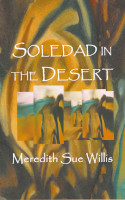

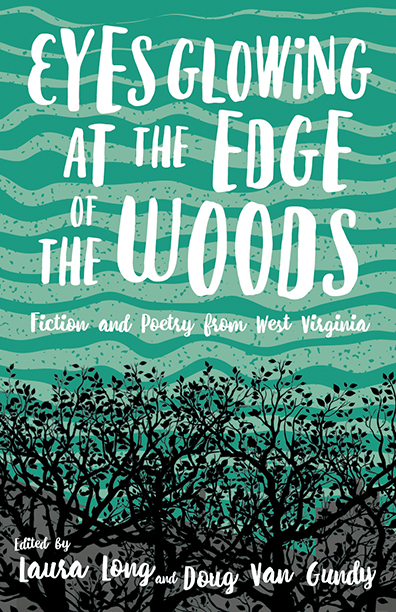




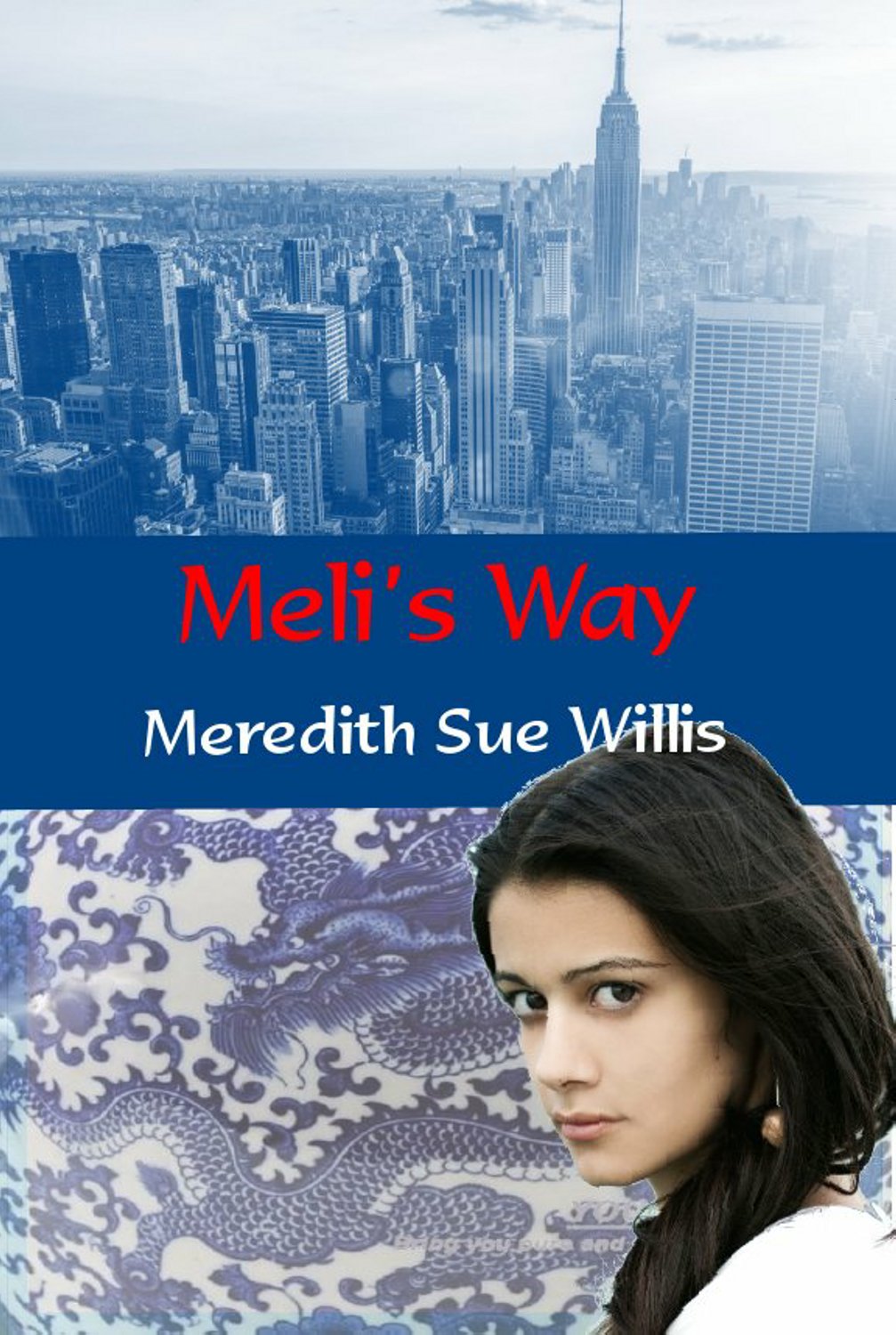
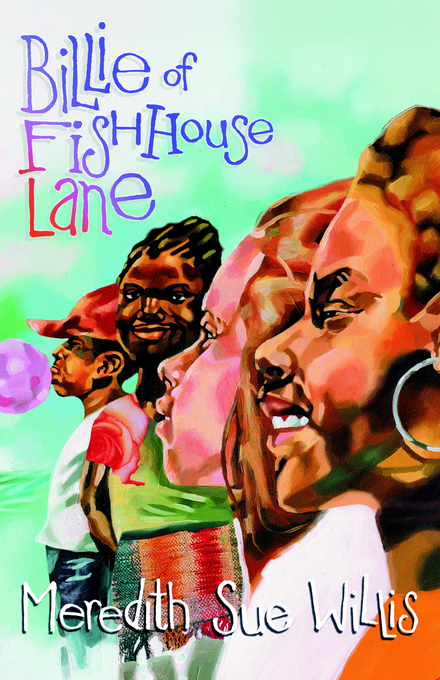


Irene Weinberger Books.... an imprint of
Hamilton Stone Editions
Check us out!
E-mail List and Free subscription to Books for Readers and Writers
Images and photos found on the various pages of this web site may be used by anyone, but please attribute the source when it is specified.
Meredith Sue Willis Author and Teacher is licensed under aCreative Commons Attribution 4.0 International License.