



Resources for Writers
For an excellent outline on the basics
of getting published, look at Jane
Friedman's page.
To find what is listed here, look at alphabetical list in the left hand column
or at this partial Table of Contents:
 A couple of good
review sites:
A couple of good
review sites:
Are you looking for an agent? Try QueryTracker.net!
Partial Table of Contents
Agents
Bibliography of Books About Writing
Book doctors, writing consultants, editors, etc.
Classes and other ways to study Writing
Further Resources
Recently Added Information
Self-Publishing
Using Names of Copyright Protected Products
What's New on this Site
Jane Friedman's "Hot Sheet" of new agents
& presses from 2023Chat GPT and writers: research by George Lies:
Wired article on using Chat GPT to improve your writing
Training Chat GPT to imitate your voice/style: from Forte labs
A Youtube on training Chat GPT
Poets & Writers Magazine has suggestions for places to study writing as alternatives to MFA programs.
Check out Odyssey Writing Workshops. They are an in- person and online writing school aimed at science fiction and fantasy writers: not cheap, but extensive in their offerings, which range include marketing webinars and beginner level classes on character, dialogue, scene, etc. The prices range from under a hundred dollars (for a two hour webinar licenced for 60 days) to multi-class $2500 packages. A typical single class is around $250 for four sessions.
Let me know if you have any knowledge of this company, please.
Reedsy on lengths of novels and novellas and all genres
Check out a page on publishing with University Presses.
Recommended editor: Danny Williams has been editing fiction, nonfiction, and poetry for more than 40 years, both freelance and employed by publishers. He offers two hours of initial work for free, with no obligation, and gives the writer some overall impressions, some ideas for where the project might go, and a sample of the manuscript, marked with some of the editing he might provide. Inquire at editorwv@hotmail.com.
Discussion of what makes a press NOT a vanity press.
What does "indie" mean? Richard Babyak says on an Authors Guild Discussion Board: ... the word "indie," for independent, has different meanings for different contexts.
-
An indie bookstore is a store that is not part of a large chain.
-
An indie press is a smaller publisher not part of the big five.
-
An indie author is a self-published author.
How to Do Online Book Events Successfully (from Jane Friedman)
Some publishers open for submissions; a free newsletter for authors and more (1-4-22)
Shambhala Publications: Open for book submissions
Authorpods.com -- a site for getting authors for your books club and much more.
What does "indie" mean? Richard Babyak says on an Authors Guild Discussion Board:
... the word "indie," for independent, has different meanings for different contexts.
• An indie bookstore is a store that is not part of a large chain.
• An indie press is a smaller publisher not part of the big five.
• An indie author is a self-published author.
• So in your case, the word indie applies to your publisher, but not to you or your books.
Ideas for Publicizing your book:
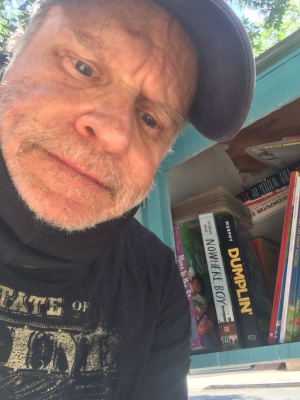
Irene Weinberger Books author Mitch Levenberg
Stocking his local Tiny Library in Brooklyn, New York!
DIY/MFA?? Check it out!
Poets & Writers Magazine has suggestions for places to study writing as alternatives to MFA programs.
A free list of publishers who don't require agents: Publishers who don't require an agent.
A recommendation for the Michigan Writing Workshop (online in 2021) with opportunities to pitch and meet agents. One participant says, "If you're new to writing/pitching/looking for an agent, I highly recommend it. And of course, if there is an agent you're interested in who is offering feedback or a pitch session, definitely go for it. Even if they don't request your material, the feedback is invaluable, and you can pitch them in the future and say 'we met at...'"
The New York Pitch conference: Highly recommended by my students and friends.
Advice from a copyright lawyer on using corporate and trademark names in fiction
The Hemingway App! Just for fun, how much can you strip down your prose into Hemingway-esque declarative sentences with no decorations?
Indie publishing, digital publishing, and POD resources
Article on Types of Publishing: September 2023 article by Emily Harstone that distinguishes three forms of publishing: tradtional, self, and vanity. It also has some good links.
•Printing is not publishing. Publishers don't own printing presses. Self-Publishing 101: Basics of self-publishing
• Pros and cons of self-publishing (Self-publishing vs. traditional publishing)
• Self-publishing children's books
• Hybrid publishing
• Hybrid authors
• Publishing scams, bad deals, vanity/subsidy publishing and presses, and author mills
Pros and Cons of Self-Publishing (Self-Publishing vs. Traditional Publishing)
www.writersandeditors.com/...#bookmark7a
To find what is listed here, look at alphabetical list on the left or on this Table of Contents:
Partial Table of Contents
Agents
Bibliography of Books About Writing
Book doctors, writing consultants, editors, etc.
Classes and other ways to study Writing
Contests
Further Resources
Recently Added Information
Self-Publishing
Using Names of Copyright Protected Products
What's New on this Site
NOTE: Mention on this page does NOT constitute a recommendation from Meredith Sue Willis. These are things that looked interesting to me, or that people have recommended to me. Whenever possible, I include what the recommender said. Please check for yourself, and let me know of any broken links or information that needs to be updated.
-- MSWA note to Writers:
This page has information and links that I hope will be helpful to you. If you come to this as a complete amateur--and keep in mind that amateur means you do something for the love of it--you will find some basic ideas about getting published and the book business. For others, there are lots of odds and ends that you can find by scanning the topics in the column at the left or the Table of Contents above.
The ideal publishing situation, which has become increasingly hard to achieve, is to get a literary agent to represent your work. The agent sells the finished book manuscript to a commercial publisher, and the editor at the publishing house works with you to perfect the book. You get paid. Usually, you get 10-15% of the cover price of each book that sells, and your agent gets 10% of everything you make on the book.
This scenario has become more and more difficult to realize. Even a previously published writer often discovers that if the first book doesn't become a best seller, then the publisher may turn down the second book.
More and more people have begun to pay for their own editing and even publishing their own work--unfortunately, often before it's fully ready. Before going to a book doctor or private editor, and certainly before self-publishing, I'd strongly suggesting taking a class or joining a writing group for mutual critique, or just getting friends to read your manuscript for reactions and suggestions. I've belonged to a group of writers for more than 30 years who get together every two weeks to critique one another's work. But non-writers can give excellent suggestions, especially about what seems to be missing or if there are things that don't make sense.
There is a lot of good material on the web and also lots of good books about writing. Explore, have fun, and good luck--
-- MSW
Excellent Further Resources:
Hot Sheet -- a couple of free issues, then if you want to subscribe, you can.
Chat GPT and writers: research by George Lies:
Wired article on using Chat GPT to improve your writing
Training Chat GPT to imitate your voice/style: from Forte labs
Digitalize Your Books and Old Floppy Disks
A good company I've used for turning my hard copy books that were written on typewriters (yes, yes, I know...) into .pdf or .doc files, is Golden Images, LLC.
Or, if you need aged floppies converted to usable files, try https://retrofloppy.com/. They charge $12--$20 a disk (unless it's some really bizarre format).
A free publication from an online magazine called AuthorsPublish.
AuthorsPublish.com (Here's a review of authors publish.)
Here's their free list of publishers who don't require agents: Publishers who don't require an agent.
The Hemingway App! Just for fun, how much can you strip down your prose into Hemingway-esque declarative sentences with no decorations?
Check out an article on choosing titles for books from TheSelfPublisher.com blog.
A piece on good authors' websites--this one you are reading is too wordy ever to make the grade!
Check out Reedsy.com for free lessons and information
and to hire publishing specialists (and more). Some examples:
• What to look for when you're looking for an editor.
• What can authors expect from their fiction editor?
• What to expect from your book cover designer,
• How to work with a typesetter or layout designer?
TheSpunYarn.com gives responses to in-process manuscripts. One enthusiastic customer said, "I want to thank all of you who suggested I try TheSpunYarn.com for beta readers for my first novel. Their notes were so helpful and the price ($300) was amazing for three different readers. The novel is sitting with an agent right now. Fingers crossed!"
Carol Gaskin's Editorial Alchemy continues to be highly recommended by my students and colleaguesfor full service editing.
Ivy from the Junior Writing Workshop recommends this website for writing ideas as well as editing tools.
Are you short of plots? Looking for a good laugh? Take a look at Reedsy's new plot generator.
A student found this good resource for grammar tips. Take a look!
Jane Friedman on Fair Use and other copyright issues. Excellent summary. 7-16-19
Jane Friedman's Electric Speed is a wonderful web site and blog source of information and ideas for writers and readers. 1-26-19
Resources for potential freelancers (recommended by a reader)
Manuscript Wish List: A website to search for agents (and more)! (3-28-19)
Susan Lindsey's website Savvy Communications has lots of interesting information and a free newsleetter as well as offering her services. To help self-editors, check out her list of things an editor looks for in a book.
A blog entry about writing and finally self-publishing a memoir by musician Birgit Matzareth.
Review of Scrivener, the writing program for writers, by Suzanne Martinez.
Submit: Online Journal that publishes only the openings of novels: Embark.
A good article with detailed instructions for creating your own website. The author Robert Mening has you start by signing up with a web host, then creating your site with WordPress. Mening insists you can have a beautiful website up and running in an hour, which I suspect is optimistic, but he has good clear instructions: Websitesetup.
My only caveat is the he emphasizes his own web host, Bluehost.com, but many hosts can do exactly the same things, including the one I use, Fatcow.com.
A piece on best POD companies for self-publishers
A site for finding editors and proof readersTheir home page is at Servicescape.com.
A site to look at for forming writers' groups. (Thanks to Suzanne Martinez)
John Attanas's notes on Writing Conferences he has attended:
1- Vermont College of Fine Arts Conference-very good teacher/student ratio. Good teachers who read from their own work each night. Good opportunity for schmoozing. Downsides-awful accommodations, greasy food, located in Montpelier, Vermont, one of the oddest and smallest of state capitals.
2- Sarah Lawrence College Festival-Great location. NY'ers do not need to live there during the conference. Good teacher/student ratio. Some schmoozing. Downsides-expensive food, much "selling" of their MFA program.
3- Stonybrook/Southampton Conference-I received a scholarship (which means you can too)! Near the water (although not right next to it). Good public readings by teachers. Downsides-lousy teacher/student ratio, acceptable living conditions, known for being cheap on food (although not when I was there).
FOR MIDDLE-GRADE/YA WRITERS:
1- NJSCBWI conference-excellent two day conference. Lots of good lectures. Good food. Driveable from NYC. Downsides-expensive, must pay for facetime, many snotty "professionals" who treat you badly (and some who treat you nicely).
2- New York SCBWI conference- A Zoo. Best thing-in midtown Manhattan
3- Los Angeles SCBWI conference- A bigger zoo. Well located in one hotel, but you need a car to tour LA. I combined it with a trip to see friends.
Suzanne Martinez on Summer Writing Programs:
IOWA SUMMER WRITERS FESTIVAL: More than 30 years old, ISWF offers a broad array of workshops in a dozen genres: fiction (short story, novel), non-fiction (essay, memoir), poetry, YA, playwriting, etc. in week-long or weekend sessions between June 16th and July 27th. More than a hundred different workshops are offered. I met a woman there who has written a number of historical novels and had attended ISWF every year it has been held. In my experience the instruction varied. Over two summers, I had two cellent instructors and two mediocre ones. Most instructors have a connection with the Iowa Writer’s Program. The level of work among the students was high. I found the experience well worth it. The accommodations at the student union are plain vanilla, but clean and convenient. Iowa City has many interesting restaurants and shops. $360.00 for weekend workshops, $685.00 for week long workshops, plus room, board and travel: https://iowasummerwritingfestival.org.
KENYON REVIEW WRITERS WORKSHOP When: 6/16-23/18 (8 days) Where: Kenyon College, Gambier, Ohio (fly to Columbus, shuttle 1 hour drive) Cost: $2,295.00 (includes single room in dorm, shared bath and dining hall access for all meals) plus airfare and shuttle Comments: Kenyon is a generative workshop where students do new writing everyday from prompts or discussions in class. The classes are small, maximum 10. There is in-class writing, as well as, homework which is reviewed daily, as well as, class discussion. Classes available: Fiction, Non-Fiction, Poetry, Nature Writing. Classes meet everyday from 8:30-12:00. Lectures or events of interest are offered some afternoons. Each student receives a private half hour with the instructor to discuss their work. There are readings every evening and all instructors and students must participate. Town access is available via shuttle bus. Beautiful campus. You work very hard, but you learn a great deal. It was worth it.
NYS WRITERS INSTITUTE When: 7/1-13/18 or 7/15-27/18 (13 days) Where: Skidmore College, Saratoga Springs, NY Cost: $2,180.00 (includes single room in dorm, shared bath and dining hall access for all meals) plus train or airfare and shuttle Comments: NYS Writers Institute is a workshop format. All students forward up to a 30 page manuscript (short stories or chapters from a novel) a month before the session for distribution to the instructors. Students are in a class of 16-18 that has a different instructor each of the two weeks. Students pick up hard copies of the next class's manuscripts a day or two before class. Classes are held on Monday, Wednesday and Friday afternoons between 1:00-4:00pm. In each class session, two or three manuscripts are reviewed and comments are given by the class and the instructor. Each instructor reviews the work of half the class only. Each student receives a private half hour with the instructor to discuss their work. On Tuesdays and Wednesdays author's do craft sessions and two authors read every night with a reception following. They draw some big name authors every session. Optional for $500. additional a students can submit a 250 page manuscript for faculty review. The pace is slow with lots of time to read the manuscripts and do comments. Classes are offered at three levels in Poetry, Fiction and Non-fiction. Beautiful campus, walkable to town.
Periodicals for submitting short work for children:
Bumples: http://www.bumples.com/
Cricket: http://cricketmedia.com/Cricket-literary-magazine
Ember: http://emberjournal.org/
Wee Tales: http://www.goldenfleecepress.com/wee-tales.html
Will Allison on Beginnings of Stories
Will Allison, in a pitch for an online class called "Write a Great Beginning," says, "In my twenty-two years as an editor, the question I've been asked most often is, 'What do you look for in a short story?' That's easy. What I look for—the very first thing—is a beginning that makes me want to keep reading. But writing a great beginning isn't easy. In fact, over the course of my career, the most-common story problems I've encountered involve beginnings: Stories that start too soon. Stories that start too late. Beginnings that try too hard to 'hook' readers. Beginnings that lack signposts. Beginnings that shut readers out of a story instead of inviting them in. And so on."
https://www.one-story.com/index.php?page=online_class
Having computer woes? Try a free newsletter, Ask Leo, that can be really useful. Leo says, "Computers are difficult and confusing beasts at times....I try make them less 'beastly.' [If you or someone you know] could use a little help... Just point them at: https://newsletter.askleo.com and invite them to come along for our ride. As you know, it's completely free."
A few tips and resources:
Resources for potential freelancers (recommended by a reader)
Scribendi's glossary of Fiction Writing Terms
The Editor's Blog on Point-of-View and Time in Fiction
Plagiarism--Unrecognized consequences of plagiarism in Academia.
How much should you pay (or charge?) for various types of editing services? Here's a list of typical ranges.
Cheat sheet for people who use html (and this is Html 5)
Tips on taxes for indie writers, from the Turbotax people.
A frequently updated list of articles for writers on the web.
A Journal of Practical Writing
One writer's experience with She Writes Press
Publishing opportunity: The beautiful online Trainless Magazine is now accepting unsolicited fiction and nonfiction.
Featured Editors
Featured Place to Study Writing
Basic sources for submitting literary prose and poetry
A publicity toolkit for writers
A Short TED talk on world building in fantasy and science fiction.
Pet Peeves of Literary Agents.
One writer's story of his MFA program experience (on Laura Treacy Bennett's blog)
Website for proofediting.
More resources
A free publication from an online magazine called AuthorsPublish.
AuthorsPublish.com (Here's a review of authors publish.
Here's their free list of publishers who don't require agents: Publishers who don't require an agent.
Ivy from the Junior Writing Workshop recommends this website for writing ideas as well as editing tools.
The back pages of the following two publications have information about contests, literary magazines, and many other matters of interest to writers:
Poets & Writers Magazine
Poets & Writers
72 Spring Street
New York, NY 10012
Writers Chronicle
Associated Writing Programs
Tallwood House Mail Stop IE3
George Mason University
Fairfax, VA 22030
For more commercially oriented information, try these longstanding publications:
The Writer Magazine
Writers Digest
1507 Dana Avenue
Cincinnati, OH 45207
A newer place for this sort of information is Reedsy.com.
Basic Sources for submitting literary poetry and prose
1. New Pages: Best source of everything at this time.
2. Poets & Writers
3. Poets Market (a book that you have to buy, but worth the investment for new writers:
4. Duotrope(has a fee)
5. CLMP's Member Directory:
6. Calls for Submissions on Facebook, (Poetry, Fiction, Art)
7. Don't forget to email CRWROPPS-B@yahoogroups.com and get on their list. They send out almost daily lists of places to submit poetry and prose. To add yourself to the list, send a blank email. You will receive a return message with further sign-up instructions.
Are You Looking for Places That Publish Novellas?
Try these lists and links:
https://thejohnfox.com/journals-accepting-novellas/
http://www.thereviewreview.net/publishing-tips/awkward-length-20-markets-novellas-and-novel
https://writingtipsoasis.com/publishers-seeking-novellas/
Will Allison on Beginnings of Stories
Will Allison, in a pitch for an online class called "Write a Great Beginning," says, "In my twenty-two years as an editor, the question I've been asked most often is, 'What do you look for in a short story?' That's easy. What I look for—the very first thing—is a beginning that makes me want to keep reading. But writing a great beginning isn't easy. In fact, over the course of my career, the most-common story problems I've encountered involve beginnings: Stories that start too soon. Stories that start too late. Beginnings that try too hard to 'hook' readers. Beginnings that lack signposts. Beginnings that shut readers out of a story instead of inviting them in. And so on."
Copyright information:
Quick Q's and A's on Copyright from Writers Digest.
Here is the government's information: Copyright
Using corporate names, Products, etc. in Fiction: Advice from a Copyright/Intellectual Property Lawyer
Generally using the name of a corporation, the name of product, or a trademark in a fictional work will not be problematic. So if the protagonist likes Toffee-ettes from See's Candies, you can say "Toffee-ettes from See's Candies." But please, please, don't write it as "Toffee-ettes® form See's Candies®." There is no obligation to use the ® symbol if you are not the trademark owner. Even worse, it's distracting and makes you look either pretentious or naive.
At the extremes, it might be possible to violate a right of the corporation or trademark owner, but as stated above, this would be very rare. For example, you could run into problems claiming that a corporation has endorsed the book when it has not. It would be difficult to defame a corporate entity by mentioning it in a fictional work. Stating that a 10 year-old looks like Mary See is not even close to being a concern. Of course, if the great aunt is a real person who resents that someone thinks that she looks like Mary See, you might have a problem-but it won't be a legal one or from See's Candies.
Mr.Krages advises writers, photographers and others on their rights. One bit of free advice from his website: "Never sign the version [of a contract] the publisher gives you."
A few Best Selling books (fiction and nonfiction) that were rejected again and again:
Joyce's Dubliners
Richard Hooker's Mash
Thor Heyerdahl's Kon-Tiki
James M. Cain's The Postman Always Rings Twice
Patrick Dennis's Auntie Mame
Frank Herbert's Dune
Laurence Peter's The Peter Principle
and oh yes...
J.K. Rowling's Harry Potter
Resources on Plagiarism
Plagiarism--Unrecognized consequences of plagiarism in Academia.
An article online called "Understanding and Preventing Plagiarism"
Grammar Questions & Resources
-
For questions about grammar, try:
-
And also look at:
The Grammarist
Grammar Girl
Grammarcheck.net
The Center for Writing Studies
-
The Hemingway App! Just for fun, how much can you strip down your prose into Hemingway-esque declarative sentences with no decorations?
Advice from Experts:
(By the way, I don't necessarily agree with all this advice, but it's fun to read!)
A former student of mine had a conversation with an ex-editor at a major New York publisher. "He started by reminding me," says the student, "that publishing a hard cover is very expensive. The publishers make money from selling hardcovers. There is a large profit margin there. But now the sales of hardcovers are decreasing while Ebooks are coming on stronger each year. The publishers haven't figured out, he said, how to make money from Ebooks yet. The profit margin is ridiculously small. And because they don't make money from this source, they don't market the books.
"Therefore, it seems, according to him, that they are staying with authors who have big reputations and can be relied upon to sell. The number of new authors they take on is minimal. I asked him if that meant I was engaged in an exercise of futility, and he said probably 'yes.'
"He also pointed out...that self-publishing on the net requires an enormous amount of personal marketing, and most Ebooks don't do well."
Elmore Leonard's Ten Rules of Writing
Here's a free article from Book Doctor Carol Gaskin called "The Top Five Errors of New Writers." Click here for article.
Improving your style
The Princeton Writing Center Resources
The Fog Index-- check how clear your writing is!
Susan Lindsey's website Savvy Communications has lots of interesting information and a free newsleetter as well as offering her services. To help self-editors, check out her list of things an editor looks for in a book.
Time in Fiction
The Editor's Blog on Point-of-View and Time in Fiction
Programs and Apps
Scrivener is a an application geared to writers. It's available for MAC or PC and is very helpful for long projects like novels, screen plays and research papers. It allows you to keep track of what you've written and what you need to write in various modes like index cards, research information, character and location profiles, outliner, and cork boards.
It's pretty intuitive, but comes with a tutorial to help you get started. Moving scenes or chapters around is 'drag and drop.' There are font choices like in Word, but you don't have to scroll through your entire document to find things. It also has a number of options for you to compile your project to print it out, import and export files. It doesn't have page numbers which I miss. The word count is available for each scene or chapter though.
It costs $45.00, but has a free trial for 30 days. I've seen coupons for discounts on lots of sites. Here's their site: https://www.literatureandlatte.com/scrivener/overview
--- Suzanne Martinez
Terms
Scribendi's glossary of Fiction Writing Terms
Conferences, Places to Study Writing, Writers' Groups, and More
Writing Conferences
John Attanas's notes on Writing Conferences he has attended:
1- Vermont College of Fine Arts Conference-very good teacher/student ratio. Good teachers who read from their own work each night. Good opportunity for schmoozing. Downsides-awful accommodations, greasy food, located in Montpelier, Vermont, one of the oddest and smallest of state capitals.
2- Sarah Lawrence College Festival-Great location. NY'ers do not need to live there during the conference. Good teacher/student ratio. Some schmoozing. Downsides-expensive food, much "selling" of their MFA program.
3- Stonybrook/Southampton Conference-I received a scholarship (which means you can too)! Near the water (although not right next to it). Good public readings by teachers. Downsides-lousy teacher/student ratio, acceptable living conditions, known for being cheap on food (although not when I was there).
FOR MIDDLE-GRADE/YA WRITERS:
1- NJSCBWI conference-excellent two day conference. Lots of good lectures. Good food. Driveable from NYC. Downsides-expensive, must pay for facetime, many snotty "professionals" who treat you badly (and some who treat you nicely).
2- New York SCBWI conference- A Zoo. Best thing-in midtown Manhattan
3- Los Angeles SCBWI conference- A bigger zoo. Well located in one hotel, but you need a car to tour LA. I combined it with a trip to see friends.
Suzanne Martinez on Iowa Writers Festival:
In its 32nd year, ISWF offers a broad array of workshops in a dozen genres: fiction (short story, novel), non-fiction (essay, memoir), poetry, YA, playwriting, etc. in week-long or weekend sessions between June 16th and July 27th. More than a hundred different workshops are offered. I met a woman there who has written a number of historical novels and had attended ISWF every year it has been held. In my experience the instruction varied. Over two summers, I had two excellent instructors and two mediocre ones. Most instructors have a connection with the Iowa Writer’s Program. The level of work among the students was high. I found the experience well worth it. The accommodations at the student union are plain vanilla, but clean and convenient. Iowa City has many interesting restaurants and shops. $360.00 for weekend workshops, $685.00 for week long workshops, plus room, board and travel: https://iowasummerwritingfestival.org
More on Writers' Conferences
Start with the listings at NewPages or the Associated Writing Programs list.
Here's information on one specific conference about Pitching your book. It's the New York Writers Workshop "Perfect Pitch" workshop.
Suzanne Rahn recommends the Algonkian conference in San Francisco. She says, "I enjoyed this conference very much. I stayed at the Fort Mason Hostel which was a 5 minute walk to the conference and 20 min walk to Fisherman's Wharf. I would recommend the hostel as an extremely affordable place to stay. There is even a small cafe in the building where you can overlook Alcatraz Island sipping a cup of chai tea. Very nice area.
"[Workshop leader] Michael Neff's credentials are listed on the website and his style is that of a literary 'Simon Cowell' but not so heartless. His workshop is designed to help a writer improve but he also won't sugar coat his opinion. His goal is to further a good story or help rescue a terrible story. I met several agents and publishers during the week and established a cordial friendship with Michael and the owners of the Larsen/Paloma agency.
"I would highly recommend this conference to any writer who wants to take a serious step towards firming up and pitching his or her novel."
Places to Study Writing & Marketing
Check out Odyssey Writing Workshops. They are an in- person and online writing school aimed at science fiction and fantasy writers: not cheap, but extensive in their offerings, which range include marketing webinars and beginner level classes on character, dialogue, scene, etc. The prices range from under a hundred dollars (for a two hour webinar licenced for 60 days) to multi-class $2500 packages. A typical single class is around $250 for four sessions.
Let me know if you have any knowledge of this company, please.
A recommendation for the Michigan Writing Workshop (online in 2021) with opportunities to pitch and meet agents. One participant says, "If you're new to writing/pitching/looking for an agent, I highly recommend it. And of course, if there is an agent you're interested in who is offering feedback or a pitch session, definitely go for it. Even if they don't request your material, the feedback is invaluable, and you can pitch them in the future and say 'we met at...'"
Students and friends highly recommend the 4 times a year New York Pitch Conference.
Strictly online, is the Short & Helpful series of online seminars with feedback from the teachers.
Here's a web site that offers links to reputedly free Online Classes in All Subjects! That means everything from Writing to Math and anthropology. Take a look.
There are many, many places to study writing both in person and online. Check your local area for adult school classes.
The places I know best are in the New York-New Jersey area, but there are also a lot of possibilities online, including my occasional online classes. I will only list places here that I know at least a little about, or have heard something about from people I know. Mention here, however, does not constitute a recommendation by MSW. If you have a specific recommendation, please send it to me at meredithsuewillis@gmail.com for inclusion here.
The New York Writers Workshop is popular, and has classes in New York, New Jersey, the JCC in Manhattan, the New York Public Library, Online, and at other venues in New York City, nationwide, and abroad. They say: "New York Writers Workshop serves a thriving community of aspiring writers. We offer a variety of classes, workshops, conferences, mentoring and other resources for the beginning or established writer, in the areas of fiction, non-fiction, journalism, poetry, memoir, speech writing, screenwriting and playwriting...In addition to our regular curriculum, some of our other offerings include free presentations and workshops through The New York Public Library, the Andrew Glover Foundation, retirement homes and community centers....New York Writers Resources is a non-profit organization founded by a group of professional writers...dedicated to helping others achieve their literary goals."
An excellent serious place for workshops is the Sackett Street Writers' Workshop in Brooklyn and other locations around New York City. The instructors mostly have MFAs. Their website says that Sackett Street is "a salon-like workshop with small classes, an intimate environment, dedicated instructors and motivated students. Today, over 2000 writers have studied with us. Many have gone on to top MFA programs, and more and more are being published by both big houses and independent presses."
The Writers Studio has been around for twenty years and has in-person classes in New York and San Francisco plus online classes. Some people swear by it, but others say that the exercises, which are good, take all your writing time. Certainly worth looking into.
I teach at NYU's School of Professional Studies Center for Writing and Speech and it has a full range of courses that range from basic creative writing to advanced poetry, nonfiction and fiction. Very complete and solid. The New School (also in New York City) offers a similar panoply of classes, as do other universities and colleges.
Gotham Writers' Workshop offers both online writing classes and in person classes. They run a tremendous number of sections, and, like the Writers Studio, some people swear by them and others find the classes unmemorable. This probably has to do with which teacher you get. They have several levels for most classes and pretty strict rules about how their classes are run, including what they call "The Booth," which is a technique that requires the writer to listen and not defend his or her writing. Many teachers do the same thing informally in their classes, calling it listening to what people have to say.
Also consider Mediabistro, which has a full and interesting list.
My online courses are usually short, and I run them irregularly-- often in the summer or in January.
New, and strictly online, is the Short & Helpful series of online seminars with feedback from the teachers.
Tips on taxes for indie writers, from the Turbotax people.
A Note on MFA Programs
DIY/MFA??
Check it out!
Check out the Poets & Writers Guide to MFA Programs for basic information.
I don't list MFA programs here in general (although I might someday), but I have a few informal notes from participants. Denton Loving, for example, says, "I'm in the MFA program at Bennington College, and I love it. It's not easy, but it's a wonderful program, and I feel like I've learned so much in my first year. Jill McCorkle was my teacher for the past term, and I'll be working with Lynn Sharon Schwartz this coming term. The teachers really all are of the highest quality, and there's a great deal of emphasis on the importance of the writing. Obviously. But Bennington also stresses the importance of reading. Their motto is 'Read 100 books and Write 1.' And I really have read 50 books in the past twelve months. I'd be glad to tell you anything more that you want to know if you have other questions. But in general, I highly recommend the program."
Barbara Rosenblatt says of her MFA program at Goucher in Creative Nonfiction, "one of the best investments of time and money I ever made. It helped me to find my authority as a writer and led to my teaching memoir writing classes, which I love. However, I have to admit that I actually had more personal work published before the degree than after, but that is more due to my lack of focus in that arena....I would also be happy to speak with any student considering Goucher's low-residency MFA in Creative Nonfiction Writing." Write her at broseleaf@gmail.com.
I also received a strong recommendation from Lita Kurth, a recent MFA graduate, who wrote: "For people who want to get really serious about writing, I'd like to suggest my alma mater, The Rainier Writers Workshop, a low-residency MFA program in Washington State that makes its on-site sessions convenient for students (You go there 10-11 days per year as opposed to many which require you to travel twice a year), has a wonderful esprit de corps, is willing to be flexible in a crisis, and offers superb teachers (of course, not everybody loves everybody). They send free shuttles to the airport to pick you up, and they provide quite a few meals and a spartan but lovable dorm room, so you don't waste time making arrangements instead of reading and writing. Though the cost is similar to many other programs on the surface, these savings really add up.
"RWW is for people who want to study fiction, creative nonfiction, and poetry or some combination (no screenwriting or plays). The student body also has an impressive age range (which I felt kept the neurosis level lower).
"Anyway, I just received my MFA there and have extremely warm and grateful feelings towards the people and program, so thought I'd let others know."
Finally, here is a good summary of one writer's experience with a part-time MFA program that might be a good fit for some people.
Forming Your Own Writers' Peer Group
Notes on Forming a Writers' Group
A site to look at for forming writers' groups.
Looking for Free Peer Critiquing?
HarperCollins supports a site that is a community of writers who upload work for others to critique. Things that get a a lot of attention from other users is sent to the "Editor's Desk".
Sources of Literature Online
I have short stories, samples, and links to longer pieces online here. There are several sites that specialize in classics, generally out of copyright. Shop around, as some are more readable than others. Here are two:
Read Print New and very readable, a couple of Google ads at the top of the page.
Bartleby One of the first of these online libraries
Articles and web sites for writers (a new page)
Need names?
20,000 names
Random name generator :
Digitalize Your Books and Old Floppy Disks
A good company I've used for turning my hard copy books that were written on typewriters (yes, yes, I know...) into .pdf or .doc files, is Golden Images, LLC.
Or, if you need aged floppies converted to usable files, try https://retrofloppy.com/. They charge $12--$20 a disk (unless it's some really bizarre format).
Proofreader's marks
Espectially for Women
The International Women's Writing Guild
Feminist Literary Journals
(Thanks to Suzanne McConnell)
Calyx Box B Corvallis, OR 97339 Reads from Oct. 1 to Dec. 15
Mary Sue Koeppel, Editor Kalliope 3939 Roosevelt Blvd. Jacksonville, Fl. 32205
Caroline Zuschek, Fiction Editor (07) So To Speak SUB 1 Rm 254A George Mason University 4400 University Dr. MSN 2C5 Fairfax, VA 22030 13th Moon
These are Old: Check before using
IRIS: A Journal about Women Fiction Editor Box 323 HSC University of Virginia Charlottesville, VA 22908
The Editors Earth's Daughters P.O. Box 41 Buffalo, NY 14215
Room of One's Own (Canada's oldest fem. mag)
Writing Summary and Synopsis
Here are a couple of Youtubes that tell you all you need to know:
Daniel José Older
Jenna Moreci
Places to submit work for Children:
Bumples: http://www.bumples.com/
Cricket: http://cricketmedia.com/Cricket-literary-magazine
Ember: http://emberjournal.org/
Wee Tales: http://www.goldenfleecepress.com/wee-tales.html
Some Print outlets for longer fiction (updated 2-18-19)
Story
Colorado Quarterly
Front Desk
Fiction
Fish
Some Small Presses:
Black Heron www.blackheron.mav.net. You have to query and send 35 to 40 pages by mail. They are distributed by Ingram and etc.
Bright Hill Press http://www.brighthillpress.org/
Carolina Wren Press Poetry, but a possibility for novels.
Chronicle Books http://www.chroniclebooks.com/site/catalog/
Coffee House Press http://www.coffeehousepress.org/ Reading period in the fall of 2019.
Four Walls Eight Windows
Ghost Road Press http://www.ghostroadpress.com Turns into Austin Macauley Publlishers Welcome manuscripts Take 3 weeks to consider Info on what to send them
Grey Wolf http://www.graywolfpress.org/
Iris Books
Leapfrog http://www.leapfrogpress.com/
Marsh Hawk Press is committed especially to publishing poetry that has an affinity to the visual arts. The artistic advisory board includes Toi Derricotte, Marilyn Hacker, Allan Kornblum, Alicia Ostriker, David Shapiro, ohn Yau, and Anne Waldman.
Midlist Press
MotesBooks
Nightboat at http://www.nightboat.org
Press 53 : Small literary press, some emphasis on North Carolina and Appalachian writers, but much broader. Reprinting novels by John Ehle; upcoming includes Valerie Nieman.
Red Hen http://www.redhen.org/
Sarabande http://www.sarabandebooks.org/
Toby Press http://www.tobypress.com/
Publishers Specializing in Nonfiction and Self-Help
Morgan James Publishing is a new model publisher that works cooperatively with authors of nonfiction and self-help only. So don't take them your literary work, but do check them out if you have a high concept idea for a book on how to do something.
Literary Agents and others (including some agent blogs)
- Try Querytracker.net as a way of researching agents (and keeping track of your queries to agents!)
-
Some basic information about agents can be found on the Poets & Writers website at literary agents. A big commercial publication about literary agents is Writers Guide to Book Editors, Publishers, and Literary Agents by Jeff Herman. Prima Publishing P.O. Box 1260BK Rocklin, CA 95677 (916) 632-4400.
-
A new-to-me site that lists agents (and more) Manuscript Wish List (3-28-19)
-
Pet Peeves of Literary Agents.
-
Poets & Writers Guide to Literary Agents
-
Poets & Writers Guide to the Book Deal
-
Guide to Literary Agents blog.
-
Conference about pitching to agents: Agent Pitch Workshop
-
queryshark.blogspot.com/ is an agent who skewers query letters. Worth browsing.
-
Also, these days, every editor, agent, publicist, schmuck in the publishing industry has a blog, either on Blogspot or Wordpress. They usually have a blog roll and when you have down time you can follow links from one blog to another. Samples:Samples: Nancy Coffey literary.com ; jet reid literary.blogspot.com ; bookends;badpitch.blogspot.com (No specific knowledge of these agents-- More below).
-
When you query an agent: Each agent and editor has very detailed rules for how you may submit. In general seems the days of sending a query by snail mail are over. The want email but no attachments because they're afraid of viruses. Typically the query text is at the top of the email with the sample manuscript text pasted below your signature block.
-
Literary Agents of North America is the most comprehensive alphabetical listing of over 800 U.S. and Canadian literary agencies. It can be found in most libraries, or from: Author Aid/ Research Associates International 340 E. 52nd Street New York, NY 10022
-
Here's a site with agents listed:agent list. (This group was formed in 1991 through the merger of the Society of Authors' Representatives, founded in 1928, and the Independent Literary Agents Association, founded in 1977.
-
To get up-to-date free information about which agents are selling what, go to Publishers Lunch Free newsletter on publishing deals.
-
Science Fiction Writers of America's website has lots of good information, including a list of "Writer Beware" agencies whose sins range from being fronts for vanity presses to charging for editorial work and never sending out your work.
-
"Pub Rants" (http://pubrants.blogspot.com/) Nathan Bransford
-
(http://blog.nathanbransford.com/) Janet Reid
-
(http://jetreidliterary.blogspot.com/) Jessica Faust
-
(http://bookendslitagency.blogspot.com/)
-
http://confessionsofawanderingheart.blogspot.com
-
http://nancycoffeyliterary.com badpitch.blogspot.com Chuck Sambuchino's Guide to Literary Agents blog.
Media Development International ...
....is a new writers management and services company, with a production arm. MDI is headquartered in New York City but with associates in Europe and India. Approach them with material that might be developed for film, and especially with pitches for your project in a few paragraphs-- not full manuscripts or film scripts. Check out their website for more details and contact information.
More Resources. Most have links to other resources as well:
Susan Lindsey's website Savvy Communications has lots of interesting information and a free newsleetter as well as offering her services. To help self-editors, check out her list of things an editor looks for in a book.
Jane Friedman's Electric Speed is a wonderful web site and blog source of information and ideas for writers and readers. 1-26-19
A piece on best POD companies for self-publishers
A blog entry about writing and finally self-publishing a memoir by musician Birgit Matzareth.
Check out www.figment.com -- a new writing site for posting your writing, getting feedback, getting writing prompts, getting writing exercises, and much more.
An article at Publishing Basics about what subsidy and vanity publishers are selling-- and keeping for themselves.
I'm not recommending Publishing Basics, by the way -- they are a for-profit resource center for self-publishers-- but they have a good newsletter with lots of tips. They are selling services, but are very up front about it, and understand the importance of sharing knowledge for free as well as selling it.
LOOKING FOR FREE CRITIQUING? HarperCollins supports a site that is a community of writers who upload work for others to critique. Things that get a a lot of attention from other users is sent to the "Editor's Desk", where it is given a close look by the actual publishing company: http://www.authonomy.com
Chuck Sambuchino's Guide to Literary Agents, especially his blog Blog about using Movie Techniques to Organize novels: Beat Sheet Central.
One writer's experience with CreateSpace
Highly Recommended: Zamzar.com. Do you ever need to get a .jpg out of a .pdf or to turn a .pdf into a .doc file? These folks do it for free. They'd like you to sign on for the paid version, but happily do the free conversions if that's all you want.
Some Blogs by literary agents (thanks to Jessica Word)
Creative Writing Now: A new web page with classes, prompts, and lots of resources: http://www.creative-writing-now.com
Winslow Eliot's "Write Spa," articles and newsletters to get you in the mood.
Best All Around Resources: New Pages Aeonix.com Good site with lots of links for small presses.
Allaboutwriting.com is a center of the writing scene in Johannesburg, SA-- take a look! Take a course, if you're in town! Also resources, online classes in romance writing, and more.
Here's an excellent site listing many other sites of interest to writers, students, and many other folks.
Authorlink.com
Booksinprint.com
Book Packagers This is the home page of the association of book producers and packagers.
Bookwire.com
Duotrope allows you to put in information and it searches for the magazines that might publish your piece!
DUSTBOOKS is one of the oldest (1964) and best sources of books on publishing. I have used their directories of small presses and little magazines for years.
For Writers.com
How to Do Things Articles on all kinds of subjects--not only writing, but the writing articles include items like "How to Write Flash Fiction" and "How to Choose a Workshop." Worth looking at.
John August 's web page about screen writing-- interesting tips for other writers too.
Literary Marketplace.com
New Pages Excellent site with all kinds of magazines to submit etc.
Poets & Writers.org
The Practicing Writer "Supporting the craft and business of excellent writing"
Publishers Weekly.com
Screenwriting
Self editing
Sensible Solutions.com
Short short novels: Here's something interesting: a site for writing novels in 25 words or less: http://espressostories.com/
Winning Writers.com A site about poetry contests.
The Writer
Writers Digest
Writers.net
Contests
Contests to beware of:
These sites have massive mailing campaigns and try to part aspiring writers from their money: poetry.com (also uses names Watermark Press, International Library of Poetry, and International Society of Poets); Circle of Poets, League of American Poets, FamousPoets.com, and Noble House Publishers (not to be confused with the American LIterary Press's Noble House in Baltimore.)
Sites for genre writers:
Science Fiction and Fantasy Writers of America
Children's Book Writers and Illustrators
Romance Writers of America
Harlequin also has a nice site with information about how to write romance novels. More Harlequin hints here.
If you Write for children:
Children's Book Writers and Illustrators
A blog about writing and illustrating for children: http://kathytemean.wordpress.com/
The Rutgers University Council on Children's Literature and their famous Rutgers One-on-One Plus conference with children's editors, agents, writers and more.
Indie: What does it mean?
Richard Babyak said this on December 12, 2021 on an n Authors Guild Discussion Board: "... the word "indie," for independent, has different meanings for different contexts.
• An indie bookstore is a store that is not part of a large chain.
• An indie press is a smaller publisher not part of the big five.
• An indie author is a self-published author.
• So...the word indie [might apply] to your publisher, but not to you or your books."
How long should a novel or story be?
- Reedsy has a good piece on lengths for types of novel, including genre novels: https://blog.reedsy.com/how-many-words-in-a-novel/
- Here's an article by agent Danielle Zigner. She breaks it down by genre.
- And here's another article on the subject: Chuck Sambuchino's Guide to book lengths.
The categories of prose fiction do not have precise lengths. Publishers of novels generally like manuscripts of at least 80,000 words and no more than 120,000. This is clearly a rule that is often broken. Chuck Sambuchino (see his article above) gives the following numbers:
80,000 – 89,999: Totally cool
90,000 – 99,999: Generally safe
70,000 – 79,999: Might be too short; probably all right
100,000 – 109,999: Might be too long; probably all right
Below 70,000: Too short
110,000 or above Too longSince a double spaced manuscript page runs 250 to 300 words, this means we'r talking about a manuscript of 250 to 350 pages. This turns into considerably less as a printed book– maybe 200 to 300 book pages.
A short story is usually 2000 to 7000 words (less than 10,000 words); a short short is 1000 to 1500 words. A novella is 15,000 to 40,000 words (in science fiction, for certain awards, between 17,500 and 40,000). There is also in science fiction a form called novelette for contest purposes that runs 7500 to 15,000 words. In literary fiction, people would probably call something of that length a long story.
Generally, a memoir, personal narrative, or collection of linked short stories is treated like fiction for length.
Prose Fiction Lengths-- another way of counting :
Flash fiction or vignette: Up to 500 words (1 - 2 double spaced pages, one inch margins, 12 point Times New Roman or similar font)
Short short 500 - 2000 words (2 - 9 pages)
Short Story 2000 to 7,000 words ( 10 - 30 pages)
Long Story 7,000 to 14,000 words (30-60 pages)
Novella 14,000 to 40,000 words (60 - 175 pages)
Novel 40,000 words and up (175 plus pages-- but 60,000 is the most common figure.)
The Australian Point of view on Novel Length!
This also breaks down by genre, which is an interesting way to think about it: Article on novel length. The article is on the old side, and from Australi, but still of interest for thinking about novel structure.
Short Story Definition
The Short Story has its origins in oral story-telling and in the verbal sketches of situations called anecdotes. Some stories are more like miniature novels, with exposition, rising action, and a turning point or climax. They are, however, generally less complex than a novel, focused on a single plot and setting, a brief period of time, and a handful of characters. A contemporary short story typically starts in the middle of the action (in medias res), and many modern short stories also end abruptly or leave things hanging. Lengths vary, but typically a short story runs as long as 7000 or perhaps 8,000 words, with shorter more usual.
Showing and Telling
Anyone who has every taken a writing class has probably heard about Show and Tell. Often, we're told it's better to "show" ("His smile was brilliant and toothy, and his laugh was deep and welcoming") than to "tell" ("He was nice.") This is true part of the time but not always. I don't want a writer to show me every action a character takes upon rising in the morning (brand of tooth paste, how she turns the door knob...) unless there's a reason. Sometimes a summary is better. I like to think in terms of learning when to tell or summarize, and when to show or dramatize in a scene. Both things are part of writing narrative, and knowing when to use which is one of the most important things to learn. Here are some examples of successful scene and summary at Materials on Scene and Summary.
Process and Product
A review in 2-27-08 New York Times Book Review of an unfinished novel by Richard Wright makes the point that (a) this should never have been published because (b) it is a very rough draft, and while drafts are an essential part of the process of writing, they are not finished products. Wright is, of course, one of our really fine American writers-- if you haven't read Black Boy and Native Son, I recommend them highly.
Notes on How to Revise a Manuscript
After you've drafted your prose narrative manuscript (story, memoir, novel), or at least drafted a substantial portion of it, try some of these steps for revision: • Add material to enrich– and to learn more. This should be done early and often
• Ask yourself if you’ve put in all the things that a reader needs. What is missing will depend on each writer’s strength, weaknesses, and methods of drafting, but might include anything from feelings (do the characters show how they are reacting to events?) to essential background facts (will your readers born in 1980 have heard of the Abraham Lincoln Brigade?).
• Go through your manuscript to see if the essential conflicts have been dramatized. This is an especially good technique for improving flat or boring dialogue, to add drama.
• Cut your material so that only the best parts (adjectives, images, lines of dialogue) stand out.
• Cut even more out of respect for the reader’s time.
• Make changes to fit your audience. This can be permanent (if I decide to make my story for young adults, I may have to get rid of explicit sex) or temporary (I decide to make a short version for a reading when I only have 15 minutes).
• Revise action scenes and other narrative sections for logistics. Is it easy to visualize the physical movement of the men having the fist fight? Is the city street where the fight takes place described in a way that makes it easy to picture? Are the parts of the fight described in the best order?
• Revise for continuity or consistency. Did the character change eye color between page 10 and page 210? Indeed, did the character’s motivation change in a way not consistent with the events in the story?
• Revise for style: are your verbs active? Do they carry more weight than your adjectives?
• Polish (correct grammar, typos, and format) to get the most respectful response from readers – especially potential agents, editors, and contest judges. If you can’t spell, you may need to ask your aunt-the-retired school teacher to go over it. There are also editors for hire who will do this work.
• Read through the entire manuscript in order, as a reader would. Read fairly rapidly for style, shape, and rhythm.
• Put it away and come back later. There is nothing like time passing for getting perspective on your manuscript. Write something else, too, a story, an article. Anything to get some distance on your novel.
Thanks to many people for contributions to this list, including: June Adler, Chuck Arguello, John Birch, Nicole Dweck, Richard Errington, Kyle Frisina, Yorker Kageyama, Mark Podolsky, Olugbenga Opesanwo, and Andrew Silver.
Reviews of places that help you design your website
Services: Book doctors, writing consultants, editors, coaches, proofeditors, and technical help.
(Listing here does not constitute a recommendation by Meredith Sue Willis. In some cases, however, there is a personal recommendation from students or agents or other people I know. The fees for these editors and coaches vary considerably, but an hourly rate of $60 to $90 is not atypical. Prices for a full length manuscript, for example, hover around $1500, depending on various factors, including the fame of the editor.)
-
Danny Williams has been editing fiction, nonfiction, and poetry for more than 40 years, both freelance and employed by publishers. He offers two hours of initial work for free, with no obligation, and gives the writer some overall impressions, some ideas for where the project might go, and a sample of the manuscript, marked with some of the editing he might provide. Inquire at editorwv@hotmail.com.
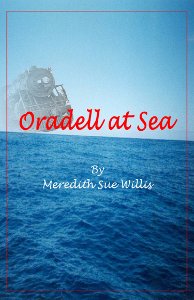
Note from MSW: Danny was the in-house editor for my novel Oradell at Sea a few years back, and he was terrific. -
Recommended by a member of the Authors' Guild, very commercially oriented and probably expensive: Robin Colucci.
-
Carol Gaskin 's Editorial Alchemy continues (as of January 1, 2020) to be highly recommended by my students and colleaguesfor full service editing. "Professional editor, literary midwife, award-winning author...offers extensive critiques, tutorials, revisions, support." http://www.editorialalchemy.com . Phone 941-377-7640; email:Carol@EditorialAlchemy.com This book doctor comes highly recommended by students from my novel writing classes at NYU and others. One student says, she is "worth every penny," and another says "Carol Gaskin was a marvelous choice and I think she really helped me make it shine."
-
Samantha Holloway at FrancesHouse.
-
Abby Mcintyre has more than five years of copy-editing experience at print and online newspapers and magazines. She offers a strong eye for detail and is adept at spotting and eliminating errors of grammar, punctuation, spelling, style, and syntax. She says her rates are negotiable, but her general fee schedule is $3 per page for proofreading. She also would offer an hourly rate for a final set of eyes on a typeset novel. Her hourly rate is $25 per hour. Contact her at abby.j.mcintyre@gmail.com.
-
How much should you pay (or charge?) for various types of editing services? Here's a list of typical ranges.
-
The Book Doctors-- "making better books one author at a time."
More Editors Featured Editors and Sites with Lots of Editors:
-
Ideasmyth-- "a creative communications, holistic coaching and branding boutique consultancy."
-
-
Proof Editing only: Here is site that offers straight proof editing, take a look at this website.
-
Servicescape.com has lots of editors and proof readers. Their home page is at Servicescape.com.
-
TheSpunYarn.com gives responses to in-process manuscripts. One enthusiastic customer said, "I want to thank all of you who suggested I try TheSpunYarn.com for beta readers for my first novel. Their notes were so helpful and the price ($300) was amazing for three different readers. The novel is sitting with an agent right now. Fingers crossed!"
-
How to Do Online Book Events Successfully (from Jane Friedman)
-
Here is one specific recommendation from Deborah Clearman, author of Todos Santos, published by the respected small press Black Lawrence. Note that in spite of the respected publisher, Clearman's success in getting her book noticed was due, according to her own account, to her publicist. Clearman writes:
I highly recommend my publicist, Sarah Burningham of Little Bird Publicity. Here's a blurb I just wrote for her website http://littlebirdpublicity.com/:
Literary fiction is a hard sell, and setting your novel in a place that’s not in the news— Guatemala— doesn’t make it any easier. Sarah came to the project of launching Todos Santos with passion, professionalism, and a warmth that made it a pleasure. She got me mainstream reviews, blog coverage, readings and events from coast to coast, and exposure in places I never would have dreamed of, including a New York Times article. Moreover, she believed in my book, and her unflagging support as well as her attention to detail made working with her a joy. I can’t wait to work with her on my next book.
Note: Sarah Burningham, who is not just a publicist for writers, usually books 5 months in advance.
-
Here's another recommendation, from the Authors' Guild discussion board: Pageturner Publicty.com
-
Poets & Writers Guide to Publicity and Promotion -- inexpensive digital guide
-
Check out a website with lists of bookstores all over the United States
-
Publishing basics.com
More possibilities (older list)
Marc Acito has taught online classes for NYU among many other credentials as writer and performer. He offers web based services as a book doctor as well as private coaching and manuscript analysis. He was highly recommended to me by a former student. See http://marcacito.com/coaching.htm . He specializes in story structure. See a video about his approach to story structure here.
Paulette Alden: says she critiques shortstories, novels and memoirs. but "specializes in book-length projects." See her websitals has an interesting blog as well at http://paulettealden.com/blog/ . Susan Borkin: "Coach approach" – http://www.susanborkin.com
Jeremy Busch [email is busch.jeremy (at) gmail.com] comes highly recommended by a colleague of mine. He does video, web pages, social media strategy, and consulting for writers and others. His LinkedIn page is at http://www.linkedin.com/in/jeremyandrewbusch or email him directly.
Charis Conn is an editorial and writing consultant. She is a writer herself as well as an experienced editor. I heard her speak at the North Wildwood Beach Writers Conference and very impressed with her practical and warm personality. Get in touch by email at charisc@earthlink.
The Book Doctors-- "making better books one author at a time."
The Editorial Department at http://www.editorialdepartment.com/ claims to be the oldest independent editorial firm in existence. They were founded by Renni Browne, co-editor of Self-Editing for Fiction Writers
Emma Dryden offers services for both writers and illustrators, specializing in works for children. She has a blog, too, at http://emmaddryden.blogspot.com/ .
Grey Core Literary services at
http://www.greycoreliteraryservices.com/index.html
Hollywood Writers Studio: "Adapt novels and stories into screenplays" http://www. HollywoodWritersStudio.com
Ideasmyth-- "a creative communications, holistic coaching and branding boutique consultancy."
Inspiration for Writers, Inc. This is a full service place for writers to get help-- informative blogs and lots of free stuff plus editorial help (or proof editing, or ghost writing) for a fee.
Dave King, coauthor of Self-Editing for Fiction Writers, does private editing. His web page is http://www.davekinged.com/ .
Susan E. Lindsey of Savvy Communications does editing and more. See Savvy Communications. She also sends out a free monthly newsletter called Savvy Writer that is available by emailng her at SusanLindsey@savvy-comm.com.
Ethel Lee-Miller does coaching and editing.
Nerd Services Proofing and Copy Editing
Kristin Ostby is a manuscript editor for writers who want to get published (she corrects grammar, spelling, etc.). She charges the standard rate, $25/hour to copyedit a manuscript. She corrects grammar, meaning, continuity, punctuation, spelling, etc. Contact her at kristin.ostby@gmail.com.
Proofread My Paper has an attractive website. They are primarily proof editors, but have services for non-native English writers and dyslexic students as well.
Candice Ransom specializes in children's books, and is recommended by an agent I know who says, "I’ve sent two writers to Candice who were happy with her work....Candice does not offer an opinion on a manuscript’s prospects for publication."
Savvy Communications does editing and more. See Savvy Communications.
Scribendi: "Editors available 24/7" http://www.scribendi.com/
Stickler Editing: "Nothing gets by the Stickler!" http://www.sticklerediting.com
Words into Print calls elf "an alliance of independent book editors and consultants offering a wide variety of services to writers....Each editor has approximately twenty years experience with leading New York trade book publishers or in the television and film industries....Our aim is to provide whatver help or advice writers may seek in their efforts to have material successfully published." See their website at http://www.wordsintoprint.org/ I don't know these folks' work, but I met two of them at the AWP Conference in New York in 2008, and they seemed highly professional and eager to answer questions.
Publicity and Publicists
First, if you're doing your own publicity, whether with a publisher on independently, take a look at this publicity toolkit for writers.
Second, be creative! Some writers drop copies of their books in the Little Free Libraries you may see around your neighborhood--with cards or advertising pamphlets telling how to get more:
Irene
Weinberger Books author Mitch
Levenberg
Stocking his local Tiny Library in Brooklyn, New York!
Whether you publish with a huge commercial press or with a small co-operative, in 2012 you are generally expected to participate in publicizing your book. There are, of course, people you can hire to do this for you.
[From an article by Scott Elliott: “Warranted Magic: Writing and Discussing Magical Realism,” The Writer’s Chronicle, Volume 40, Number 6, May/Summer 2008, pp. 42 - 49.]
The term “Magical Realism” was coined in 1925 as a way to name the post-expressionist art produced in Weimar, Germany. It was first used for a kind of fascination with objects and a kind of magic that comes out of the objects themselves. Later, especially with Latin American fiction, it was used to describe writing with mythic and supernatural things and events.
Scott Elliott in the article referred to above suggests it is “an organic relationship between the extraordinary and the ordinary” that stretches the confines of traditional realism. Usually, early in the writing, even in the first line, there will be “clues that commonly accepted verities will be blurred, exaggerated, or played with.” (42)
A good example of Magical Realism would be Gabriel Garcia Marquez's One Hundred Years of Solitude. Other examples include the Henry James’s story “The Jolly Corner;” Toni Morrison’s novels Song of Solomon and Beloved; Cormac McCarthy’s Blood Meridian; and Nathaniel Hawthorne in his tales of Puritan New England.
The problem with writing magical realism– as with fantasy and experimental fiction– is to avoid the looseness of Anything Goes. How can you talk about Magical Realism? How judge its success beyond liking or disliking a particular work? Elliott suggests looking for the “warrant,” the thing that connects it (its “claim”) to the grounds and/or reasons for the thing (46). Thus one asks, Are the magical elements here warranted? What in this story requires the supernatural? The warrant is the “organic, connective tissue binding marvelous or magical elements to psychological truths.” (46)
MSW's Favorite Books About Writing
(In alphabetical order. Books that explained a lot to me)
Booth, Wayne C. The Rhetoric of Fiction
Burroway, Janet. Writing Fiction: A Guide to Narrative Craft
Ciardi, John How Does a Poem Mean?
Paglia, Camille Break, Blow Burn (How her favorite poems work)
Silber, Joan The Art of Time in Fiction: As Long a It Takes.
Wood, James How Fiction Works
Bibliography of Books about Writing
Comments in quotations by various colleagues and students. If there are no quotation marks or other indication, the comments are by MSW.
Beginnings, Middles, and Ends. Writer's Digest Books, Cincinnati, OH.
Bernays and Painter. What If?: Writing Exercises for Fiction Writers, ;Harper Perennial, New York, 1990.
Bickham, Jack M., Scene and Structure. 1993.
Booth, Wayne C., The Rhetoric of Fiction, Second Edition, University ;of Chicago, 1983.
Bradbury, Ray, Zen in the Art of Writing, Bantam, NY 1990.
Buchman and Groves, The Writer's Digest Guide to Manuscript ;Formats. Writers Digest Books, Cincinnati, OH.
Burroway, Janet. Writing Fiction: A Guide to Narrative Craft. Many ;editions, HarperCollins.
Chatman, Seymour, Story and Discourse: Narrative Structure in ;Fiction and Film. Cornell, Ithaca 1978.
Ciardi, John How Does a Poem Mean?
Dillard, Annie, The Writing Life.
Edelstein, Scott, Manuscript Submission. Writer's Digest Books, ;Cincinnati, OH, 1989.
Elbow, Peter. Writing With Power, Oxford, New York, 1981.
Fugard, Athol, Tsotsi.
Gardner, John, The Art of Fiction: Notes on Craft for Young Writers. ;Vintage, 1991.
Goldberg, Natalie, Writing Down the Bones: Freeing the Writer Within, Shambala, Boston 1986. Also her Wild Mind.
Kernen, Robert Builing Better Plots, Writer's Digest Books, 1999.
Kundera, Milan, The Art of the Novel, HarperCollins, 1986.
The Literary Press and Magazine Directory 2006/2007: The Only Directory for the Serious Writer of Fiction and Poetry, Soft Skull Press, 2006. ISBN: 1933368160
Meredith, Robert, From Basic Idea to Finished Manuscript, Harper and Row, 1972.
Novel & Short Story Writer's Market 2007, 26th edition, by Lauren Mosko (Editor), Michael Schweer (Editor), Writers Digest Books, 2006. ISBN: 1582974306
Paglia, Camille Break, Blow Burn (How her favorite poems work)
Rockwell, F.A., How to Write Plots That Sell
Rodale, J.I. , The Synonym Finder , Warner Books, 1978. Recommended by a veteran journalist and writer of thrillers.
Sexton, Adam, Master Class in Fiction Writing: Lessons from ; Austen, Hemingway, and Others, McGraw-Hill, 2005. Excellent book on learning the tricks of the fiction writing trade by reading the masters from a well-known writer and teacher of writing.
Shertzer, Margaret, The Elements of Grammar, Collier Books. Recommended by a veteran journalist and writer of thrillers.
Silber, Joan, The Art of Time in Fiction: As Long a It Takes.
Stein, Sol, How to Grow a Novel: The Most Common Mistakes ;Writers Make and How to Overcome Them.
Sol Stein, Stein on Writing . "Author of nine novels, publisher, teacher and editor (he’s edited the work of James Baldwin, Jack Higgins, Lionel Trilling, W.H.Auden and Dylan Tomas), knows more than a thing or two about writing fiction. His 320-page book STEIN ON WRITING (ISBN 0312136080) has invaluable advice on every aspect of writing a novel."
Strunk, William and White, E.B., The Elements of Style, Macmillan, ;Many editions.
Willis, Meredith Sue:
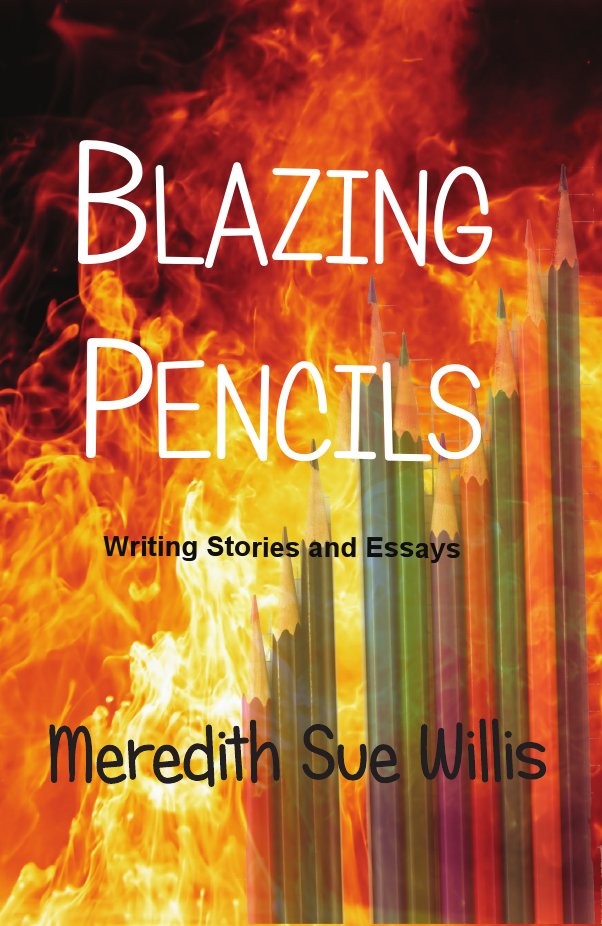
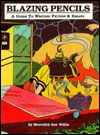
-Blazing Pencils: A Guide to Writing
Fiction & Essays, Teachers & Writers, New York, 1991,
Montemayor 2013
-Deep Revision: A Guide for Teachers, Students,
and Other Writers, Teachers & Writers, New York, 1993
-Personal Fiction Writing, Teachers & Writers, New York, 2001.
-Ten Strategies to Write Your Novel, Montemayor Press 2010
Wood, James, How Fiction Works, Farrar, Straus and Giroux, New York, 2008.
Ueland, Brenda, If You Want to Write
Zuckerman, Albert, Writing the Blockbuster Novel
A mother/daughter book writing team makes this recommendation: "a resource... that worked out great for us [is] 99designs book cover design. After a lot of failed attempts with other freelancers (and a lot of money spent), we ended up with what we wanted and it was just a really great experience."
Here's a site with some thoughts on good (and bad) book cover design.
Types of Publishing; Pros and Cons of Self Publishing
Types of Publisher (A Publishing Continuum): Commercial; University presses/ larger small presses; Small Presses; Micro-mini presses; Co-operative Presses; Self-publishing; POD companies; Vanity Presses
Commercial Press: Advances! Puts you on T.V.! Author tour-- but-- sometimes no commitment at all. They often demand that you present a marketing "platform," make you do your own publicity, and they will drop you fast if your book does not sell a lot of copies very rapidly.
University press and large "small" press: Vary considerably: may make a real commitment, or not. Usually pay low advances or none, but do pay royalties. They often give little publicity, but are in many ways the mainstay of literature at the present time.
Small press: No cost to you, usually, but little profit either. They will expect in-kind support (set up your own readings, send out your own publicity). A good resource for more information for small presses is http://www.aeonix.com
Micro-mini press: No advance, possibly some shared costs with the writer. Like others, this type of press expects the author to do publicity and share the work.
Co-operative publishing: Shared costs and labor by a group-- often author owned, run, and managed (Otherwise, like micro-minis and small pressess).
Self-publishing: Join the likes of Lord Byron, Walt Whitman, and Anaïs Nin. You have to do everything, and might use a conventional printing press or print-on-demand technology. Note: Important distinction a technology called "print-on-demand," used by great conglomerates like Random house as well as tiny micro-mini presses, and POD companies. For more on this topic, see below.
POD companies like Xlibris, Iuniverse, 1stbook, and others will, for a reasonable cost, print anyone's book. They have lots of packages with rapidly escalating prices for fancy covers etc. Reviewers and bookstores tend to be suspicious of these companies, which make their prof by accommodating authors more than by selling books.
Vanity Presses: In the old days, these were considered misleading, too expensive, and very low prestige. Serious writers avoided them.
In the 2020's, however, self and subsidized publishing have become much more common and not low prestige at all. Read Danny Williams's note on a paid publishing house he knows from the production angle:
"Populore Publishing, where I work 10-15 hours per week, would be classified as "vanity press" under your taxonomy. And yes, a lot of it is vanity. All but the poorest of us spend some money on vanity--boats, cigars, clothes. I have several musical instruments which are way beyond the needs of a player at my level. And some spend on publishing a book.
But at least in our shop, we do work of which I am proud. As a Result (a Holocaust memoir) was one of ours. I don't recall specifically what I did there, but I do remember that I worked on it, and whatever large or small input I had, I am proud of it.
We also have a designer, a typesetter, and an eagle-eyed boss, and we all pore at length over each other's work. Whatever the content, anything we do is absolutely professional in every way. And as for content, it's not all vanity.
A few other [books] on the level of As a Result. the Holocaust memoir: Early history of a company that revolutionized manufacturing. Collected proceedings of a riverboat history organization, with a CD database of details for every commercial boat that ever worked the Monongahela. Examination of the petroleum industry's impact on one California town. And some small-run projects like church, family, or organizational histories, when the clients know there is very little demand but they want a professional-quality product. High-school writing from the blighted, remote southern end of Wayne County (my home county), funded by a teacher who wants to encourage his students.
I have zero knowledge of the business side of Populore, so I can't say anything about cost versus value. And I have no idea what happens in other shops. I have a spotty employment history, to put it mildly, and that's because I can not do a job for long if I'm not happy to own it. This is my fifth year at Populore. Other than my hourly wage, I have no financial interest in the company.
About the name: Populore was founded 25 years ago with a vision of collecting and publishing stories from "ordinary" people, whatever they felt like telling. Eventually that did not work out as envisioned, but then all these other possibilities opened.
https://www.facebook.com/populorepublishingcompany/
Print-On-Demand; Self-Publishing; Hybrid Publishing
Self-Publishing has always been a respectable option for writers who can't find a satisfactory commercial publisher. In self-publishing, the author does all the work, from having a cover made to finding a printer. Vanity publishing (sometimes distinguished from subsidy publishing), on the other hand, has a somewhat unsavory reputation. A Vanity Publisher does all the work for an author in exchange for a hefty fee, and often sells more services than the author needs.
The ideal is still a commercial publisher who will pay the author for her or his work, giving royalties or other compensation. Such a publisher expects to make some profit on the sale of the author's books, and is thus willing to pay for review copies, advertising, attractive covers, etc. Now, however, well into the twenty-first century, getting a commercial book publisher can be extremely difficult – even for books that would have been considered commercial twenty-five years ago. For a quick outline of why, read André Schiffrin's book The Business of Books, or, for a précis of his argument, see my review of it at Ethical Review of Books.
Falling between self-publishing and vanity publishing is an option called POD (or sometimes "subsidy publishing"). POD stands for "print-on-demand," which is actually the name of the technology it uses. The print-on-demand technology is a means of digitalizing books and printing one book at a time or many books at a time. (Read a 2010 summary of what is happening in Print-on-Demand in The Economist.) This technology creates trade paperbacks that are indistinguishable from those printed by conventional offset presses. These books can be prepared to print for less than $100. Many commercial and small publishers use this technology to keep books in print that sell in small numbers or to bring into print books with niche markets. Without knowing it, you may have ordered a book from a large or small press that was printed by the print-on-demand technology. Large commercial presses and small presses with very selective standards are openly and unapologetically using this technology as a way around the enormous costs of warehousing books.
Another new option is Hybrid Publishing, which usually means the company charges the writer more or less, but it has standards for what manuscripts it will take. An example is Austin Macauley Publishers.
The POD Companies, however, are large profit-making businesses who use the POD technology and work in much the same way as vanity publishers, but at less cost. Like vanity publishers, the POD companies generally work with amateur authors. There are exceptions: the Author's Guild, for example, a professional authors' organization, had a program, now mostly closed, tht used IUniverse to bring members' out-of-print books back into print. My first novel, A Space Apart, originally published at Scribner's, is part of that program. The POD companies take care of all the details for the author and offer many different packages and services. Like the vanity publishers, they don't do much publicity, but they do list your book on their web site and often link it to Amazon.com and other outlets. They have attractive web sites and enticing packages, some priced very reasonably, as well as lots of fancy ways of separating the author from more money. There is another problem: setting up your book is reasonably priced, but if you intend to sell copies yourself at readings or other events, it costs a LOT to buy copies of your own book from the POD companies. The standard author discount from a commercial or noncommercial publisher is 40%-- thus I just bought copies of my book ORADELL AT SEA which sells for $15 retail at $9 each-- I'll sell them at readings etc. maybe even at a discount, and still make a little. The POD companies will charge you much more, so buying copies becomes an issue. Some of the best known POD companies like http://www.iuniverse.com and http://www.authorhouse.com/are now part of AuthorSolutions.com . They are now having "relationships" with major publishers like Simon and Schuster that associate the commercial name with subsidized publishing.
There are also (much cheaper) do-it-yourself places like Ron Pramshufer’s Self-Publishing.com and Lulu.com. For a blog on the experience of publishing with Lulu go here. Finally, here's an article from PC Magazine. In sum, the POD producers are not a scam: they do what they promise, but read the fine print.
Also--here's a great place to comparison shop the POD place.
A few more places:
http://www.infinitypublishing -- Lulu at http://www.lulu -- The Virtual Bookworm -- www.Blurb.com -- www.createspace.com (this is Amazon's business--now Kindle Direct)
One-Book-at-a-Time Printers (not POD Publishers)
Better than self-publishing, if you have the inclination, is to form your own small press with other people. This requires a dedication to literature and other people's works beyond your own book. If you do this, you will be entering a respectable and even admirable tradition of small presses. You also approach book producing companies-- printers, not publishers-- as you and your colleagues are the publisher. More and more book producers do both conventional printing and one-book-at-a-time printing, using the same technology as the POD companies. These companies may require your group to prove that you are a press, not an individual. You will be responsible for getting your own ISBN numbers and registering your copyright-- very doable, if you have a group to share responsibilities. Lightning Source, Inc., for example, welcomes small presses and is helpful as long as the small press acts reasonably professional.
Conventional/Mixed Printers
Most printing companies, whatever type of press they use, work from digital files, so it hardly matters, as long as the final book looks good. One good printing company is Morris Publishing. You'll have to buy 500 or 1000 books at $1.50 to $4.00 each, so this is a fairly large investment that you then have to store as well as distribute, but the price is reasonable. Another full service printer with a long history and a reputation for being helpful to everyone is Edwards Brothers . Edwards also does Print-on-Demand ultra-short-run printing. Two more conventional printers are McNaughton &Gunn, Inc. and Whitehall Printing Company Also, look into
48hrbooks.com/ , who seem easy to use, friendly, and not unreasonably price-- and will happily do smaller numbers of books.
An updated list of places for self-publishing (August 2022)
First, check out this comparison site for self-publishing: http://www.booksandtales.com/pod/
A large consideration for self and cooperative publishing is the cost of finished books. Some printers only charge 3 or 4 dollars plus shipping. Of, course it is much cheaper if you use printers like Lightning Source Incorporated (which is a book printer including one-book-at-a-time technologies) not a self-publisher. LSI is associated with the giant distributor Ingram. LSI also has a self-publishing branch called Ingramspark.
Many of the POD companies make their profit by selling expensive services, and by sellingcopies of the books to the author for ten or twelve or more dollars each copy. So finding out the cost of buying a supply of books is important.
https://www.thebookpatch.com/
https://www.diggypod.com/book-printing/
Ingramspark
Lulu.com often has good deals: http://www.lulu.com/publish/books
Outskirts Press.com
And finally, I've had students praise Booklocker.com (See this article)
She Writes Press
She Writes Press has an unusual business model. You pay, and pay quite a bit, but the services try to be like a commercial press. See their "How It Works Page.
One writer who has published two books with them says: "My experience with SWP has been mixed. I brought out two books with them, the first in May 2013 and the second, my novel, in October 2014. In the year and a half in between, [the press] went through a lot of changes, mostly for the good, particularly in terms of getting traditional distribution through Ingram.
"However, I had a really bad time with their proofreader. My galley of the novel was full of mistakes, and I had to use my own readers, three separate times, in fact, to vet all the mistakes.
"Then I was paired with a publicist who was less than useless and didn't get me a single pre-release review. The company was then sold to SparkPoint Studio – which has its own imprint and does publicity services for all kinds of authors, regardless of who publishes them. Crystal Patriarche is at the helm there, and she seems to know what she's doing.
"In sum, they're expensive, aggressively seeking to make a solid place for themselves in the publishing world, and pretty innovative. That said, I think when my current novel is done, I'm going to try to find myself an agent – I have one who's eager to read the book – and see what I can arrange for myself...."
Convert Your Old Floppies!
If you have old floppy disks-- 5.25 inch or 3.5 inch formatted for PC or Apple computers- I recommend a company called RetroFloppy. They get the material off the disk for a reasonable price. I had an old book taken off a floppy for under $7.00 (it would have been $ for postage too if I'd wanted the floppy disk back). They take the material off in a couple of formats you can use and post it all as a zip file online that you download once you're paid.
Web Sites: Making Your Own
A good website with detailed instructions for creating your own website is Websitesetup. They focus on Wordpress and one particular web host, Bluehost.com, and they do link to a page that lists other hosts: Best-web-hosting-sites.
I use Fatcow.com. There are more linked below: Wordpress itself, Wix, Weebly. Look at the next article for links to some.
More on Getting Your Own Web Page
If you don't have a web presence yet, you really ought to. To get your feet wet, you might try one of the major blog sites like Blogger and Word Press or a free web building site (usually meaning with ads). Check out http://www.easysitestarter.com/ as well as places like http://www.wix.com/ or http://www.weebly.com/. Another web host that has been recommended to me makes things easy and cheap for you: Homestead.com. There's lots more great information at Web Site Ideas 4 Writers.com . Basically, if you can fill in information in a form, you can have a website for free or very cheap.
Also consider buying the domain name with your name--thus, I own meredithsuewillis.com. You can get these at several places, including www.domainbank.com.
One way or another, you need a website. The Web is rapidly becoming an important place for writers' pieds-à-terre, or is it pied-à-cyberspace?
How to build a website: an excellent review of website programs from the same mother/daughter team that recommends a resource for book cover design: "a resource... that worked out great for us [is] 99designs book cover design. After a lot of failed attempts with other freelancers (and a lot of money spent), we ended up with what we wanted and it was just a really great experience."
Cheat sheet for people who use html (and this is Html 5)--html is the code for building websites.
Tutorials on making/getting a web site
Good List of Best Website Builders
(Thanks, Natasha Wentz for suggestions!)
More:
Check out an article at Publishing Basics about what subsidy and vanity publishers are selling-- and keeping for themselves. I'm not especially recommending this company, Publishing Basics, by the way -- they are a for-profit resource center for self-publishers-- but they have a good newsletter with lots of tips. They are selling services, but are very up front about it, and understand the importance of sharing knowledge for free as well as selling it. Here are some POD companies that people I know have worked with:
Subscribe to Meredith Sue Willis's Free Newsletter
for Readers and Writers:
The best way to get in touch with Meredith Sue Willis is by email: Meredithsuewillis (symbol for "at") gmail ("dot") com
Images and photos found on the various pages of this web site may be used
by anyone, but please attribute the source when it is specified.
Meredith Sue Willis Author and Teacher is licensed under aCreative Commons Attribution 4.0 International License.